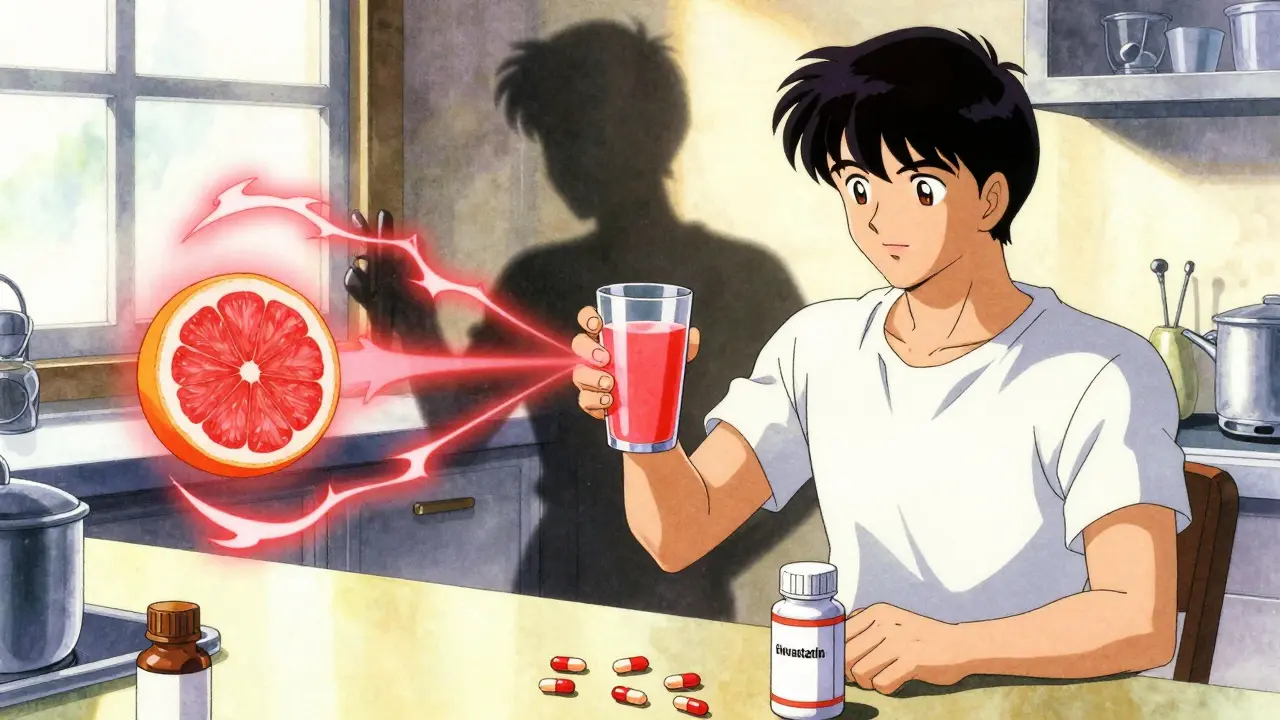
Statin-Grapefruit Interaction Checker
Every morning, millions of people take a statin to lower their cholesterol and protect their heart. At the same time, many of them reach for a glass of grapefruit juice to start their day. What they don’t realize is that this common combo could be quietly pushing their body toward a dangerous tipping point. The interaction between grapefruit and certain statins isn’t just a minor warning on a label-it’s a powerful, measurable, and sometimes life-threatening drug-food reaction that can turn a safe medication into an overdose.
Why Grapefruit Changes Everything
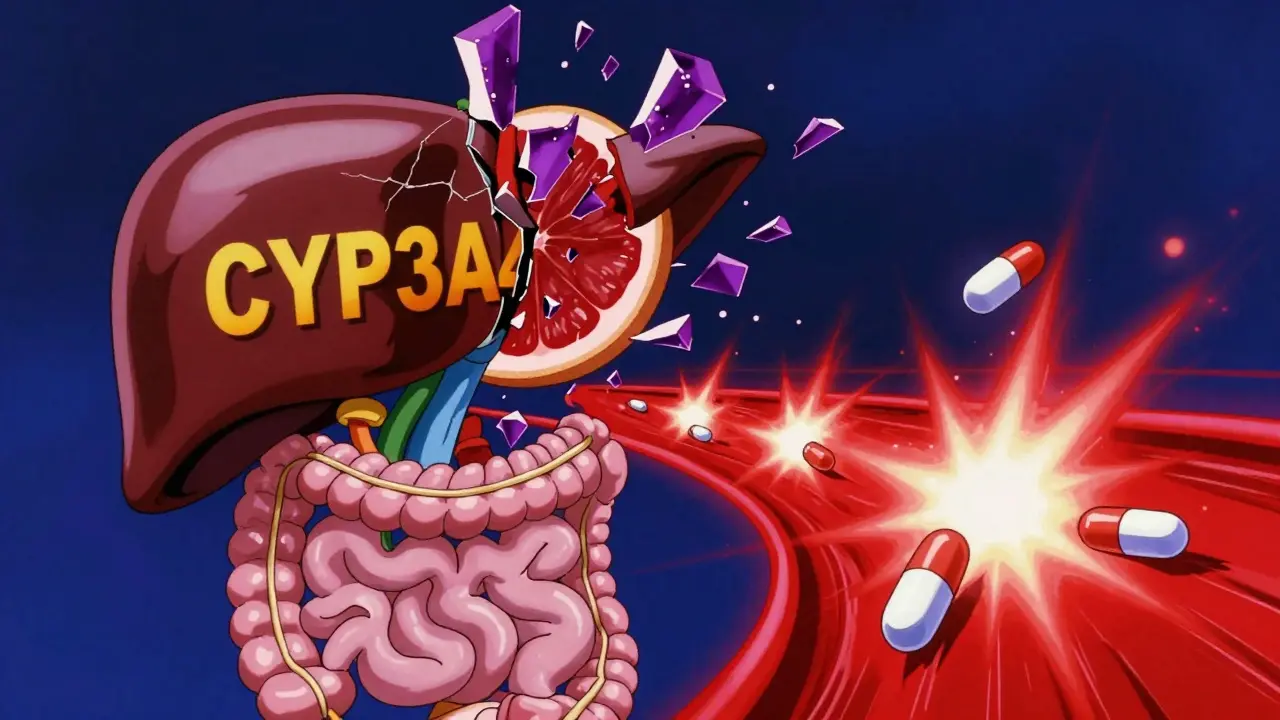
Grapefruit doesn’t just taste different-it acts differently in your body. The problem lies in a group of natural chemicals called furanocoumarins, naturally occurring compounds in grapefruit that irreversibly block a key liver and gut enzyme called CYP3A4. This enzyme normally breaks down certain statins before they enter your bloodstream. When furanocoumarins shut it down, the statin doesn’t get metabolized properly. Instead, it floods into your system at levels you didn’t expect.Think of it like this: your body is designed to process a certain amount of statin. But grapefruit turns your body’s brakes off. The result? Blood levels of the drug can spike by up to 16 times higher than normal. A landmark 1998 study in Clinical Pharmacology & Therapeutics showed that just 200 mL of double-strength grapefruit juice-about a small glass-taken three times a day, increased the concentration of simvastatin in the blood by nearly 16-fold. That’s not a little bump. That’s the difference between a 20 mg dose and what’s essentially a 320 mg dose.
Which Statins Are at Risk?
Not all statins are created equal when it comes to grapefruit. The risk depends entirely on how your body processes them. Statins that rely heavily on the CYP3A4 enzyme are the ones you need to worry about:- Simvastatin (Zocor) - Highest risk. Even a small amount of grapefruit can cause dangerous spikes.
- lovastatin (Mevacor) - Also high risk. The FDA lists it as contraindicated with grapefruit.
- Atorvastatin (Lipitor) - Moderate risk. Small amounts may be tolerated, but regular consumption is unsafe.
On the other side, these statins are largely unaffected:
- Pravastatin (Pravachol)
- Rosuvastatin (Crestor)
- Fluvastatin (Lescol)
- Pitavastatin (Livalo)
These don’t depend on CYP3A4 for breakdown. That’s why switching from simvastatin to rosuvastatin isn’t just a suggestion-it’s often the safest fix for someone who loves grapefruit.
The Real Danger: Rhabdomyolysis
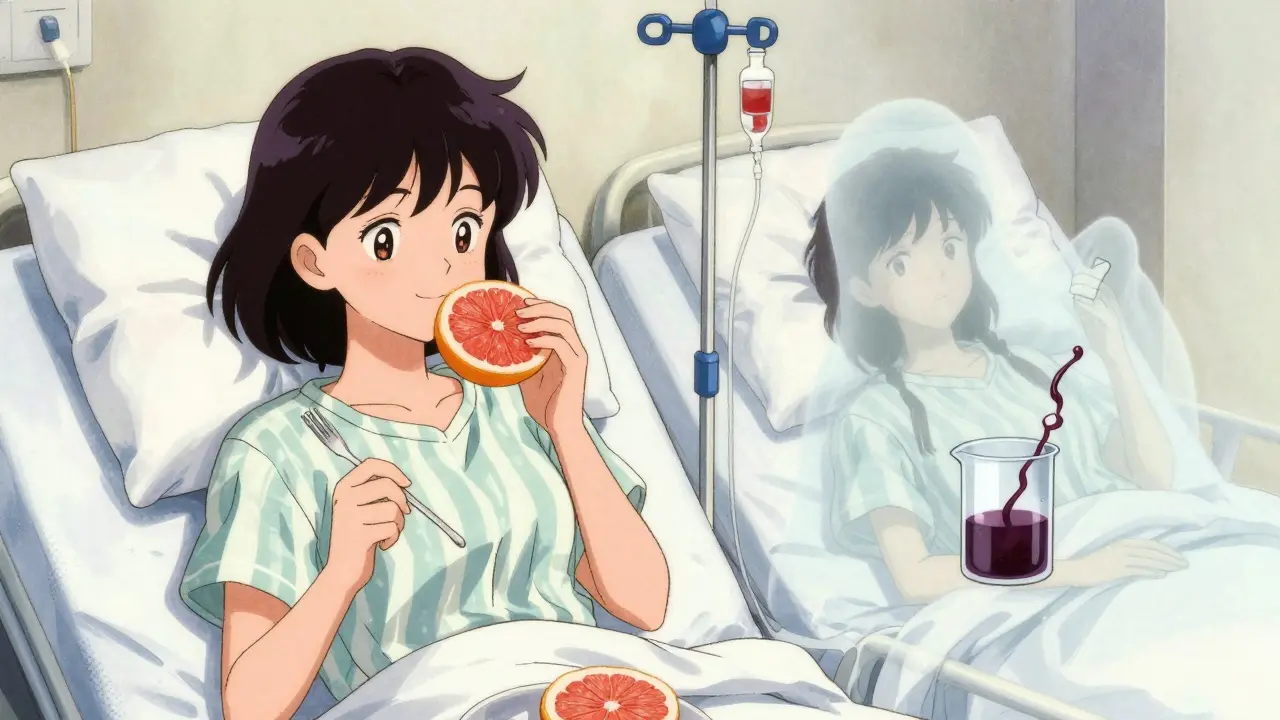
Most people know statins can cause muscle aches. But what most don’t know is that grapefruit can turn that common side effect into something far more serious: rhabdomyolysis, a condition where muscle tissue breaks down rapidly, releasing toxic proteins into the bloodstream that can shut down your kidneys.This isn’t theoretical. There are documented cases of people ending up in the hospital after eating grapefruit daily while on simvastatin. One 40-year-old woman developed rhabdomyolysis after just 10 days of combining the two. Her symptoms? Severe muscle pain, weakness, and dark, tea-colored urine-the classic warning signs.
The risk of rhabdomyolysis is rare overall-less than 1 in 10,000 statin users per year. But with grapefruit in the mix, that risk jumps. The FDA’s adverse event database shows a clear pattern: cases spike in patients who regularly consume grapefruit while taking high-dose simvastatin or lovastatin. And because the enzyme inhibition is irreversible, it doesn’t matter if you take your statin in the morning and grapefruit at night. The enzyme stays blocked for up to 72 hours. One grapefruit in the morning can affect your evening dose.
How Much Is Too Much?
There’s no safe amount if you’re on simvastatin or lovastatin. The FDA’s label for simvastatin says it plainly: “The coadministration of simvastatin and grapefruit juice is not recommended.” That’s not a suggestion. That’s a hard line.Even one small grapefruit or 8 ounces of juice can trigger a significant interaction. Studies show that as little as 200 mL of juice-about one glass-can cause measurable spikes. And it doesn’t take daily consumption to be dangerous. Because the enzyme stays turned off for days, even weekly grapefruit intake can keep your statin levels dangerously high.
Atorvastatin is a gray zone. Some guidelines allow up to one small grapefruit or 8 ounces of juice per week. But if you’re older, have kidney issues, or take other medications, even that might be too much. The safest approach? Avoid it entirely unless your doctor says otherwise.
What About Other Citrus Fruits?
This isn’t about all citrus. Only grapefruit, Seville oranges (used in marmalade), and pomelos contain enough furanocoumarins to cause this interaction. Regular oranges, lemons, limes, and tangerines? They’re safe. You can enjoy them without worry.And it’s not just juice. The whole fruit, even grapefruit sections or zest, carries the same risk. The compounds are concentrated in the peel and pulp. So if you’re using grapefruit zest in baking or salad dressing, you’re still at risk.
What Should You Do?
If you’re on a statin and you eat grapefruit:- Check which statin you’re taking. Look at the name on the bottle.
- If it’s simvastatin or lovastatin, stop eating grapefruit immediately. Talk to your doctor about switching.
- If it’s atorvastatin, cut out grapefruit completely unless your doctor confirms it’s safe for you.
- If it’s pravastatin, rosuvastatin, fluvastatin, or pitavastatin-you’re fine. No changes needed.
Don’t stop your statin on your own. The risk of heart attack or stroke from untreated high cholesterol far outweighs the risk of grapefruit interaction. But don’t ignore the warning either. A simple switch to a safer statin can eliminate the danger without sacrificing protection.
Doctors and Pharmacists Are Your Best Defense
Surprisingly, many people don’t even know about this risk. A 2021 survey found that only 42% of primary care doctors routinely ask patients about grapefruit use when prescribing statins. And only 28% of patients reported being warned at all.Pharmacists are often the first line of defense. A 2021 study showed that when pharmacists proactively flagged grapefruit-statin combinations, they reduced unsafe pairings by 78%. If your pharmacist flags this, listen. They see hundreds of prescriptions a week. They know the patterns.
If you’re unsure, ask: “Is my statin affected by grapefruit?” Don’t assume. Don’t guess. Get a clear answer.
The Future: Grapefruit Without the Risk?
Scientists aren’t giving up on grapefruit. Researchers at the University of Florida are breeding new varieties that keep the sweet taste and vitamin C-but remove the furanocoumarins. Early trials show promising results. Within the next decade, we may see “safe grapefruit” on grocery shelves.But until then, the message is simple: if you’re on simvastatin or lovastatin, grapefruit isn’t just a bad pairing-it’s a health hazard. The numbers don’t lie. The science is clear. And the consequences can be irreversible.
Can I still drink grapefruit juice if I take a low dose of simvastatin?
No. Even low doses of simvastatin can become dangerously high when combined with grapefruit. The interaction isn’t about the dose of the statin-it’s about how grapefruit blocks your body’s ability to break it down. A 10 mg dose of simvastatin with grapefruit can act like 160 mg. There is no safe threshold.
How long does grapefruit affect statins?
The enzyme CYP3A4 stays blocked for up to 72 hours after you eat grapefruit. That means even if you take your statin at night and grapefruit in the morning, the interaction still happens. Time gaps don’t help. Only avoiding grapefruit entirely works.
Is it safe to eat grapefruit if I take my statin every other day?
No. The problem isn’t how often you take the statin-it’s that grapefruit permanently disables the enzyme that clears it from your body. Even if you skip a day, the enzyme stays blocked. The next time you take the statin, it will still build up to dangerous levels.
What are the early signs of statin toxicity from grapefruit?
The first sign is usually unexplained muscle pain or weakness, especially in the shoulders, thighs, or lower back. Other signs include dark urine (like tea or cola), fatigue, and nausea. If you notice these while eating grapefruit, stop the grapefruit immediately and contact your doctor. Don’t wait for severe symptoms.
Can I switch to a different statin if I love grapefruit?
Yes, and it’s often the best solution. Statins like rosuvastatin (Crestor) and pravastatin (Pravachol) don’t interact with grapefruit at all. Switching lets you keep your heart protection without giving up your favorite fruit. Talk to your doctor about making the change-it’s safer than trying to limit grapefruit.


13 Comments
I can't believe people still eat grapefruit with their statins. My grandma died from rhabdomyolysis because she thought 'a little juice' was fine. It's not. Stop being lazy with your health.
I take rosuvastatin. Grapefruit is fine. No drama.
You know, it's fascinating how we've turned a simple, natural fruit into a villain because of pharmaceutical chemistry. Grapefruit has been around for centuries, and now we're told it's a silent killer? The real danger isn't the fruit-it's the over-reliance on synthetic compounds that our bodies weren't designed to handle. The CYP3A4 enzyme isn't broken-it's being hijacked by a system that profits from fear.
I'm sorry, but this article is dangerously incomplete. It mentions that only simvastatin and lovastatin are high-risk, but fails to emphasize that even 'safe' statins can interact with other medications-like antibiotics, antifungals, or calcium channel blockers-that also inhibit CYP3A4. This is not a grapefruit problem-it's a polypharmacy problem. And yet, doctors still prescribe five drugs without checking interactions. I've seen patients on four meds, grapefruit, and a supplement. They don't even know what they're taking. This is systemic negligence.
This is all a Big Pharma lie. They want you to stop eating grapefruit so you'll buy their 'safe' statins. The real reason they don't want you to have grapefruit? It's cheaper than their drugs. And the enzyme thing? That's just a myth they invented to sell more Crestor. I stopped my statin and now I eat grapefruit every day. My cholesterol dropped 30 points. Coincidence? I think not.
OMG I just realized I’ve been eating grapefruit with my Lipitor for 3 years 😱 I’m switching to pravastatin tomorrow. Thank you for saving my life 🙏❤️
I had no idea. I love grapefruit. I take simvastatin. I just stopped. No big deal. My legs don't hurt anymore. Simple fix. You don't need a PhD to not eat fruit with your meds. 🤷♂️
The irony is that grapefruit contains naringin, which has antioxidant properties that may actually help reduce inflammation. The real issue isn't the fruit-it's the industrial-scale dosing of statins. Maybe we need less medication and more lifestyle changes. But then again, that doesn't sell pills.
i mean… i get it. grapefruit + statin = bad. but like… what if you just eat half a grapefruit once a week? 🤔 i’ve been doing it for 5 years. my doc said ‘eh, probably fine.’ now i’m just waiting for my kidneys to explode lol 🤞
I switched to pravastatin last year after my pharmacist flagged it. Best decision ever. I still get my grapefruit fix. No more muscle pain. No more anxiety. Just life. Simple.
I am a clinical pharmacist with over 18 years of experience in cardiology. I cannot stress enough: the interaction between grapefruit and CYP3A4-metabolized statins is not theoretical. It is quantifiable, reproducible, and clinically significant. The FDA's warning is not hyperbole. In my practice, I have seen three cases of rhabdomyolysis directly tied to grapefruit consumption in patients on simvastatin. All three required ICU admission. The risk is not ‘low’-it is unacceptable. I recommend patients avoid grapefruit entirely if on atorvastatin, and absolutely eliminate it if on simvastatin or lovastatin. There is no safe window. No compromise. This is not negotiable.
The real story here is that the pharmaceutical industry doesn't want you to know that grapefruit juice is a natural, cheap, and effective way to lower cholesterol. They created this ‘danger’ narrative to sell you pravastatin at $300 a month. Why do you think they didn't patent the furanocoumarin-blocking effect? Because they can't monetize nature. This is a profit-driven scare tactic.
i didnt even know this was a thing… i took simvastatin for 4 years and ate grapefruit every day… my doctor never said anything… i hope im okay…