Sulfonylurea Risk Calculator
Assess Your Hypoglycemia Risk
This tool calculates your personalized risk of low blood sugar based on your medication, age, and other factors.
When you're managing type 2 diabetes, keeping blood sugar under control is the goal-but not at the cost of crashing too low. Sulfonylureas, a decades-old class of diabetes pills, are still prescribed to millions because they work and cost very little. But here's the catch: sulfonylureas are one of the most common causes of dangerous low blood sugar episodes. If you're taking one of these drugs, you need to know how to avoid the risks-and how to pick the safest option if you have options.
How Sulfonylureas Work (and Why They Cause Low Blood Sugar)
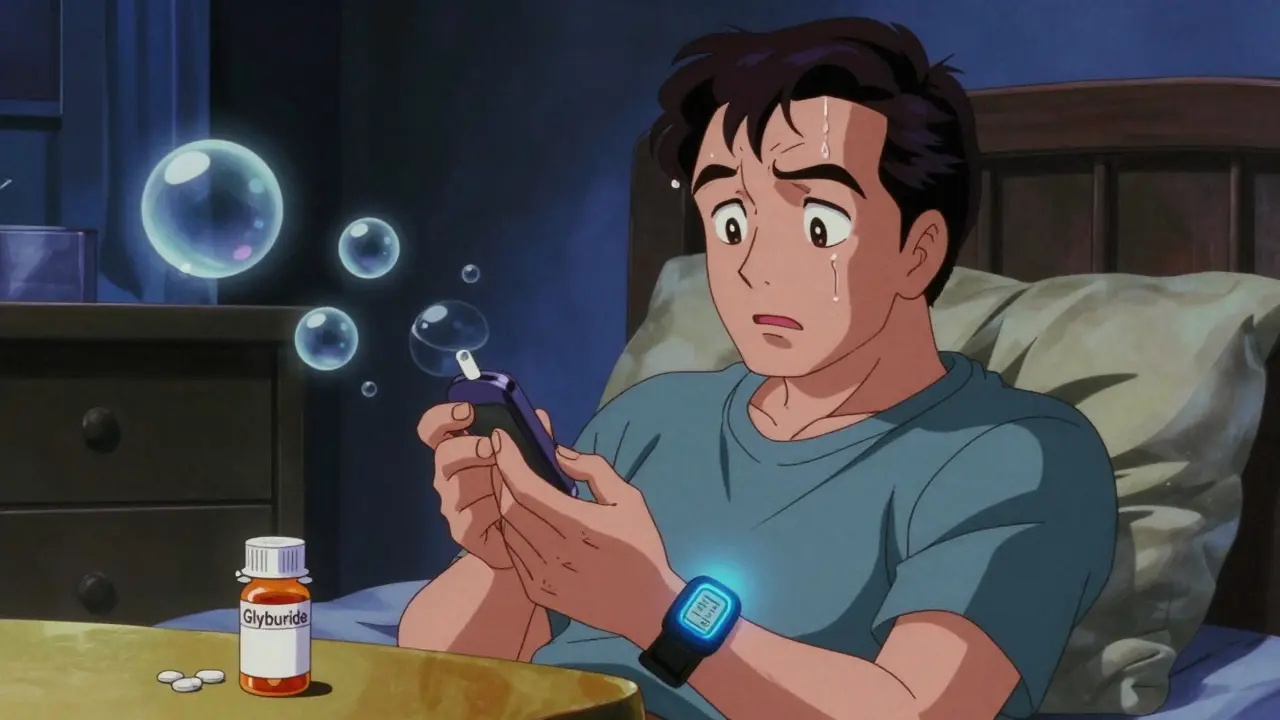
Sulfonylureas force your pancreas to release more insulin, no matter what your blood sugar level is. That’s different from newer drugs that only boost insulin when your blood sugar is high. This is why hypoglycemia happens so often. When you skip a meal, exercise more than usual, or take too much of the drug, your body keeps pumping out insulin even when it shouldn’t. Blood sugar drops below 70 mg/dL, and symptoms start kicking in: sweating, shaking, confusion, heart pounding, hunger.
According to a 2014 meta-analysis, about 1 in 10 people on sulfonylureas will have at least one low blood sugar episode. For some, it’s just a scary moment. For others, it’s a trip to the ER. The problem isn’t just the drug-it’s which drug you’re taking.
Not All Sulfonylureas Are the Same
There are two generations of sulfonylureas. The first-gen ones-like chlorpropamide and tolbutamide-are rarely used today. The second-gen ones are what most people take: glyburide, glipizide, glimepiride, and gliclazide.
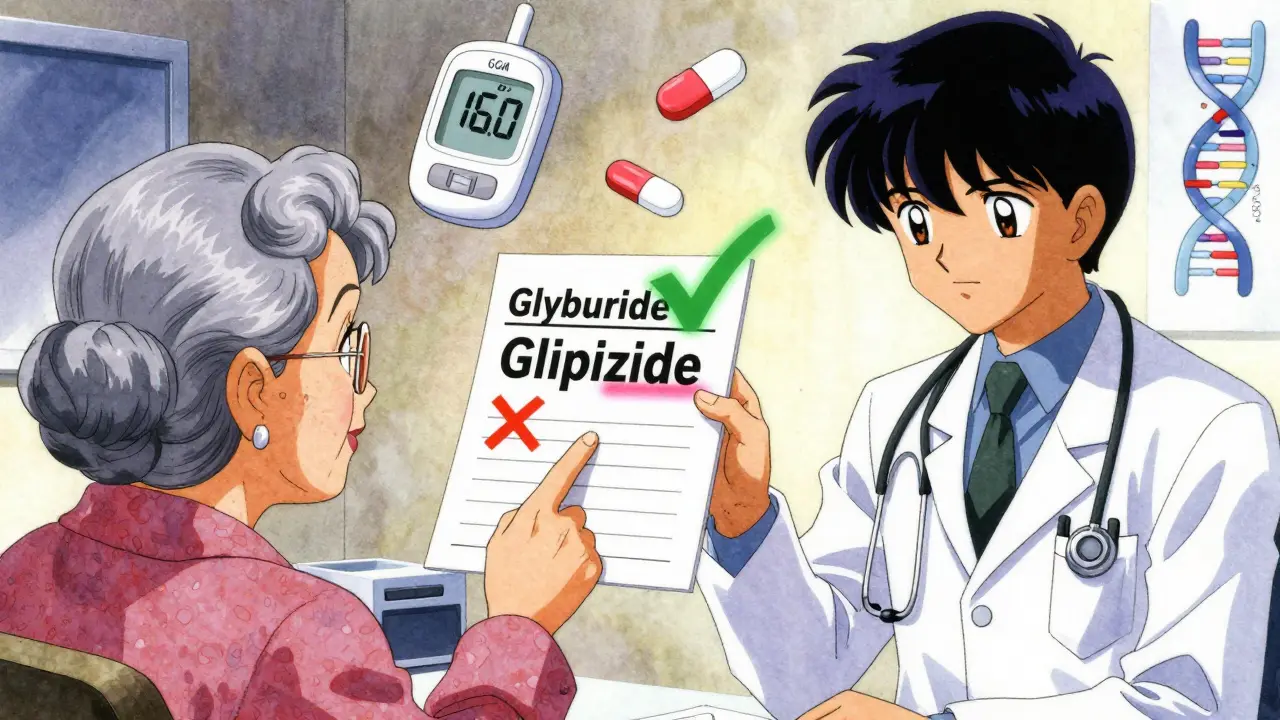
Here’s where it gets critical: glyburide is the most prescribed sulfonylurea in the U.S., making up about 70% of all prescriptions. But it’s also the riskiest. Why? It lasts too long. Its half-life is around 10 hours, and it breaks down into active metabolites that keep working for days. That means even if you eat dinner on time, glyburide can still be pushing insulin out of your pancreas at 3 a.m. A 2017 study in Diabetes Care found that people on glyburide had a 36% higher chance of being hospitalized for severe hypoglycemia than those on glipizide.
Glipizide and glimepiride? Much safer. Glipizide’s half-life is only 2 to 4 hours. It clears out faster. Gliclazide (not available in the U.S.) is even better-it targets only pancreatic beta cells, not other tissues, which reduces side effects. Studies show gliclazide has a 28% lower risk of hypoglycemia than glyburide.
Switching from glyburide to glipizide isn’t just a minor change-it can cut your low blood sugar episodes from weekly to once every few months. Real people report it: Reddit user “GlipizideSurvivor” said their episodes dropped from weekly to once every 2-3 months after the switch.
Who’s Most at Risk?
Age matters. The American Geriatrics Society says anyone over 65 should avoid glyburide. Why? Older bodies process drugs slower. Kidneys and liver don’t clear the drug as fast. That means higher drug levels in the blood-and more insulin being released when it shouldn’t be. Studies show older adults on glyburide have a 2.5 times higher risk of severe hypoglycemia than younger patients on glipizide.
But it’s not just age. Genetics play a huge role. If you have a CYP2C9*2 or *3 gene variant, your body breaks down sulfonylureas way too slowly. Research from 2020 shows this single genetic difference increases hypoglycemia risk by 2.3 times. That’s why some people crash even on low doses, while others stay fine on higher ones.
Medications you’re taking matter too. Drugs like gemfibrozil (for cholesterol), sulfonamide antibiotics, or even warfarin can push sulfonylureas off protein-binding sites, leaving more of the drug free in your bloodstream. One study found gemfibrozil increases glyburide exposure by 35% and doubles the risk of hypoglycemia.
How to Prevent Low Blood Sugar
Prevention isn’t just about avoiding sugar-it’s about managing timing, dose, and monitoring.
- Start low, go slow. The American Diabetes Association recommends starting with 1.25 mg of glyburide or 2.5 mg of glipizide. Most doctors now follow this. Going too high too fast is a recipe for disaster.
- Know your symptoms. Sweating (85% of cases), shakiness (78%), confusion (52%)-if you feel any of these, check your blood sugar. Don’t wait for dizziness or fainting.
- Treat lows immediately. 15 grams of fast-acting carbs: 4 glucose tablets, ½ cup juice, or 1 tablespoon of honey. Wait 15 minutes. Check again. Repeat if needed. Don’t just eat a candy bar-fat slows absorption.
- Use a continuous glucose monitor (CGM). A 2022 trial called DIAMOND found that sulfonylurea users who wore CGMs had a 48% reduction in time spent in hypoglycemia. The alarm tells you before you feel it. That’s huge.
- Educate people around you. 22% of users in ADA forums reported needing help during severe lows. Make sure your family, coworkers, or caregivers know how to give glucagon or call 911.
How Sulfonylureas Compare to Newer Drugs
Yes, newer drugs like SGLT-2 inhibitors (Jardiance, Farxiga) and GLP-1 agonists (Victoza, Ozempic) are safer. They rarely cause low blood sugar-less than 0.3 events per 100 person-years. Sulfonylureas? 1.2 to 1.8 events per 100 person-years. That’s 4 to 6 times higher.
But cost matters. Glipizide costs about $4 a month. Ozempic? Over $1,000 without insurance. For many people, especially those without good coverage, sulfonylureas are the only realistic option. A 2021 analysis showed they save $1,200-$1,800 per patient annually compared to newer drugs-while still lowering HbA1c just as much.
That’s why the American Diabetes Association still lists them as second-line therapy after metformin. The key word: when risk is minimized.

The Future: Personalized Dosing
There’s hope on the horizon. The Pharmacogenomics Knowledgebase (PharmGKB) now recommends testing for CYP2C9 variants before starting sulfonylureas. If you carry *2 or *3 alleles, you need 30-50% less drug to get the same effect-and far fewer lows.
An ongoing trial called RIGHT-2.0, expected to finish in late 2024, is testing a genetic dosing algorithm. Early data shows it could cut hypoglycemia rates by 40%. Another promising approach: combining low-dose sulfonylureas with GLP-1 agonists. The DUAL VII trial found this combo reduced hypoglycemia by 58% compared to sulfonylureas alone.
For now, the best strategy is simple: if you’re on glyburide, ask if glipizide or glimepiride is an option. If you’re over 65, insist on avoiding glyburide. If you’ve had a low blood sugar episode, get a CGM. And if you’re starting sulfonylureas, ask about genetic testing.
Final Thoughts
Sulfonylureas aren’t going away. They’re cheap, effective, and familiar. But they’re not risk-free. The same drug that helps one person stay in range can send another into a medical emergency. The difference? Choice. Monitoring. Awareness.
You don’t have to accept frequent lows as normal. You can ask for a safer drug. You can use a CGM. You can get your genes tested. You can change your dose. You’re not powerless. The system may push the cheapest option-but you have the right to demand the safest one for you.
Do all sulfonylureas cause low blood sugar equally?
No. Glyburide carries the highest risk due to its long half-life and active metabolites. Glipizide, glimepiride, and gliclazide have significantly lower hypoglycemia rates. Studies show glyburide causes up to 36% more severe lows than glipizide. Switching from glyburide to glipizide can cut episodes by more than half.
Can I avoid hypoglycemia if I take sulfonylureas?
Yes, but it requires action. Start with the lowest dose possible. Avoid skipping meals. Use a continuous glucose monitor (CGM) to catch lows before symptoms appear. Avoid combining sulfonylureas with drugs like gemfibrozil or sulfonamide antibiotics. If you’re over 65, ask your doctor to switch you away from glyburide. Education and monitoring reduce hypoglycemia risk by over 30%.
Why is glyburide still prescribed if it’s so risky?
It’s cheap and effective. Glyburide makes up about 70% of sulfonylurea prescriptions in the U.S. because it’s widely available as a generic and costs less than $5 a month. Many patients, especially those without insurance, can’t afford newer drugs. But guidelines now recommend avoiding glyburide in older adults and favoring shorter-acting alternatives whenever possible.
Should I get genetic testing before taking sulfonylureas?
If you’re starting a sulfonylurea and have a history of unexplained low blood sugar, yes. The CYP2C9*2 and *3 gene variants impair how your body breaks down these drugs, increasing hypoglycemia risk by over 2 times. The PharmGKB now recommends testing before prescribing. If you carry one of these variants, you may need 30-50% less medication to get the same benefit with far fewer lows.
What should I do if I have a severe low blood sugar episode?
If you’re unable to swallow or are unconscious, someone must give you glucagon (injection or nasal spray). Keep a glucagon kit at home and make sure family or coworkers know how to use it. After a severe episode, contact your doctor immediately. You may need to reduce your dose, switch medications, or start using a continuous glucose monitor. Severe hypoglycemia is a warning sign-not just a one-time accident.



10 Comments
I’ve been on glipizide for 3 years now and honestly? Life changed. Used to get shaky at 2 a.m. every other night. Switched from glyburide after my ER visit. Now I sleep through the night. No more panic checks. My endo said it was the right call. Why aren’t more people told this? It’s not just about cost-it’s about safety. I wish I’d known sooner.
Also, CGM was a game-changer. The alarms saved me twice. I didn’t even feel it coming. That’s not hype. That’s survival.
Y’all are acting like sulfonylureas are some evil drug. They’ve been saving lives for 70 years. If you can’t handle a little hypoglycemia, maybe you shouldn’t be on insulin secretagogues at all. Glipizide? Sure, fine. But don’t act like glyburide is a death sentence. I’ve been on it for 12 years. I eat on time. I check my sugar. I’m fine. Stop the fearmongering.
I just want to say thank you for this post 💙
I’m 68 and was on glyburide until last month. My daughter found this article and made me go to my doc. We switched to glimepiride. I haven’t had a low since. I didn’t even realize how often I was crashing-mood swings, confusion, zoning out… I thought it was just ‘getting older.’ Turns out it was the drug. So grateful for people who share this info. You’re helping more than you know.
i just started glipizide last week and im already feeling better no more 3am panic attacks 😭 i wish my doc had mentioned this sooner like why is glyburide still even a thing?? its like prescribing lead paint because its cheap
Glyburide is a relic. Period. Half-life longer than my last relationship. Active metabolites? That’s not pharmacology-that’s a horror story. Glipizide clears in hours. Gliclazide? Precision tool. Why are we still using a sledgehammer when we have a scalpel? Stop pretending cost justifies risk. It doesn’t.
I’ve been on glimepiride for five years now. Never had a single low. I’m from the UK, and we don’t even use glyburide anymore. It’s banned in our guidelines. Funny how the US clings to it. Maybe it’s the ‘more is better’ mindset. But for diabetes? Less is often more. I’m just glad I switched early.
OMG I’m so glad someone finally said this 😍
Like, if you’re still prescribing glyburide in 2024, you’re either stuck in 1998 or you’re getting kickbacks from Big Pharma. No, really. Who’s your pharma rep? 🤔
Also, CGMs are not optional. They’re essential. If you’re not using one, you’re gambling with your brain. And your kidneys. And your dignity.
Ah yes, the classic ‘switch to glipizide’ advice. So convenient. Until you realize your insurance won’t cover it because it’s ‘not preferred’-and glyburide is $3. You think this is about health? Nah. It’s about who’s got the best lobbyist. The system doesn’t care if you crash at 3 a.m. It cares if your pharmacy gets a rebate.
Interesting read. I live in India and we use gliclazide more often here. Less hypoglycemia, cheaper than newer drugs. My uncle switched from glyburide and hasn’t had a low in two years. Maybe the answer isn’t just changing drugs-but changing how we think about them. Simple, safe, smart.
This is a well-researched and clinically sound overview. The distinction between sulfonylurea generations is critical and often overlooked in primary care. I encourage all clinicians to review the ADA guidelines and consider pharmacogenomic testing in patients with recurrent hypoglycemia. Prevention is far more effective than intervention.