
Fiber & Medication Timing Calculator
Why Timing Matters
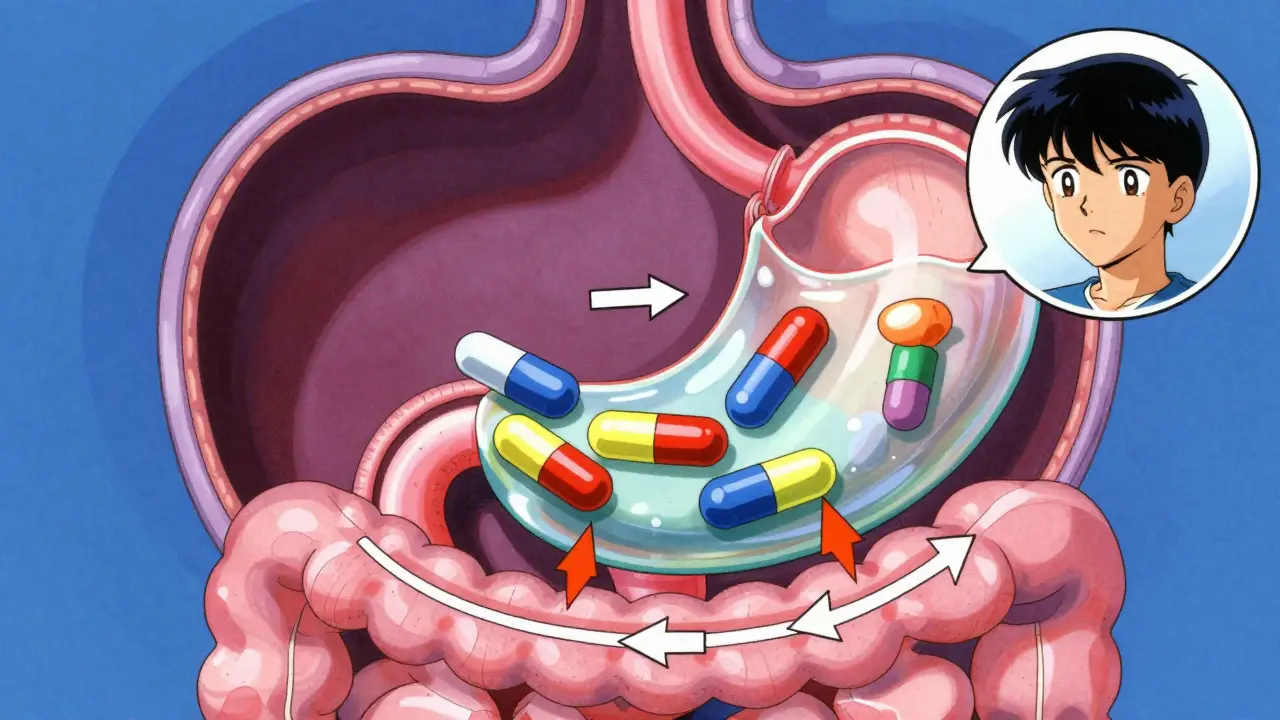
Fiber forms a gel in your gut that can trap medications, preventing absorption. Proper spacing ensures your drugs work effectively.
You might think taking a fiber supplement is as simple as mixing powder into water and drinking it. But if you take prescription medications, that routine could be silently undermining your health. Fiber supplements are dietary additives like psyllium husk or methylcellulose used to improve digestive health and manage cholesterol. While they offer significant benefits for digestion and heart health, they have a physical property that can interfere with how your body absorbs drugs. When taken at the wrong time, fiber can bind to medications in your gut, preventing them from entering your bloodstream effectively. This isn't just a minor inconvenience; for critical drugs like blood thinners or thyroid replacements, reduced absorption can lead to dangerous health outcomes.
The core issue lies in how fiber behaves inside your gastrointestinal tract. Soluble fibers, such as psyllium husk, absorb water and form a thick, viscous gel. Research published in the Journal of Clinical Lipidology (2015) shows this gel can reduce the absorption of certain medications by up to 30-50% when consumed simultaneously. The American Pharmacists Association recommends a strict separation window: take fiber supplements at least one hour before or two to four hours after your medications. This rule exists because the gel barrier created by fiber takes time to form and dissolve, physically blocking drugs from being absorbed in the small intestine.
Why Fiber Blocks Medication Absorption
To understand why timing matters, you need to look at what happens in your stomach. When you consume a gel-forming fiber like psyllium, it expands rapidly upon contact with water. Dr. Michael Pratt, a pharmacologist at Johns Hopkins University, explains that this creates a physical barrier in the gut. Medications must penetrate this barrier to reach the intestinal wall where absorption occurs. If the medication is trapped in the gel matrix, it moves through your system too quickly or is excreted without ever entering your bloodstream.
This interaction is not limited to one type of drug. Several classes of medications are particularly vulnerable:
- Thyroid Medications: Levothyroxine is highly sensitive to food and supplements. A 2020 study in the Journal of Pharmacy Practice found that psyllium reduced levothyroxine absorption by nearly 29% when taken together. This can cause TSH levels to spike, leading to fatigue and weight gain despite being on treatment.
- Blood Thinners: Warfarin requires consistent absorption to maintain safe INR levels. Fluctuations caused by fiber binding can increase the risk of clotting or bleeding.
- Diabetes Drugs: Metformin and other oral hypoglycemics may have their efficacy dampened, leading to higher blood sugar readings.
- Antibiotics: Certain antibiotics, such as tetracycline, can bind to fiber components, rendering the infection-fighting dose ineffective.
The visual evidence of this process is clear in medical diagrams showing nutrient absorption in the proximal small bowel. Normally, nutrients and drugs absorb early in this region. However, the introduction of a gel-forming fiber delays this process, pushing the absorption window further down the tract where efficiency drops significantly.
Optimal Timing Strategies for Daily Use
So, when should you actually take your fiber? The answer depends on your medication schedule and your personal tolerance. Many people assume taking fiber before bed is convenient since they’re already winding down. However, this strategy often backfires. Hilma’s research (2023) notes that 68% of patients experienced nighttime bloating, gas, and abdominal discomfort when taking fiber within two hours of bedtime. These symptoms disrupt sleep quality and can make you want to stop the supplement entirely.
A more effective approach is to anchor your fiber intake to your meals, while respecting the medication buffer zone. Here is a practical framework:
- Morning Medication Users: If you take pills first thing in the morning, wait at least two to four hours before taking fiber. For example, if you take thyroid medication at 7:00 AM, do not take fiber until 11:00 AM or later. Alternatively, take your fiber with lunch or dinner.
- Evening Medication Users: If your meds are taken at night, consider taking fiber earlier in the day, perhaps with breakfast or lunch. Avoid taking fiber right before bed to prevent nocturnal digestive distress.
- Appetite Control Goal: If you use fiber to curb hunger, take it 20-30 minutes before your largest meal. Just ensure no medications are scheduled within the preceding hour or the following two hours.
Nature Made suggests a simple swap: "Take fiber supplements before bed if you take medications in the morning, or take fiber in the morning if you take medications before bed." However, given the sleep disruption risks mentioned above, aiming for mid-day doses (with lunch) is often the safest compromise for most people.
Exceptions and Synergistic Effects
While separation is the general rule, there are notable exceptions where combining fiber and medication can be beneficial. Statins, which lower cholesterol, sometimes work better alongside fiber. Research published in PMC (2015) demonstrated that a low dose of simvastatin combined with divided doses of psyllium before meals resulted in a superior reduction in LDL cholesterol compared to the statin alone. In this specific case, the fiber helps trap bile acids, forcing the liver to use more cholesterol to replace them, thereby enhancing the drug's effect.
However, do not attempt this combination without explicit approval from your doctor. For most other medications, including blood pressure drugs and antidepressants, the interference risk outweighs any potential synergy. Always check the drug labeling or consult your pharmacist, as guidelines vary by specific compound.
Special Populations and Precautions
Certain groups require even more careful planning. Post-bariatric surgery patients have reduced stomach capacity and altered anatomy. Bodyspec (2023) emphasizes starting these patients on very gradual doses-starting with 1-2 grams daily-and increasing slowly over weeks. Because their absorption windows are different, maintaining the one-to-four-hour separation from medications is critical to avoid complications.
Patients with Irritable Bowel Syndrome (IBS) also face unique challenges. The Bon Secours Blog (2022) reports that 42% of IBS patients experienced worsened symptoms when taking fiber on an empty stomach. For these individuals, taking fiber *with* meals rather than before might be necessary to mitigate gas and cramping, but this requires strict coordination with medication times to ensure the meal itself doesn’t interfere with drug absorption.
| Medication Class | Example Drugs | Interaction Risk | Recommended Separation |
|---|---|---|---|
| Thyroid Hormones | Levothyroxine | High | 4+ Hours |
| Blood Thinners | Warfarin | High | 2-4 Hours |
| Statins | Simvastatin, Atorvastatin | Low/Potential Benefit | Consult Doctor |
| Antibiotics | Tetracycline | Medium-High | 2-4 Hours |
| Diabetes Meds | Metformin | Medium | 2 Hours |

Practical Implementation Tips
Knowing the rules is one thing; sticking to them is another. The National Community Pharmacists Association found that only 38.7% of patients received specific timing instructions when buying fiber supplements. You likely need to manage this yourself.
Create a "medication timing chart" on your fridge or phone. Map out every pill you take and its required absorption window. Identify the gaps. If you take multiple medications throughout the day, your fiber window might be narrow. In such cases, smartphone reminders are invaluable. Consistency matters more than perfection, but missing the window repeatedly will render your medications less effective.
Start low and go slow. Begin with 1-2 grams of fiber daily and increase gradually over 2-4 weeks. This minimizes the gas and bloating that often scare new users away. Crucially, drink at least 8 ounces of water with each dose. Without adequate fluid, fiber can cause constipation rather than relieve it, and the gel formation becomes even more problematic for absorption.
User experiences on platforms like Reddit highlight real-world consequences. One nurse reported a patient whose thyroid levels were uncontrolled until they separated their Metamucil and levothyroxine by four hours. Within six weeks, her levels normalized. Conversely, negative reviews for fiber products often cite "my blood pressure meds stopped working" as a primary complaint, underscoring the tangible impact of poor timing.
Future Developments in Fiber Technology
The industry is aware of these interaction issues. According to Drug Development & Delivery (March 2023), time-release fiber formulations are currently in Phase 2 clinical trials. These innovations aim to control the rate of gel formation in the gastrointestinal tract, potentially allowing for safer co-administration with medications. Until these products become widely available, however, the old-fashioned method of timing separation remains the gold standard for safety.
As the global fiber supplements market grows toward $3.7 billion by 2030, education becomes paramount. Don't let convenience compromise your health. By mapping your schedule and respecting the absorption windows, you can enjoy the digestive and cardiovascular benefits of fiber without sabotaging your medical treatments.
How long should I wait after taking medication to take fiber?
You should generally wait at least 2 to 4 hours after taking medication before consuming fiber supplements. This allows the medication to be fully absorbed in the small intestine before the fiber forms a gel that could block subsequent absorption. For thyroid medications like levothyroxine, a 4-hour gap is often recommended due to high sensitivity.
Can I take fiber and statins at the same time?
In some cases, yes. Research suggests that combining psyllium fiber with statins like simvastatin may enhance LDL cholesterol reduction. However, this should only be done under the guidance of your healthcare provider, as individual responses vary. Do not assume this applies to all cholesterol medications.
Is it safe to take fiber supplements before bed?
Taking fiber before bed is generally not recommended. Studies show that 68% of users experience bloating, gas, and abdominal discomfort within 30-90 minutes of consumption, which can severely disrupt sleep quality. It is better to take fiber during the day, spaced appropriately from medications.
Does fiber affect blood thinner effectiveness?
Yes, fiber can interfere with the absorption of blood thinners like warfarin. Inconsistent absorption can lead to fluctuating INR levels, increasing the risk of clots or bleeding. Maintain a strict 2-4 hour separation between your blood thinner and fiber supplement to ensure stable drug levels.
How much water should I drink with fiber supplements?
You should drink at least 8 ounces (one full glass) of water with each dose of fiber supplement. Adequate hydration is essential to prevent constipation and allow the fiber to expand properly in the gut. Aim for a total daily fluid intake of 64-80 ounces.
What are the signs that fiber is interfering with my medication?
Signs include returning symptoms of the condition being treated (e.g., high blood sugar, high cholesterol, or thyroid-related fatigue), unexpected changes in lab results (like INR or TSH levels), or needing frequent dosage adjustments by your doctor. If you notice these changes after starting fiber, review your timing schedule.
Should I start with a full dose of fiber immediately?
No. Start with a low dose of 1-2 grams per day and gradually increase over 2-4 weeks. Rapidly increasing fiber intake can cause significant gas, bloating, and abdominal pain. Gradual introduction allows your gut bacteria to adjust and minimizes discomfort.
Do insoluble fibers interact with medications too?
Insoluble fibers (like wheat bran) do not form gels like soluble fibers (psyllium), so they are less likely to bind medications chemically. However, they still add bulk to stool and can speed up transit time, potentially reducing the window for drug absorption. It is still prudent to separate them from medications by 1-2 hours.
Can I take fiber with my diabetes medication?
Fiber can help stabilize blood sugar, but it may also reduce the absorption of oral diabetes medications like metformin. To ensure your medication works effectively, take your diabetes drugs at least 2 hours before or after your fiber supplement. Monitor your blood glucose closely when adjusting your fiber intake.
Are there new types of fiber that don't interact with drugs?
Time-release fiber formulations are currently in clinical trials (Phase 2 as of 2023). These aim to control gel formation rates to minimize interaction risks. However, they are not yet widely available. Currently, all common fiber supplements (psyllium, methylcellulose, inulin) require timing separation from medications.




Write a comment