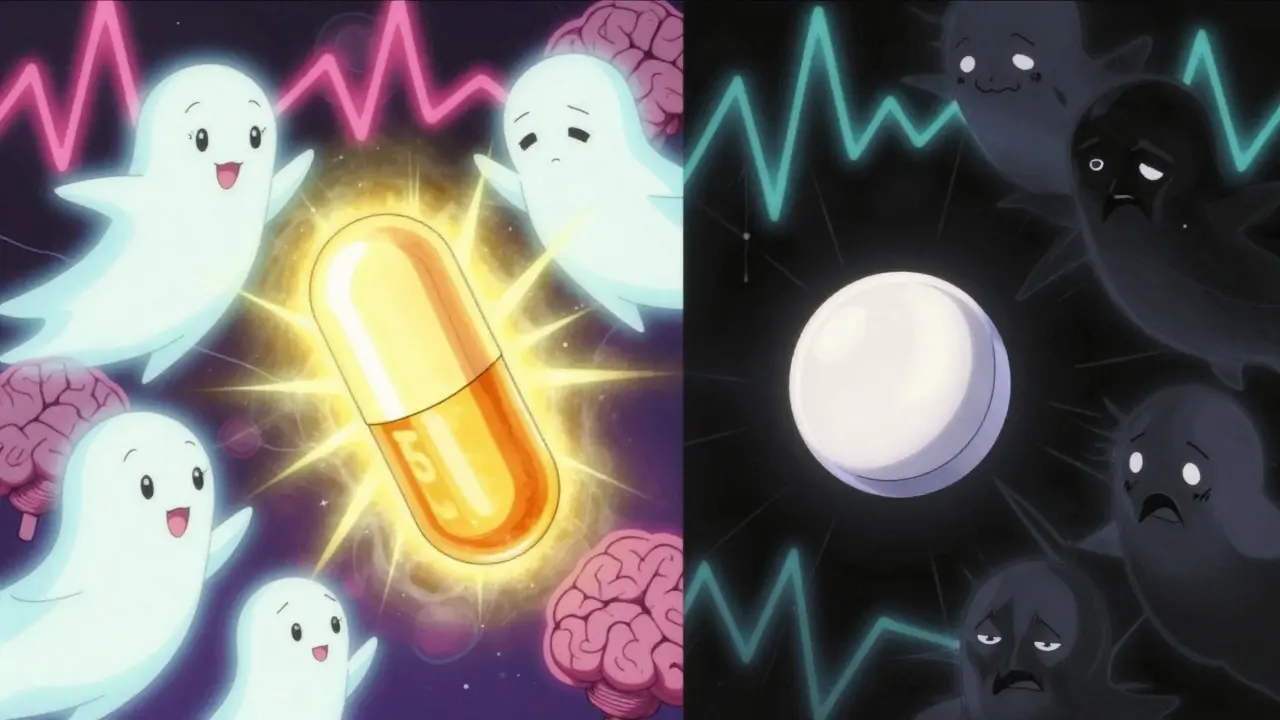
Have you ever switched to a cheaper generic drug only to feel like it just doesn't work as well? You aren't imagining things. The chemistry is identical, but your brain might be telling you otherwise. This isn't about the medicine failing; it's about a powerful psychological phenomenon known as the placebo-and its darker cousin, the nocebo-effect.
When we switch from brand-name drugs to generics, our expectations play a huge role in how we feel. Studies show that simply labeling a painkiller with a famous brand name can make it work better than an identical pill labeled as generic. It sounds strange, but it’s real. Understanding this link between your mind and your medication is key to managing your health effectively without breaking the bank.
The Science Behind the "Brand Name" Feeling
Let's look at what happens inside your head when you take a pill. In a landmark study published in Health Psychology by Kate Faasse and colleagues (2014), researchers gave participants placebos-inert pills with no active ingredients. Some were labeled with famous brand names, while others had generic labels.
The results were striking. The brand-name placebos relieved headaches just as well as actual ibuprofen. The generic-labeled placebos? They worked significantly less. Why? Because your brain expects the expensive, branded option to be superior. Functional MRI scans showed that these brand-name expectations activated the dorsolateral prefrontal cortex 27% more intensely than generic labels. That part of the brain helps regulate pain perception. So, when you believe a drug will work, your body actually produces physiological changes to help it work.
This effect isn't uniform across all medicines. Analgesics (painkillers) show the biggest gap. A meta-analysis found a Cohen's d effect size of 0.82 for brand vs. generic placebo effects in pain relief. For cardiovascular meds, the gap is smaller (d = 0.31). This means if you're taking pain medication, your mindset matters even more than if you're on blood pressure meds.
The Nocebo Effect: When Expectations Cause Harm
If the placebo effect is belief making you feel better, the Nocebo Effect is expectation causing symptoms. This is where things get tricky with generics. If you read online forums or hear friends complain that "generics don't work," you might start expecting side effects before you even swallow the pill.
Consider statins, commonly used for cholesterol. In clinical trials, patients given a neutral placebo reported muscle pain at rates of 1.9-3.4%. But when patients were told they were receiving a generic version, those rates jumped to 8.7-11.2%. Compare that to the general population's chronic fatigue rate of 17.5-19%, and you see how much power suggestion holds. Your brain can literally manufacture side effects based on what you think you're taking.
User experiences back this up. On Drugs.com, 78% of users who switched from brand to generic reported reduced efficacy. One user noted their blood pressure rose after switching to generic levothyroxine, despite identical dosing. Another on Reddit mentioned feeling worse anxiety on generic escitalopram, even though blood tests showed therapeutic levels were unchanged. These aren't failures of the drug; they are victories of the nocebo effect.
Why Does Price Matter?
We often equate cost with quality. In the world of pharmaceuticals, this is a dangerous myth. Yet, it persists. A study by Waber et al. in the Journal of the American Medical Association (2008) demonstrated this clearly. Participants received calibrated electric shocks and were given placebos labeled with different prices. Those told the pill cost $2.50 per dose experienced 64% greater pain reduction than those told it cost $0.10. The pills were identical. The price tag changed everything.
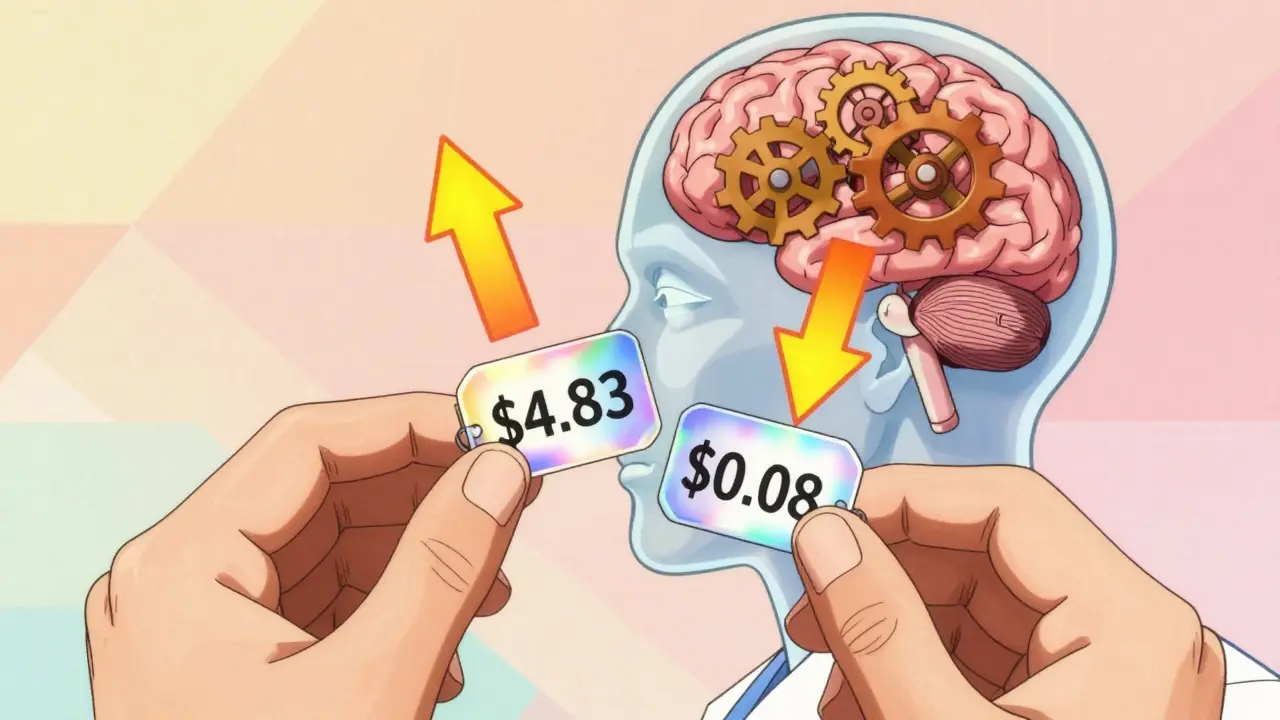
This "cost-expectation relationship" is why generic drugs face such resistance. Generic atorvastatin costs roughly $0.08 per pill, while the brand-name Lipitor costs around $4.83. Dr. Aaron Kesselheim argues that while labeling effects are real, paying nearly 60 times more for a psychological boost is financially unsustainable for healthcare systems. However, ignoring the psychology leads to poor adherence. Brand-name users show 18.3% higher 12-month adherence rates for cardiovascular meds, largely because they trust the product more.
Managing Your Mindset: Practical Strategies
You don't have to accept bad outcomes when switching to generics. You can manage the psychological factors. Here is how:
- Educate Yourself on Bioequivalence: The FDA requires generic drugs to be bioequivalent to brand names. This means the active ingredient must reach your bloodstream within a 90% confidence interval of 80-125% compared to the brand. In practice, most generics are much closer to 100%. Knowing this scientific standard can reduce anxiety.
- Avoid Negative Information Loops: Be careful where you get your information. Reading horror stories on forums can trigger the nocebo effect. Instead, rely on clinical data and your doctor's advice.
- Communicate with Your Provider: A 2021 study in JAMA Internal Medicine found that a simple 3-minute educational intervention by a doctor reduced nocebo responses by 47%. Ask your pharmacist or doctor to explain *why* they are switching you and reassure you about the equivalence.
- Use a Transition Period: Give yourself two weeks to adjust. Monitor your symptoms objectively. If you feel different, note it, but remember that perception differences are often psychological, not pharmacological.
- Maintain Consistency: If possible, stick with one manufacturer of the generic. Changing pill colors or shapes can increase nocebo responses by 29%. Consistent appearance helps maintain consistent expectations.

The Role of Healthcare Providers
Doctors and pharmacists are on the front lines of this battle. They need to bridge the gap between science and patient belief. Effective communication includes three components: explaining the rigorous FDA requirements, acknowledging that feelings may differ but chemistry does not, and providing close monitoring during the switch.
Training matters. Clinicians who complete specialized instruction in managing these expectations show 32% greater success in maintaining generic adherence. It’s not enough to just hand over the prescription. They need to validate your concerns while reinforcing the facts. As Dr. Ted Kaptchuk from Harvard Medical School notes, it’s not about deception; it’s about helping the brain’s predictive processing align with reality.
Future Trends and Solutions
The industry is starting to catch on. The FDA launched a pilot program in 2023 requiring manufacturers to maintain consistent pill appearances for generics to reduce discontinuation rates. Appearance changes alone can increase dropout rates by 19.3%.
New tools are emerging too. The "Expectation Modulation Protocol," a digital therapeutic module, has shown promise in reducing nocebo responses by 53% in clinical trials. Imagine a short app-based session that resets your expectations before you start a new medication. This could save the U.S. healthcare system billions annually by improving adherence and reducing unnecessary switches back to expensive brands.
Until then, the power remains in your hands. Your brain is a potent tool. Use it to support your treatment, not sabotage it. By understanding the placebo and nocebo effects, you can take control of your health journey, ensuring that generics work as well as they should-for both your body and your wallet.
Are generic drugs really the same as brand-name drugs?
Yes. Generic drugs contain the same active ingredients, strength, dosage form, and route of administration as brand-name drugs. They must meet the same strict FDA standards for safety, purity, and potency. The main differences are in inactive ingredients (like fillers or dyes) and price.
What is the nocebo effect in relation to generics?
The nocebo effect occurs when negative expectations about a treatment cause adverse symptoms. With generics, if a patient believes the drug is inferior, they may experience side effects or perceive reduced efficacy, even though the drug is chemically identical to the brand-name version.
How can I stop feeling like my generic medication isn't working?
First, educate yourself on bioequivalence standards. Second, avoid reading negative anecdotal reports online. Third, talk to your doctor or pharmacist about your concerns-they can provide reassurance and monitor your progress. Finally, give the medication time to work and track your symptoms objectively.
Does the price of a drug affect how well it works?
Psychologically, yes. Studies show that patients often report better outcomes from more expensive medications due to heightened expectations. However, pharmacologically, the price does not change the chemical composition or effectiveness of the drug itself.
Should I ask my doctor to keep me on brand-name drugs?
For most people, generics are a safe and effective choice. Switching to brand-name drugs solely due to psychological preference is rarely necessary and can be costly. However, if you have a documented sensitivity to specific inactive ingredients in a generic, or if you consistently fail therapy with generics despite proper management, discuss alternatives with your provider.

Write a comment