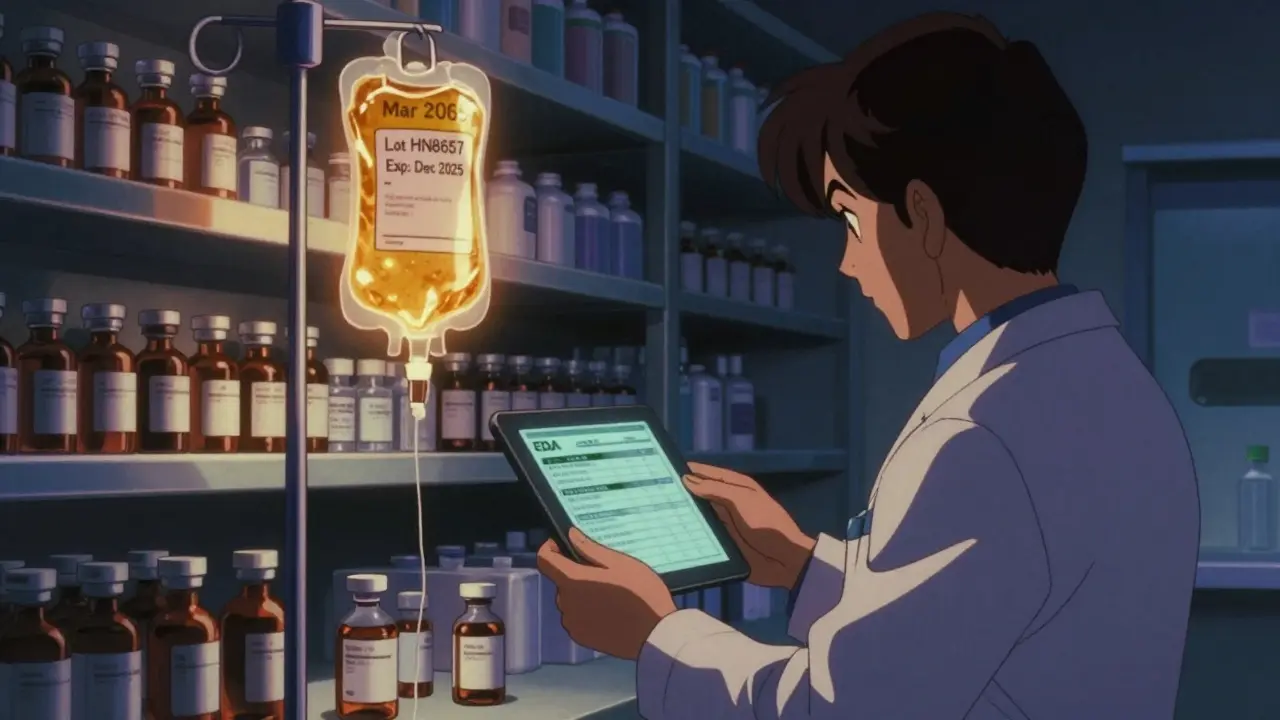
When a life-saving drug runs out, hospitals don’t just wait for more to arrive. In the U.S., the FDA has a quiet but powerful tool to keep medications flowing during shortages: extending expiration dates. This isn’t a loophole or a guess. It’s a science-backed, tightly regulated process that lets providers safely use drugs past their printed date-when there’s no other choice.
Why expiration dates get extended
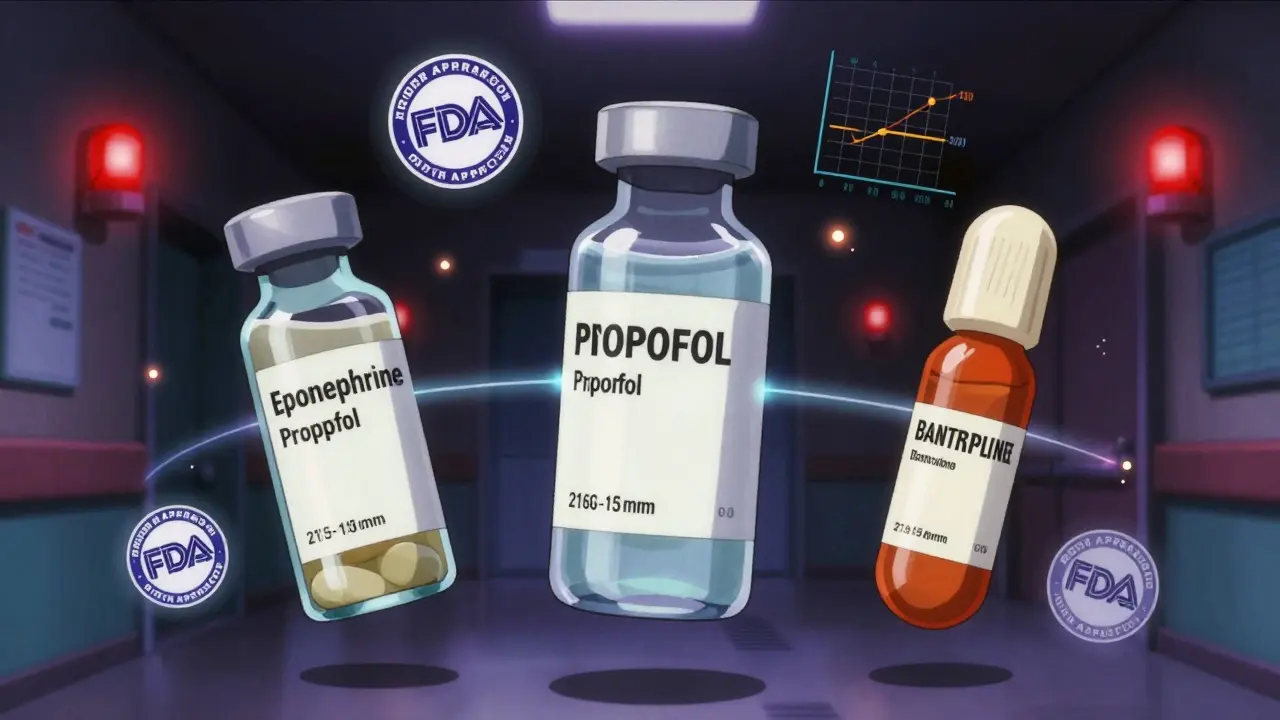
Expiration dates on drug labels aren’t magic dates when the medicine suddenly turns useless. They’re the last day the manufacturer guarantees full potency and safety under proper storage. But many drugs stay stable for months-or even years-beyond that date if stored correctly. The FDA doesn’t ignore this. When a critical drug like epinephrine, propofol, or IV fluids becomes scarce, the agency reviews stability data from manufacturers and approves extensions to stretch existing supplies.Between 2017 and late 2024, the FDA approved over 343 drug lots for extended use. These aren’t random. They’re targeted at drugs where alternatives are risky, unavailable, or not suitable for certain patients. For example, during the 2024 IV solution shortage, the FDA allowed certain Baxter products to be used up to 24 months after manufacture-double the original expiration. That meant hospitals didn’t have to delay surgeries or compromise care.
How the FDA decides
Not every drug on the shortage list gets an extension. The FDA only approves them for products that meet two strict criteria: strong stability data and high clinical need.Manufacturers must submit real-world data showing the drug still meets identity, strength, purity, and quality standards past its labeled date. This isn’t theoretical-it’s lab-tested. Samples are stored under controlled conditions and tested over time. If the data holds up, the FDA approves an extension. Most commonly, that’s an extra year. But some cases go further. In 2024, Dantrolene sodium lots got 6-9 month extensions. Meperidine injection was cleared for use until January 2026, even though its original date was September 2025.
The FDA doesn’t approve extensions for every drug. It prioritizes what’s called “critical” medications-those used in emergencies, ICUs, or for patients with no safe alternatives. Propofol, epinephrine, and antiviral drugs like Tamiflu are top priorities. A drug like a non-essential antibiotic? Probably not.
How it works in practice
If you’re a pharmacist or nurse, you can’t just assume a drug is safe to use past its date. The extension applies only to specific lot numbers, not entire product lines. The FDA publishes a searchable table with exact NDC codes and lot numbers that qualify. If your hospital has a vial with Lot HN8657 of Meperidine, you check the FDA’s list. If it’s there, you can use it. If not, you can’t.Here’s the catch: the FDA doesn’t require relabeling. That means a vial might still show an expiration date of December 2025, even though it’s approved for use until March 2026. Pharmacists must track these manually-using spreadsheets, pharmacy software, or printed lists. Mistakes can happen. That’s why training and double-checking are non-negotiable.
Healthcare systems have had to adapt. Some hospitals now tag extended-date lots with colored stickers. Others run weekly audits. The American Hospital Association sends out bulletins when new extensions are approved, so providers don’t miss updates.
Who’s behind the scenes
This system didn’t appear overnight. It grew out of laws passed after major drug shortages in the 2010s. The Food and Drug Administration Safety and Innovation Act (FDASIA) of 2012 forced manufacturers to tell the FDA early if they planned to stop making a critical drug. Before that, hospitals often found out about shortages only when the shelves were empty.Then came the Project BioShield Reauthorization Act (PAHPRA) in 2013, which gave the FDA explicit power to extend expiration dates for medical countermeasures-like vaccines or antivirals stockpiled for bioterrorism or pandemics. That’s how Tamiflu and Relenza got extra shelf life in 2024 after a surge in flu cases.
The FDA’s Drug Shortages Staff now works closely with manufacturers to catch problems before they become crises. They review stability data faster, expedite inspections, and sometimes even help find backup suppliers. But the extension program remains one of their most effective tools.

What you need to know as a patient or provider
If you’re a patient, you should know: if your doctor prescribes a drug that’s been extended, it’s not experimental. It’s approved, tested, and monitored. The FDA doesn’t take risks lightly. If you’re concerned, ask your provider for the lot number and check the FDA’s public list.For providers, the key is vigilance. Don’t assume. Always verify lot numbers. Update your inventory systems. Train your team. And remember: extensions are temporary. Once new supply arrives, the extended lots must be removed from use and properly disposed of. The FDA expects this. It’s not a green light to hoard.
The bigger picture
Expiration date extensions are a bandage, not a cure. They help during emergencies, but they don’t fix broken supply chains. Many critical drugs are made by just one or two factories. If one shuts down for quality issues, the whole country feels it. Global reliance on a few overseas suppliers makes things worse.The FDA’s extension program buys time. It keeps surgeries going, keeps ICU patients alive, and prevents dangerous substitutions. But long-term, the U.S. needs more resilient manufacturing, better inventory planning, and incentives for companies to produce backup supplies.
For now, though, this program is a lifeline. And in January 2026, with 343 active extensions still in play, it’s still saving lives every day.
Are drugs with extended expiration dates safe to use?
Yes, if the extension was approved by the FDA and applies to your specific lot number. The FDA only approves extensions after reviewing rigorous stability data showing the drug maintains its strength, purity, and safety beyond the original date. These aren’t guesses-they’re science-backed decisions made to protect patients during shortages.
Can I use any drug past its expiration date if it’s on the shortage list?
No. Only specific lots with FDA-approved extensions are eligible. The FDA publishes a detailed list with exact NDC codes and lot numbers. Using a drug past its printed date without verification could be dangerous. Always check the official FDA table before administering any extended-date medication.
Does the FDA require drugs with extended dates to be relabeled?
No. The FDA does not require or recommend relabeling. The original expiration date stays on the packaging. This means staff must track approved lots using the FDA’s published list, pharmacy databases, or internal systems. Mislabeling could cause confusion and lead to errors.
How long are expiration dates typically extended?
Most extensions add one year to the original expiration date. But it varies. For example, during the 2024 IV fluid shortage, some Baxter products were approved for use up to 24 months after manufacture. Other drugs, like Dantrolene, received 6-9 month extensions. The length depends on the stability data submitted by the manufacturer and the urgency of the shortage.
What happens when new supply arrives?
The FDA expects hospitals and pharmacies to replace extended-date lots with newly manufactured product as soon as it becomes available. These extended lots should be properly disposed of-never stockpiled. The extension is meant to bridge a gap, not become permanent inventory.
How often is the FDA’s extended use dates list updated?
The FDA updates its Drug Shortages Database daily. New extensions, resolved shortages, and discontinued products are added as soon as they’re confirmed. Healthcare providers should check the official FDA website regularly, especially during known supply disruptions.
Which drugs are most commonly extended?
Propofol injection is the most frequently extended drug, followed by epinephrine injection, IV fluids, and critical anesthetics. These are drugs used in emergency and critical care settings where alternatives are limited or unsafe. The FDA prioritizes these because they directly impact patient survival.
Can I trust the FDA’s list of extended expiration dates?
Yes. The FDA’s list is the only official source. It’s based on manufacturer-submitted stability data reviewed by regulatory scientists. The agency does not approve extensions without strong evidence. Relying on unofficial sources or rumors can lead to dangerous mistakes. Always verify against the FDA’s published table.


12 Comments
This is actually one of those quiet hero systems that most people don’t even know about. I’ve seen hospitals scramble during shortages, and having this FDA backup saves lives without anyone screaming about it. Kudos to the scientists behind the data.
So let me get this straight. The FDA lets hospitals use drugs past their labeled date… but doesn’t make them relabel? That’s not a loophole, that’s a liability waiting to happen. Who’s going to be responsible when someone gets poisoned because a nurse didn’t check the spreadsheet?
Listen here, people! This isn’t ‘science-backed’-this is corporate greed in a lab coat! Drug companies know their products last longer, so they pad expiration dates to force more sales! The FDA? Just a puppet for Big Pharma! And now you’re all clapping like it’s some noble act?!
They’re not extending expiration dates-they’re hiding the fact that the entire supply chain is a dumpster fire. This is the government saying ‘just use the old stuff’ because they can’t be bothered to fix the real problem. And don’t get me started on how these drugs are made in one factory in India or China. This is all a setup. They want you dependent on expired meds.
I work in a hospital pharmacy and I can tell you this system works. We track every lot, we train new staff, we tag the vials. It’s not perfect-but it’s the best tool we’ve got right now. The FDA isn’t cutting corners, they’re just being smart under pressure.
In India, we’ve been using expired meds for decades out of necessity-but we don’t have the luxury of FDA oversight. Seeing this kind of structured, science-based approach in the U.S. is actually refreshing. It’s not about cutting corners-it’s about using what you’ve got, wisely. That’s wisdom, not desperation.
If you’re not checking the FDA’s database before giving any drug past its printed date you’re not a professional you’re a liability. This isn’t optional. This is protocol. Period. Train your team or get out of the way
My mom was on propofol during her surgery last year and they used an extended lot. I asked the nurse about it and they showed me the FDA list on their tablet. I was nervous-but seeing how careful they were made me trust it. People need to know this isn’t random. It’s controlled.
Wait-so if a drug’s expiration date is printed as 2025 but the FDA says it’s good until 2026… how do you even know which vial is which? It sounds like a nightmare waiting to happen. Are there any cases where someone got hurt because of a mix-up?
This is precisely why we can't trust any government agency anymore. They extend dates because they're too lazy to regulate manufacturing properly. And now we're supposed to applaud them for ‘saving lives’-when they’re just covering up systemic failure with bureaucratic glitter. This isn’t innovation. It’s negligence dressed up as compassion.
And yet no one talks about how many of these extended lots are sitting in warehouses because hospitals are afraid of liability. The FDA says ‘dispose of them when new supply arrives’-but hospitals keep them as backup. They know they might need them again. This isn’t a temporary fix. It’s a quiet stockpile. And someone’s going to get hurt because of it.
Let’s be real-this system works because Indian and Chinese manufacturers actually make good drugs. The problem isn’t the FDA. The problem is that the U.S. outsourced its entire pharma supply chain and now acts shocked when things break. We need factories here-not spreadsheets and stickers.