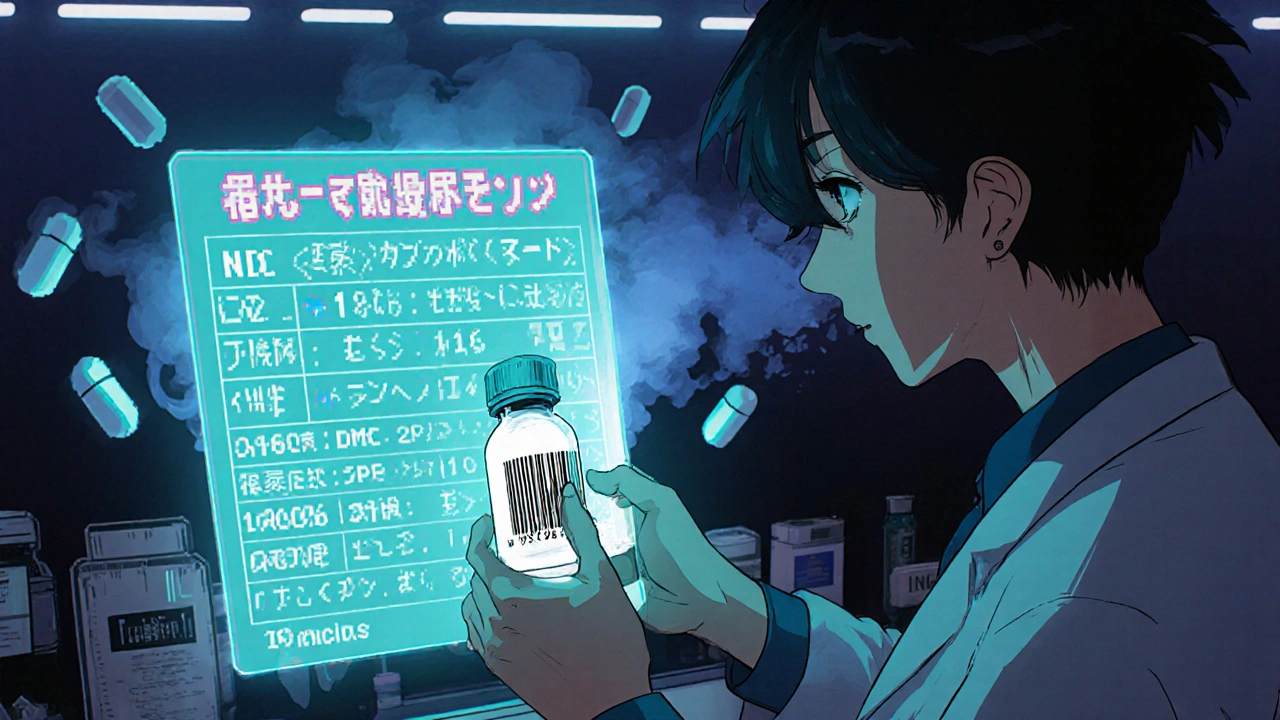
Why legitimate drug sourcing isn’t optional-it’s life or death
Every pill, injection, or capsule that enters a pharmacy should come with a guarantee: it’s real, safe, and made for the person who needs it. But in 2025, that’s not always true. Up to 1% of the world’s medicines are fake, stolen, or contaminated. That’s not a rumor. It’s a WHO estimate backed by $200 billion in annual global losses. And when a pharmacy buys from the wrong supplier, it’s not just a compliance issue-it’s a patient risk.
The rules for buying drugs legally aren’t suggestions. They’re federal law. In the U.S., the Drug Supply Chain Security Act (DSCSA), passed in 2013 and fully enforced by November 2023, forces every player in the supply chain-manufacturers, distributors, pharmacies-to track every drug package from factory to patient. No paper logs. No handshakes. Just electronic, interoperable data that proves where each product came from and who handled it.
What exactly does DSCSA require?
DSCSA isn’t about fancy tech. It’s about three simple things: transaction information, transaction history, and transaction statements. Every time a drug changes hands, the seller must give the buyer a digital document showing:
- The product’s National Drug Code (NDC)
- The lot number
- The expiration date
- The quantity
- Who sold it and who bought it
- The date of the transaction
If you can’t produce that data when asked by the FDA, your shipment gets quarantined. In 2023, one hospital in Ohio had to lock down $87,000 worth of medication because their distributor’s system failed to send the full traceability record. That’s not an outlier. It’s common.
And it’s not just federal. Forty-nine states require wholesalers to be Verified-Accredited Wholesale Distributors (VAWD) through the National Association of Boards of Pharmacy. Mississippi is the only holdout. If your supplier isn’t VAWD-certified, you’re breaking state law-even if they’re FDA-registered.
How do you verify a supplier before you buy?
Don’t just take their word for it. The American Society of Health-System Pharmacists (ASHP) says you need to check seven things before you sign a contract:
- Current FDA registration-Go to the FDA’s website and search their facility list. If it’s not there, walk away.
- State pharmacy licenses-Each state has its own database. Check them all if you’re buying across state lines.
- cGMP compliance-Good Manufacturing Practices aren’t optional. Ask for their latest FDA inspection report. If they’ve had a 483 notice in the last two years, be wary.
- History of recalls or adverse events-Search the FDA’s recall database. If a supplier had three recalls in 18 months, they’re a liability.
- Security against diversion-Do they have locked warehouses? Do they track who picks up shipments? Counterfeiters often steal real drugs from compromised warehouses.
- Financial stability-A supplier going bankrupt might cut corners on quality control to stay afloat.
- DSCSA readiness-Ask for a sample transaction statement. If they can’t generate one on demand, they’re not ready.
Health systems that use all seven criteria cut medication errors by 63%, according to the Pharmaceutical Benefits Management Institute. Those using only two or three? Their error rates stayed the same-or got worse.
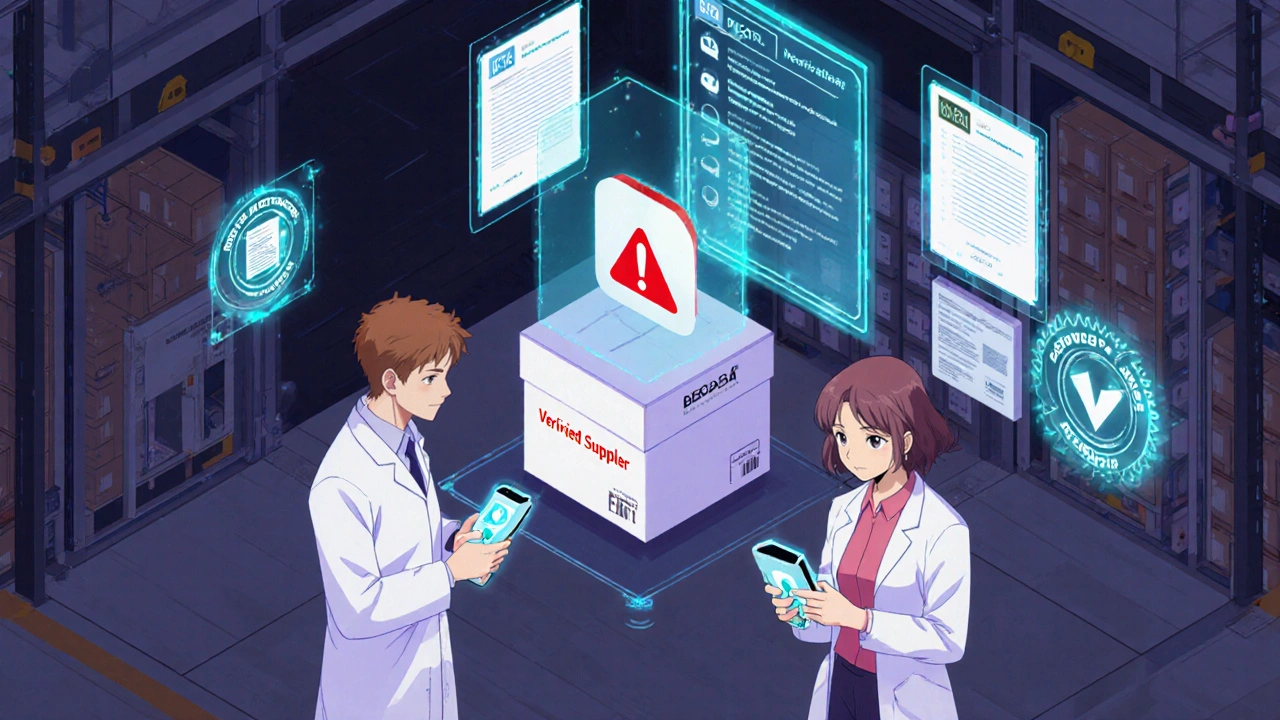
White bagging, brown bagging, and why they’re dangerous
Some pharmacies try to save money by using "brown bagging"-where patients buy drugs at retail pharmacies and bring them to clinics-or "white bagging," where specialty pharmacies ship directly to hospitals. Both bypass traditional supply chains.
ASHP found that 42% of health systems using these methods had at least one medication error tied to improper handling. Why? Temperature control. Wrong labeling. Missing lot numbers. No traceability. A vial of insulin that’s been sitting in a car for six hours isn’t just ineffective-it’s dangerous.
And when a patient gets the wrong dose because the label was misread? That’s not a mistake. That’s a preventable harm-and your pharmacy is liable.
The hidden cost of cutting corners
Legitimate sourcing isn’t cheap. Buying directly from authorized distributors adds 5-15% to your costs. But here’s what that extra money buys you:
- Full traceability
- Guaranteed product integrity
- Legal protection
- Insurance coverage for claims
Independent pharmacies spend 10% of their budget just on compliance. Chain pharmacies? Around 6%. Why? Because chains have centralized teams, automated systems, and legal departments. Small pharmacies don’t. That’s why group purchasing organizations (GPOs) are becoming essential. Hospitals using GPOs with dedicated compliance teams reported zero supply chain security incidents in 2022. Those managing it alone? Only 67% had clean records.
What’s changing in 2025 and beyond
The FDA is ramping up enforcement. In 2024, they got $150 million more in funding to track suspicious activity. Last year, they received 2,147 reports of drug diversion-a 28% jump from 2021. Counterfeiters aren’t giving up. They’re getting smarter.
Technology is fighting back. By 2026, 90% of pharmaceutical transactions are expected to use AI to spot anomalies in supply chain data-like a sudden spike in orders from a new supplier, or a lot number that’s been reported stolen. Blockchain systems from companies like TraceLink and rfxcel are already being piloted in major hospitals.
And the rules keep tightening. ASHP’s updated guidelines, due in early 2024, will add new requirements for verifying compounders (503B facilities) and specialty drug suppliers. If you’re not preparing now, you’ll be left behind.
What you need to do today
Here’s your checklist to start getting compliant:
- Review every supplier’s FDA registration and state licenses. Do it now.
- Ask for DSCSA transaction statements from your last three shipments. If they’re incomplete, find a new supplier.
- Install barcode scanners at your receiving dock. Scan every package. Match it to your purchase order.
- Store all transaction records for at least six years. Paper or digital-it doesn’t matter as long as it’s searchable.
- Train your staff. At least 120 hours of training on DSCSA, cGMP, and traceability is recommended.
- Join a GPO if you’re a small pharmacy. The compliance support alone is worth the fee.
There’s no shortcut. No loophole. No "just this once." The system is built to catch you. And when it does, the penalty isn’t a fine-it’s a lawsuit, a loss of license, or worse, a patient’s life.
Frequently Asked Questions
What happens if a pharmacy buys from an unlicensed supplier?
The FDA can seize the drugs, issue a warning letter, or shut down the pharmacy. State boards can revoke the pharmacist’s license. If a patient is harmed, civil lawsuits and criminal charges are possible. In 2022, the FDA fined one pharmacy $2.4 million for distributing drugs from an unregistered foreign supplier.
Can I buy drugs from Canada or other countries?
Under U.S. law, importing prescription drugs from other countries is illegal unless it’s done through an FDA-approved program-like the 340B Drug Pricing Program for eligible clinics. Even then, the drugs must meet U.S. standards. Most Canadian suppliers aren’t registered with the FDA, so buying from them violates DSCSA and FDA import rules.
Do I need to verify every single lot number?
Yes. ASHP recommends scanning and verifying every package. Even one fake vial in a shipment of 1,000 can cause a recall. In 2023, a single counterfeit insulin vial led to a nationwide recall of 47,000 units because traceability data showed it entered the chain through a compromised distributor.
What’s the difference between 503A and 503B compounders?
503A pharmacies compound drugs for individual patients under a valid prescription and follow state rules. 503B outsourcing facilities compound in bulk, sell to hospitals, and must follow FDA cGMP standards. Buying from a 503B? They must be registered with the FDA and listed on their website. If they’re not, it’s illegal.
How do I know if a supplier is telling the truth about their compliance?
Don’t just ask-verify. Check the FDA’s registration database, the VAWD directory, and state pharmacy board sites. Request inspection reports. Call their compliance officer directly. If they hesitate or can’t provide documents, walk away. Real suppliers have nothing to hide.
Is blockchain really necessary for pharmacies?
Not yet-but it’s coming fast. By 2025, most hospitals will use blockchain-based traceability. For now, DSCSA-compliant SaaS platforms like TraceLink or rfxcel are sufficient. They’re cheaper, easier to implement, and FDA-recognized. Blockchain is the future, but you don’t need it today if you’re fully compliant with current standards.
What’s next for pharmacy sourcing?
If you’re a small pharmacy, your biggest challenge isn’t technology-it’s time and resources. But you’re not alone. Joining a GPO, partnering with a compliance consultant, or even sharing a part-time compliance officer with another local pharmacy can make a difference. The goal isn’t perfection. It’s protection. Protection for your patients, your license, and your business.
The next time a supplier says, "It’s fine, we’ve always done it this way," ask them: "What’s your DSCSA transaction statement for last month?" If they can’t answer, you already know the answer.


13 Comments
I can't believe how many pharmacies still cut corners. I worked in one that got audited last year-turned out their supplier was dodgy. We lost three weeks of inventory and had to retrain everyone. It's not just about rules-it's about keeping people alive. Please, if you're reading this, just verify the damn paperwork.
It's not hard. FDA database. VAWD. One call. Do it.
Oh wow. Another 12-page manifesto on how to not die from a pill. Next up: "How to breathe air that isn't laced with corporate poison."
Meanwhile, my local pharmacy still sells expired insulin in a paper bag with a sticky note that says "for John, 10 units." But hey, at least they're "DSCSA-compliant" now. 😂
Okay but have you SEEN the blockchain pilots at Mass General? 🤯 It’s like a digital fingerprint for every pill. Like, imagine if your Tylenol had a LinkedIn profile. "Verified by FDA. No 483s. Certified cGMP. 100% trust score."
And the AI flags anomalies before they happen-like a drug suddenly popping up from a distributor in Moldova with zero history. 🤖💊
It’s not sci-fi. It’s Tuesday.
Verify suppliers. Scan every package. Keep records. Train staff. Join GPO. Do it now.
This isn't just about compliance-it's about dignity. Every pill is someone's hope. A mother's insulin. A child's antibiotic. A grandfather's heart medicine.
When we cut corners, we're not just breaking rules-we're breaking trust. And trust, once broken, takes generations to rebuild.
In Nigeria, we see fake drugs kill daily. Here, we have the tools to stop it. Let's not waste them.
I get the whole DSCSA thing. But let’s be real-some of us are running a one-person shop with a laptop and a barcode scanner we borrowed from our cousin’s auto shop.
It’s not that we don’t care. It’s that we’re drowning. GPOs are a lifeline. I joined one last year. They handled the paperwork. I got to sleep. My patients didn’t get fake meds. Win-win.
Wait, so if I buy from a Canadian pharmacy, I’m a criminal? But my friend gets her insulin from there for $20. Here it’s $300. So you’re telling me I have to pay more so the FDA can feel good? What if I just... don’t report it?
This is all a distraction. The real problem? The FDA and Big Pharma are colluding to keep prices high. DSCSA? It’s just a way to force small pharmacies out so the big chains can monopolize the market. The "counterfeit drugs" are mostly manufactured by the same companies who profit from the fear.
They want you scared. They want you dependent. They want you paying $500 for insulin while they patent the same molecule every 3 years.
And now they’re pushing blockchain like it’s holy water. It’s all smoke and mirrors.
dscsa? who cares. i buy from whoever has the best price. if the pill works, who gives a damn if it came from china or mars. i've been using the same supplier for 10 years and no one's died. yet. lol
You think this is about safety? No. It’s about control. The FDA doesn’t care if you save lives. They care if you follow their paperwork. They’ve been pushing this since 2013 to centralize power. They don’t want you to buy from small manufacturers-they want you dependent on the Big 3 distributors who pay them in lobbying cash.
And blockchain? That’s not traceability-it’s surveillance. Every pill you handle gets logged. Who’s watching? Who owns the data? You think your pharmacy’s "compliance" is really protecting patients-or just feeding a corporate data farm?
I’ve seen the internal memos. They call it "supply chain optimization." Translation: eliminate independent players. You’re being played. Wake up.
The DSCSA requirements are clear, but implementation is messy. Most small pharmacies don’t have the IT infrastructure. The FDA’s guidance documents are vague on interoperability standards. And the cost of upgrading systems? It’s not 5-15%-it’s 30-50% for a mom-and-pop shop.
So yes, verify suppliers. But also demand that regulators simplify the tech specs. We’re not IT departments. We’re pharmacists trying to keep people alive.
As a pharmacist with 22 years of experience, I can confirm: the seven-verification checklist works. I implemented it in 2019. We had zero compliance incidents since. We scanned every package. We called every supplier’s compliance officer. We kept digital logs. We trained staff monthly.
It takes time. It takes discipline. But it is not optional. One counterfeit vial can kill. And when it does, the blame falls on the pharmacy. Not the supplier. Not the distributor. You.
Do the work. It matters.
One wonders whether the obsession with traceability is less about patient safety and more about the ritual of bureaucratic certainty. In an age of systemic uncertainty, we cling to paper trails and digital signatures as if they were talismans against chaos.
But perhaps the real question is not whether the system works-but whether we have lost the capacity to trust anything without a certificate.