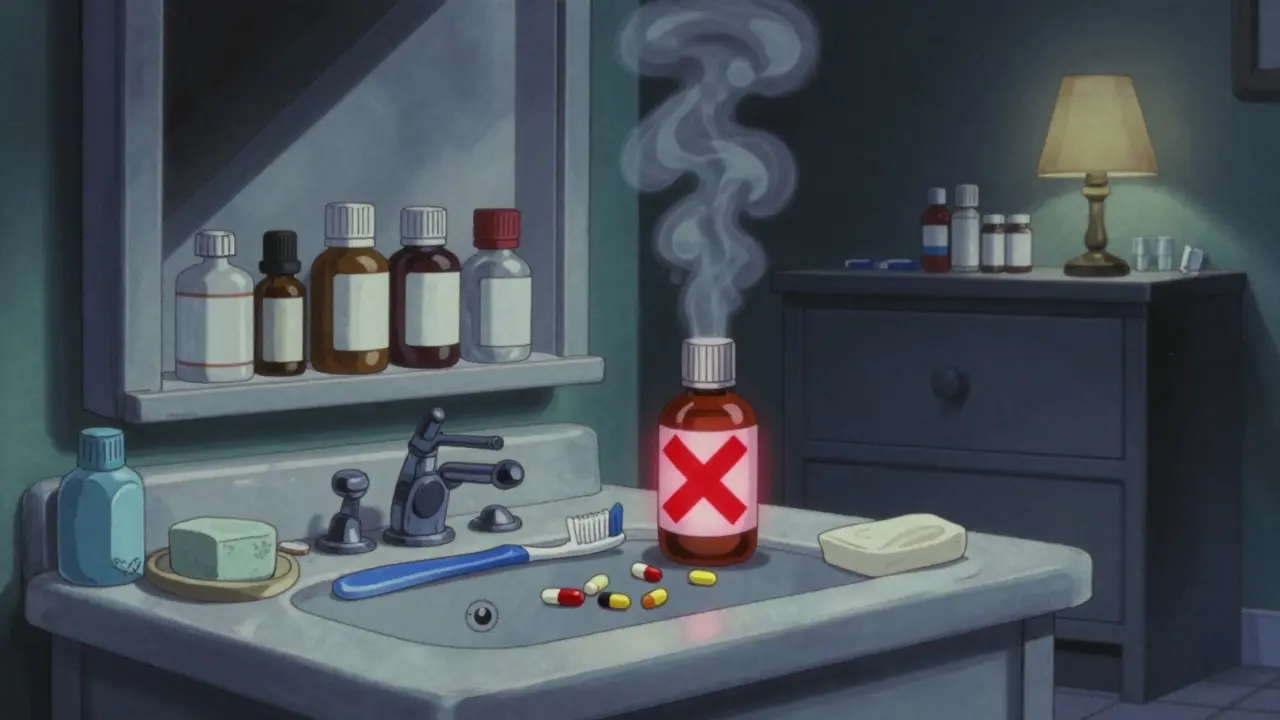
Every year, clinics and households throw away billions of dollars worth of medications that are still good to use. In the U.S., medication waste costs the healthcare system about $20 billion annually. That’s not just money lost-it’s pills patients need, refrigerated biologics spoiled by faulty fridges, and chemicals ending up in landfills or waterways. The good news? You don’t need fancy tech or a big budget to stop this. With simple, smart habits, you can keep medications fresh, usable, and out of the trash.
Store Medications Correctly from Day One
The first mistake most people make? Storing pills where it’s hot, humid, or sunny. Your bathroom cabinet isn’t a pharmacy. Heat and moisture break down active ingredients faster than expiration dates suggest. The same goes for leaving insulin or epinephrine in a hot car or near a radiator.Follow these two rules:
- Refrigerated meds (like insulin, some antibiotics, or biologics) must stay between 36°F and 46°F (2°C-8°C). Use a dedicated fridge if possible-not the one with leftovers.
- Room-temperature meds (most pills, creams, inhalers) should be kept between 68°F and 77°F (20°C-25°C). A cool, dry drawer in your bedroom works better than the kitchen or bathroom.
Check the label. If it says "store at room temperature," don’t assume that means anywhere in your house. Avoid windowsills, near ovens, or above the dishwasher. Temperature excursions are the #1 cause of preventable waste in small clinics-and homes too.
Use FIFO: First In, First Out
Imagine your medicine cabinet is a grocery shelf. You wouldn’t put the new carton of milk in front of the old one, right? Yet that’s exactly what most people do with pills.Use FIFO-First In, First Out. When you get a new prescription, move the older bottle to the front. When you reach for a pill, grab the one that’s been sitting the longest. This simple habit alone can cut expiration waste by up to 30% in households and clinics.
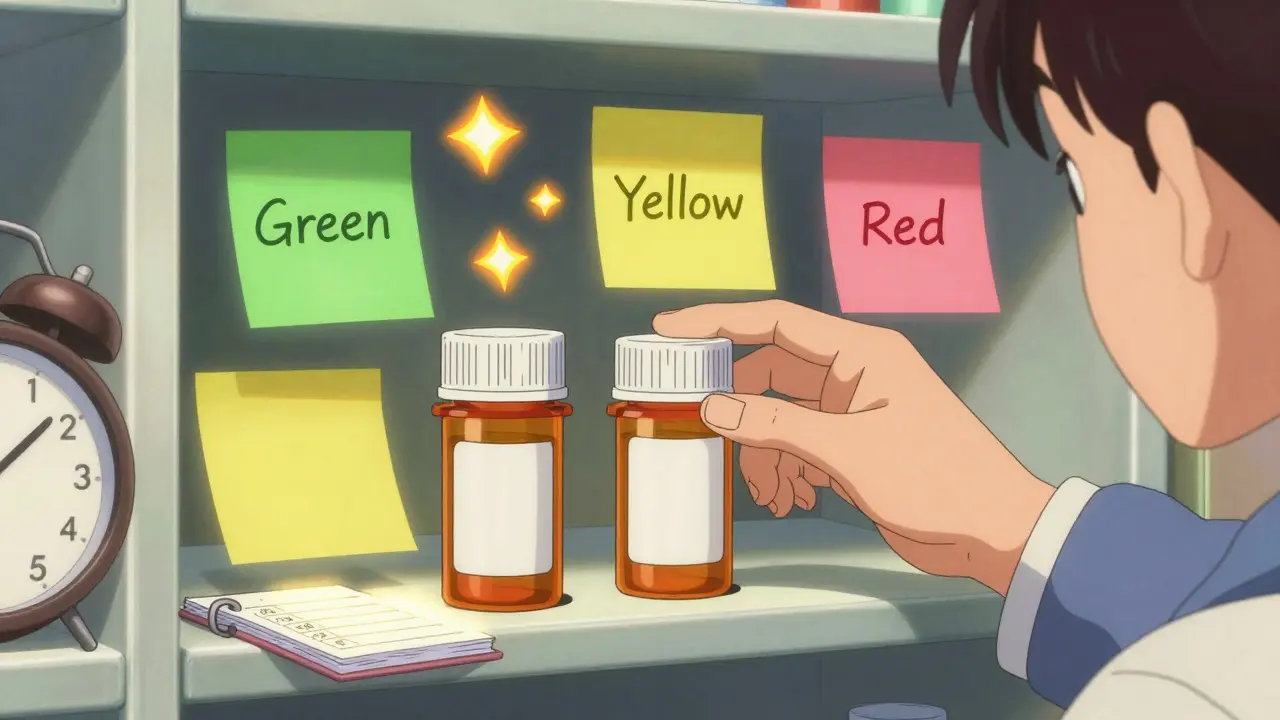
For pharmacies and clinics, this means labeling bottles with the date received and arranging shelves so the oldest stock is always at eye level. Daily checks take less than five minutes. Many clinics use color-coded stickers: green for more than 90 days out, yellow for 30-90 days, red for under 30 days. Staff scan red labels every Friday morning and flag them for use or return.
Ask for Smaller Quantities
Doctors often prescribe 30 or 90-day supplies by default. But what if you only need 14 days? Or 21? Many chronic meds-like blood pressure pills, thyroid hormones, or antidepressants-are taken for years. Why give you a year’s supply if you’re not sure you’ll stick with it?Ask your pharmacist or provider: "Can I get a smaller initial fill?" Studies show this reduces waste by up to 37% for long-term medications. You’ll still get refills as needed. No more opening a bottle of 100 pills, forgetting about them, and tossing them two years later because they expired.
Split-fill prescriptions aren’t just for seniors. They work for anyone starting a new treatment. It’s safer, cheaper, and smarter.
Track Expirations Like a Pro
You don’t need an app to do this. But you do need a system.- Keep a small notebook or use a free notes app. Write down each medication, its expiration date, and when you opened it.
- Set a monthly reminder on your phone: "Check meds."
- When you open a bottle, write the open date on the label. Most pills stay stable for 6-12 months after opening, even if the expiration date is years away.
For families with multiple prescriptions, designate one person to manage the list. It takes 10 minutes a month. That’s less time than scrolling through social media-and it saves hundreds of dollars.
Know When Expiration Dates Are Just a Suggestion
The FDA says expiration dates are the last day the manufacturer guarantees full potency. But that doesn’t mean the drug turns toxic or useless the next day. In fact, the FDA’s own Shelf Life Extension Program found that 88% of stockpiled drugs remained effective 15 years past their expiration date.That doesn’t mean you should take every old pill you find. But for stable, non-critical meds-like acetaminophen, ibuprofen, or antihistamines-there’s often a long safety buffer. If the pills look dry, intact, and smell normal, they’re likely still good.
Never take expired: insulin, nitroglycerin, liquid antibiotics, or eye drops. These lose potency fast and can be dangerous. For everything else, use judgment. If in doubt, ask your pharmacist. They can check stability data.
Use Take-Back Programs, Not the Toilet
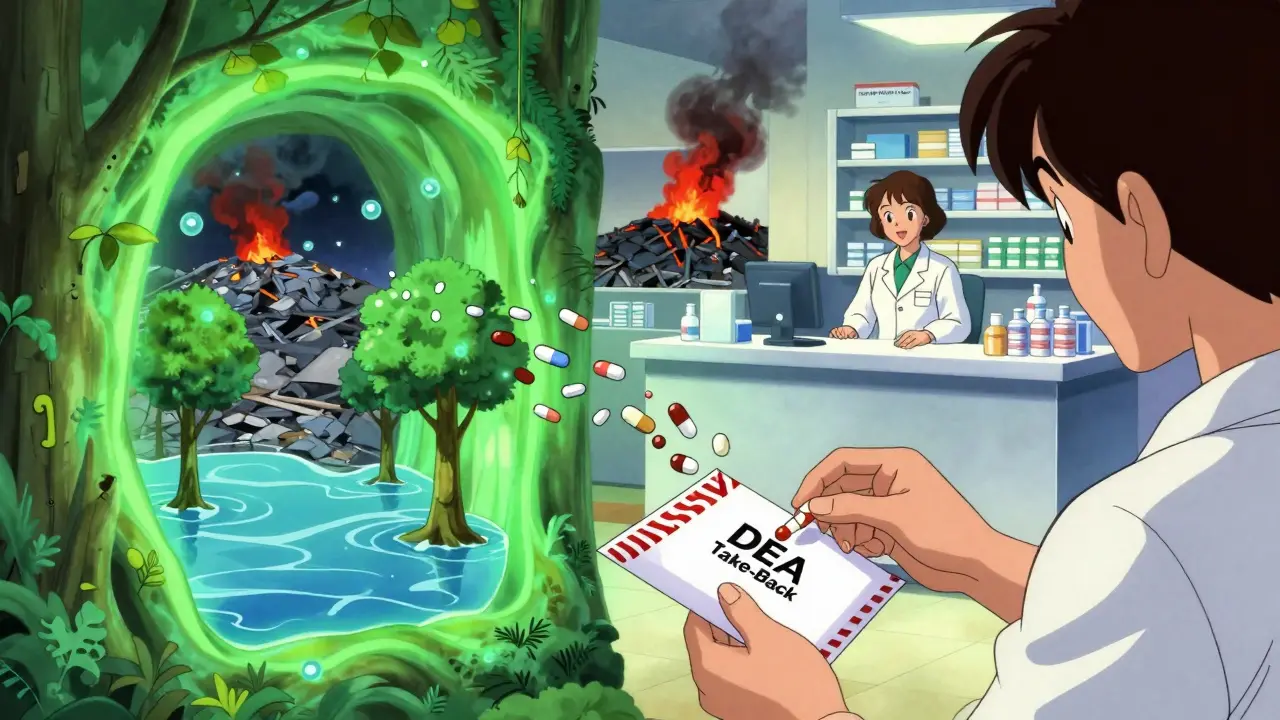
Never flush pills down the toilet or toss them in the trash. The EPA says 43% of facilities still dump hazardous meds this way, contaminating water supplies. Instead, use a take-back program.As of January 2023, there are over 11,000 registered collection sites across the U.S.-at pharmacies, police stations, and hospitals. Most are free. You can find one near you by visiting the DEA’s website or asking your local pharmacy.
Some pharmacies even offer mail-back envelopes. You drop in unused pills, seal the envelope, and mail it. No stamp needed. It’s simple, safe, and legal.
Technology Helps-But Isn’t Required
Big clinics use barcode scanners, cloud systems like Epic or Omnicell, and AI alerts to track expiration dates. These tools reduce waste by 25-30%. But they cost $8,000-$15,000 a year.For small clinics or homes, low-tech works better. A printed checklist, a color-coded label system, and weekly 10-minute audits cost nothing. Nurse Practitioner Elena Rodriguez cut her clinic’s waste by 29% using just sticky notes and staff training.
For home users, a simple calendar reminder and a dedicated drawer are enough. You don’t need an app. You need consistency.
Train Everyone Who Handles Medications
In clinics, staff who don’t understand proper storage or inventory rotation cause most waste. The WHO says training is the #1 factor in reducing waste. Even a 30-minute session on FIFO, temperature control, and disposal cuts waste by 28%.At home, teach kids and caregivers how to read labels and check dates. Make it part of your routine-like checking smoke detectors. If someone else picks up your prescription, make sure they know where to store it.
What to Do With Unused Meds
You’ve got pills you won’t use. Maybe you switched meds. Maybe you recovered early. Here’s what to do:- Don’t give them to friends or family. Dosing is personal. What’s safe for you might harm someone else.
- Don’t crush or flush. That’s illegal and harmful.
- Check for a take-back program. Use the DEA locator or call your pharmacy.
- If no take-back is available, mix pills with coffee grounds or cat litter in a sealed bag. Throw in the trash. This makes them unappealing to kids or pets.
And if you’re unsure? Call your pharmacist. They’ll tell you exactly what to do.
Start Small. Save Big.
You don’t have to overhaul your whole system tomorrow. Pick one thing:- Move your meds out of the bathroom today.
- Ask for a 14-day refill next time.
- Set a monthly phone reminder to check expiration dates.
- Find your nearest take-back location now.
Each step adds up. A family of four can save $300-$600 a year just by managing prescriptions better. Clinics save thousands. The environment wins too-less landfill, less pollution, fewer drugs in our water.
Medications aren’t trash. They’re tools. Treat them like it.
Can I still use medication after its expiration date?
For most solid medications like pills and capsules, yes-often well past the date. The expiration date is the manufacturer’s guarantee of full potency, not a safety cutoff. The FDA found many drugs remain effective for years beyond expiration. Exceptions include insulin, liquid antibiotics, nitroglycerin, and eye drops, which lose effectiveness quickly and can become unsafe. Always check with your pharmacist if unsure.
What’s the best way to dispose of expired medications?
The safest and most legal way is through a take-back program. Over 11,000 collection sites exist across the U.S., including pharmacies, hospitals, and police stations. Use the DEA’s online locator to find one near you. If no take-back is available, mix pills with coffee grounds or cat litter in a sealed bag and throw them in the trash. Never flush or recycle them.
Do I need expensive tech to prevent medication waste?
No. While clinics use barcode scanners and AI systems, small homes and offices can prevent waste with zero cost. Use FIFO (first-in, first-out), store meds properly, track dates in a notebook or phone app, and do a monthly check. These habits reduce waste by 20-30% without spending a dime.
Why do pharmacies give me so many pills at once?
It’s often for convenience and insurance billing. A 90-day supply is cheaper to process than three 30-day fills. But you can ask for less. Many insurers allow smaller initial fills, especially for new prescriptions. Requesting a 14- or 21-day supply reduces waste and lets you see if the medication works for you before committing to a larger amount.
How can I tell if a medication has gone bad?
Look for changes: pills that are crumbly, discolored, or smell odd. Liquids that are cloudy, have particles, or smell fermented. Creams that separate or change texture. If you notice any of these, don’t use it. Even if it’s before the expiration date, improper storage can ruin it. When in doubt, return it to your pharmacy for advice.
Is it safe to store medications in the fridge?
Only if the label says so. Insulin, some antibiotics, and biologics require refrigeration between 36°F and 46°F. But storing other pills in the fridge can expose them to moisture, which degrades them. Keep non-refrigerated meds in a cool, dry place like a bedroom drawer. Never store them in the fridge door-it’s too warm and fluctuates too much.
What should I do if I find old meds in a relative’s cabinet?
Don’t use them. Even if they look fine, dosing and conditions may no longer apply. Take them to a local take-back program. If none is nearby, mix them with coffee grounds or cat litter in a sealed bag and throw them in the trash. Clean out cabinets once a year-it’s a simple habit that prevents accidents and waste.
Can I donate unused medications?
In most U.S. states, donating unused medications is not allowed due to safety and legal concerns. Even if the pills are unopened, there’s no way to guarantee proper storage or verify the recipient’s medical needs. Take-back programs are the only legal and safe option. Some states have pilot programs for donation, but they’re rare and tightly regulated.

8 Comments
People still store pills in the bathroom? I don’t even know how to feel about this. It’s not 1995. Your toothpaste and shampoo are releasing steam every morning and you think Tylenol is immune? Get a drawer. Seriously.
In India, we don’t have the luxury of refrigerators for meds. Many of us keep them in cool corners of the house. You think this advice works for someone living in a 10x10 room with no AC? Stop preaching. Start solving.
Good post. Real talk: most people don’t know how to read a medicine label. I’ve seen grandmas keep antibiotics in the sun because "it’s just pills." Simple fixes work. Use FIFO. Write dates on bottles. Set a monthly phone alert. No app needed. Just consistency. I taught my aunt this last year-she saved $200 in wasted insulin alone. Small habits, big impact.
They’re lying about expiration dates. The FDA knows these drugs last decades. Big Pharma wants you to buy more. That’s why they print fake dates. I’ve taken 10-year-old ibuprofen and felt fine. They’re scared you’ll figure out you don’t need to keep paying. Take-back programs? More like corporate garbage disposal. Don’t fall for it.
So let me get this straight. You want me to write dates on bottles, move them around like a grocery shelf, and check my meds like I’m doing a daily yoga routine? Meanwhile, my neighbor just crushes his pills and flushes them because he’s tired of thinking. Who’s really saving the planet here? The guy who follows your 12-step plan… or the guy who doesn’t care and lives anyway?
While the intent of this article is commendable, its underlying assumption-that individual behavioral modification is sufficient to address systemic pharmaceutical waste-is empirically flawed. The structural inefficiencies within insurance reimbursement models and supply chain logistics remain unaddressed. Personal accountability is neither a substitute for institutional reform nor a scalable solution to a $20 billion problem.
I started using the monthly reminder and it’s changed everything 😊 I even made a little chart with colored stickers like the article said-now my whole family checks meds together. We found three expired bottles we didn’t even know we had. So simple. So satisfying. Thank you for this!
It’s irresponsible to suggest people use expired meds. Even if the FDA says some are stable, you’re gambling with health. What if someone gets sick because they trusted a 12-year-old aspirin? This isn’t a DIY experiment. It’s medicine. Treat it like it matters.