
Allergy Treatment Calculator
Which Treatment is Best For You?
Answer these questions to get personalized guidance based on the latest medical research.
Your Results
How to use correctly
Shake bottle before use
Tilt head slightly forward
Aim toward outer nasal wall
Key Findings
Nasal steroids work 3x better for nasal congestion than antihistamines
As-needed use works almost as well as daily use (University of Chicago study)
Oral antihistamines only help 30% of nasal symptom cases
Cost-effective - generic steroids cost $15 vs $30-$40 for oral meds
If you suffer from seasonal allergies, you’ve probably been told to reach for an antihistamine when your nose starts running or your eyes get itchy. But what if the most effective treatment isn’t the one you’re already using? For millions of people with allergic rhinitis, the real answer lies in a nasal spray many avoid because they think it’s a steroid - and therefore dangerous. The truth? Intranasal corticosteroids are not only safer than most people believe, but they also work better - even when used only when symptoms show up.
Why Most People Get Allergy Treatment Wrong
About one in five Americans has seasonal allergies. That’s more than 65 million people dealing with sneezing, congestion, itchy eyes, and postnasal drip every spring, summer, or fall. The go-to fix? Oral antihistamines like loratadine or cetirizine. They’re everywhere - on pharmacy shelves, in ads, even sold as generics for under $5 a month. But here’s the problem: most people don’t take them regularly. They wait until they feel symptoms. And that’s where antihistamines fall short. A 2001 study from the University of Chicago followed patients who used either an intranasal corticosteroid or an oral antihistamine only when they felt allergic symptoms. The corticosteroid group had far fewer symptoms - less congestion, less runny nose, fewer sneezes - over four weeks. Even though both groups used their meds sporadically, the nasal spray worked better. Why? Because antihistamines only block one part of the allergic reaction: histamine. They don’t touch the inflammation that causes swelling and mucus overproduction.How Intranasal Corticosteroids Actually Work
Intranasal corticosteroids - like fluticasone, mometasone, or budesonide - don’t just mask symptoms. They calm down the whole allergic fire inside your nose. They reduce swelling, stop immune cells from flooding the nasal lining, and cut down on the chemicals that make your nose leak and itch. Unlike oral antihistamines, which act quickly but narrowly, corticosteroids work on multiple levels:- They block mast cells from releasing histamine and other inflammatory signals
- They reduce the number of eosinophils - white blood cells that drive chronic nasal inflammation
- They lower levels of eosinophil cationic protein (ECP), a biomarker linked to allergy severity
When Antihistamines Still Have a Place
Don’t throw out your antihistamines just yet. If your main problem is watery, itchy eyes - not a stuffy nose - then an oral antihistamine can help fast. Studies show no significant difference between the two for eye relief. So if your eyes are the worst part of your allergy, an antihistamine makes sense. But here’s the smarter move: use an intranasal corticosteroid for your nose, and add an antihistamine only if you need it. A 2020 study found that adding an intranasal antihistamine - like azelastine - to a corticosteroid spray gave better results than either one alone. That’s because intranasal antihistamines work right where the allergy is happening: inside the nose. Oral antihistamines? They’re slower to act, cause drowsiness in some people, and don’t touch nasal congestion well. They’re okay as a backup, but not a first choice.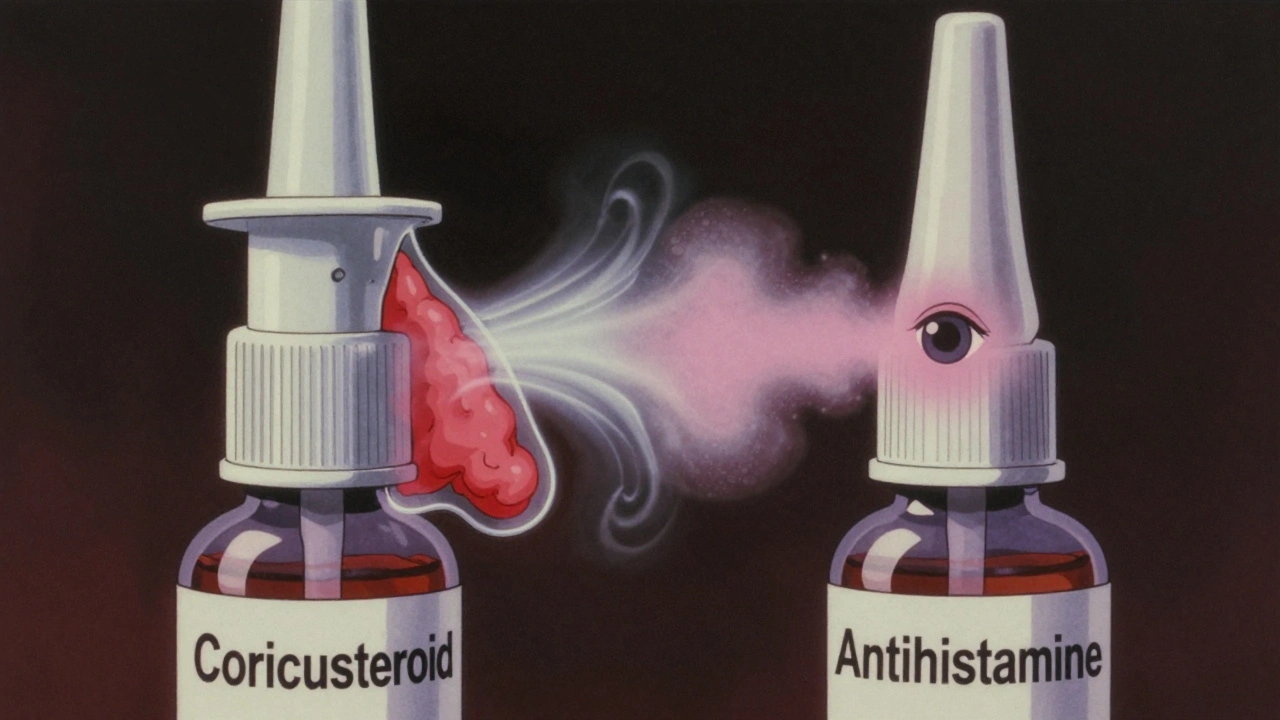
The Timing Trick: Use It Only When You Need It
Doctors used to say you had to use nasal steroids daily, even when you felt fine. That’s why so many people stopped using them - it felt like overkill. But new evidence flips that idea. The University of Chicago study showed that when patients used intranasal corticosteroids only when symptoms started - just like they did with antihistamines - the corticosteroid group still had significantly fewer symptoms. That’s huge. It means you don’t need to spray every day all season long. Here’s a simple rule: start using your nasal spray the moment you feel the first sneeze or sniffle. Keep using it every day until symptoms fade. Then stop. You don’t need to be on it continuously unless your allergies are severe and year-round. This approach works because corticosteroids reduce inflammation fast - often within 12 to 24 hours - and keep working as long as you keep using them. They’re not like antibiotics that need a full course. They respond to your body’s signals.Cost, Safety, and Misconceptions
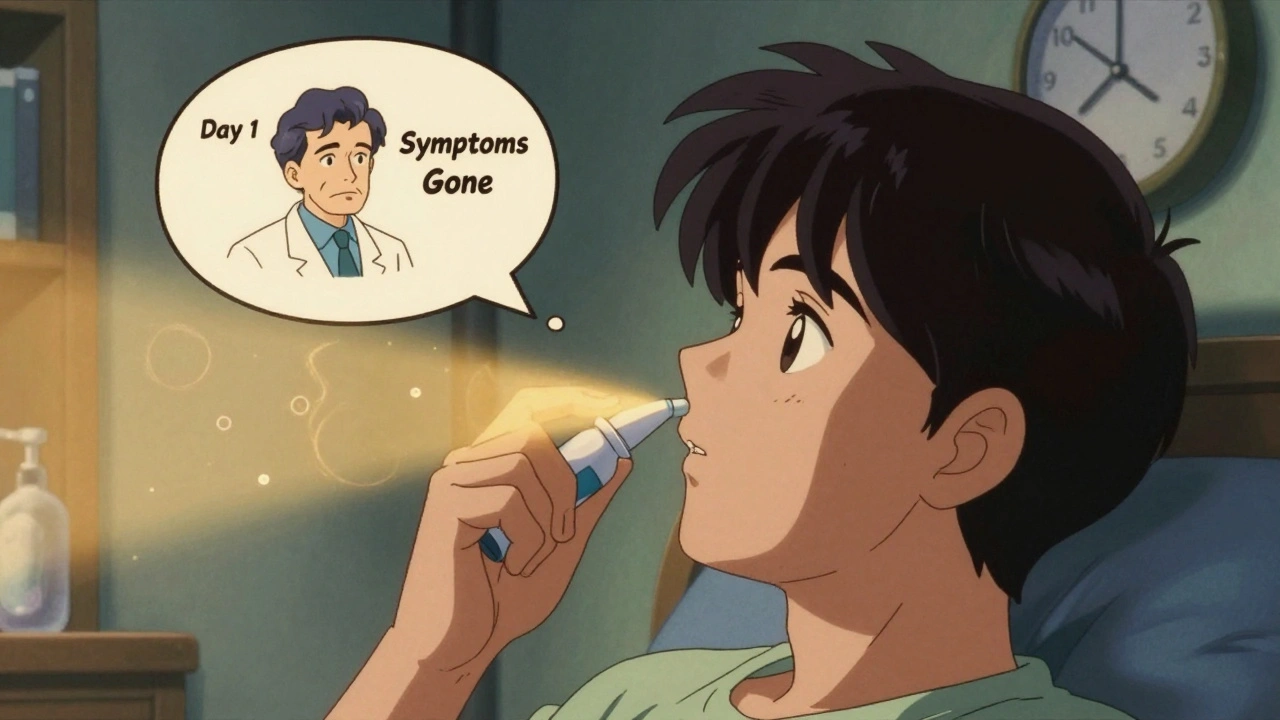
Many people avoid nasal steroids because they think they’re like the steroids athletes use - the kind that build muscle or cause weight gain. They’re not. Intranasal corticosteroids are local. Less than 1% of the dose gets into your bloodstream. Long-term studies show no serious side effects even after five years of use. And cost? A month’s supply of generic fluticasone spray costs about $15. Brand-name oral antihistamines like Claritin or Zyrtec can cost $30-$40 for the same time. Even with insurance, the nasal spray is cheaper and more effective. The biggest barrier? Technique. If you spray the wrong way - aiming toward the septum or swallowing the medication - it won’t work. Here’s how to do it right:- Blow your nose gently before spraying.
- Shake the bottle.
- Tilt your head slightly forward - don’t lean back.
- Insert the nozzle just inside your nostril, aiming toward the outer wall (not straight up or toward the center).
- Breathe in gently through your nose as you press the pump.
- Don’t sniff hard or blow your nose right after.
What Experts Are Saying Now
Back in 2001, Dr. Robert Naclerio called for guidelines to change: stop making antihistamines the first-line treatment. He said the data was clear - nasal steroids were better, cheaper, and worked even when used as-needed. Since then, multiple high-quality reviews have backed him up. A 2017 meta-analysis of 18 studies concluded intranasal corticosteroids were superior to oral antihistamines for improving both nasal symptoms and quality of life. Yet, here’s the irony: antihistamines are still prescribed three times more often than nasal steroids. Why? Habit. Marketing. Misunderstanding. The evidence is no longer in question. The question now is: why are we still waiting to fix this?Bottom Line: What to Do Today
If you have allergic rhinitis, here’s your action plan:- Start with an intranasal corticosteroid spray - generic fluticasone or mometasone is fine.
- Use it only when symptoms appear. Spray once daily in each nostril until you feel better, then stop.
- If your eyes are the worst part, add an oral antihistamine temporarily - but don’t rely on it for nasal symptoms.
- If you’re still struggling after a week, ask your doctor about adding an intranasal antihistamine spray.
- Learn the right technique. It makes all the difference.
Are intranasal corticosteroids safe for long-term use?
Yes. Multiple studies, including five-year follow-ups, show no serious side effects from regular use of intranasal corticosteroids. Unlike oral steroids, they don’t significantly enter the bloodstream. Common side effects like mild nosebleeds or dryness are rare and usually go away with proper technique.
Can I use antihistamines instead of nasal steroids?
Oral antihistamines are less effective for nasal congestion and don’t reduce inflammation. They’re okay for itchy eyes or mild sneezing, but if your nose is blocked or runny, nasal steroids work better - even when used as-needed. Don’t skip the spray unless your symptoms are purely eye-focused.
How soon do nasal steroids start working?
Most people notice improvement within 12 to 24 hours. Full effect usually takes 2-4 days. Unlike oral antihistamines, which work fast but wear off quickly, nasal steroids build up their effect with continued use - even if you’re not using them daily.
Is it better to use intranasal antihistamines or oral ones?
Intranasal antihistamines (like azelastine) work faster and more directly in the nose than oral ones. They’re often used as add-ons to nasal steroids for stubborn symptoms. Oral antihistamines are slower, can cause drowsiness, and don’t help with congestion. For nasal symptoms, intranasal is superior.
Do I need to use nasal steroids every day all season?
No. Studies show that using nasal steroids only when symptoms appear works almost as well as daily use. Start when you feel the first sneeze or sniffle. Keep using it daily until symptoms fade. Then stop. This approach improves adherence and cuts unnecessary use.






11 Comments
I’ve been using fluticasone on and off for two seasons now and it’s been a game changer. No more waking up with a clogged nose or needing to blow my nose 10 times before coffee. I started spraying when I felt the first sneeze and kept going until things cleared. No daily grind, no side effects. Just quiet mornings.
Also, the technique tip about aiming toward the outer wall? Huge. I used to spray straight up and wonder why it didn’t work. Turns out I was just spraying my septum.
antihistamines are for eyes not nose stop pretending they fix congestion
YES THIS!!! 🙌 I used to be the person who reached for Zyrtec every time I sneezed… until I tried the spray. My nose stopped feeling like a leaky faucet and my eyes stopped watering like I was crying over a breakup. I even told my mom and now she uses it too. No more ‘I’ll just take a pill’ nonsense. Nasal spray > pill for nasal stuff.
And honestly? The cost difference is insane. $15 vs $40? That’s a no brainer.
It’s funny how we treat inflammation like it’s optional. We’ll pop pills for pain, but when it comes to the body’s natural response to allergens, we act like it’s something to be ignored or masked. Corticosteroids don’t suppress your immune system-they quiet the noise. It’s like turning down the volume on a screaming alarm instead of putting earplugs in every time it goes off.
And the idea that you need to use them daily? That’s the old dogma. The body knows when it needs help. Let it tell you. Don’t force it.
Let’s be real - Big Pharma doesn’t want you to know this. Why? Because antihistamines are daily, repeat purchases. Nasal sprays? One bottle lasts two months if you’re smart. And they’re generic. No brand loyalty. No ads on TV. No influencers shilling them. This is the medical equivalent of finding out your car runs better on regular gas than premium - and the dealer spent $50 million convincing you otherwise.
Also, the fact that doctors still prescribe antihistamines first? That’s not medicine. That’s inertia. And maybe a little kickback from the pharma reps who hand out free samples like candy.
okay so i tried the spray and i swear i felt a burn and then i thought i was gonna die and now i’m scared to use it again. like what if it’s like the vapes that made people cough up lungs? i just want to sneeze and be done with it. why is this so complicated. i just want to be normal again. also i think the guy who wrote this works for the spray company. just saying.
ps i still use claritin and i’m fine. maybe i’m just built different.
Look, I get it. You don’t want to use a steroid. I didn’t either. I thought it’d make me gain weight or turn me into a rage monster. Turns out, the amount that gets into your blood is less than what’s in a banana. And yeah, it’s not magic. But if you’re still blowing your nose into a tissue every five minutes while your coworker sips coffee like nothing’s wrong? You’re not being tough. You’re being inefficient.
Try it for three days. If you hate it, stop. But don’t tell me antihistamines are the answer when your nose is a swamp.
For anyone new to this - don’t overthink it. Start with the generic fluticasone. Use it when you feel the first sign. Don’t wait until you’re drowning in snot. And if you’re unsure about technique, watch a 30-second YouTube video from a reputable clinic. Seriously. It’s that simple.
This isn’t about being ‘medical’ or ‘scientific.’ It’s about living your life without your nose being the boss. You deserve that.
i used this for the first time last week and my nose stopped feeling like a broken faucet. i didnt even realize how bad it was until it got better. i dont know why i waited so long. also i think i sprayed it wrong at first and it tasted weird but now i know how to do it. thanks for the tips.
ps i still take zyrtec for my eyes but only when i really need it
One of the most under-discussed public health gaps in allergy care. The fact that nasal steroids are underused despite overwhelming evidence is a failure of communication, not science. Primary care docs still default to antihistamines because they’re easier to prescribe and patients expect them. But when you take the time to explain the mechanism - inflammation vs histamine - people get it.
Also, the as-needed dosing data is revolutionary. It removes the biggest psychological barrier: feeling like you’re on medication all season. This isn’t just clinical - it’s behavioral economics in action.
While the data presented is statistically significant, it is imperative to acknowledge potential publication bias in the cited studies. The 1999 meta-analysis referenced includes a disproportionate number of industry-funded trials, and the 2020 combination therapy study lacked long-term safety endpoints. Furthermore, the assertion that intranasal corticosteroids are "safer" than oral antihistamines must be contextualized against individual patient comorbidities, including glaucoma, osteoporosis, and immunocompromised status. The recommendation to use as-needed regimens, while pragmatic, contradicts established guidelines from the Allergic Rhinitis and its Impact on Asthma (ARIA) consortium, which continue to advocate for continuous therapy in moderate-to-severe cases. Without individualized risk stratification, this advice risks oversimplification of a complex immunologic condition.