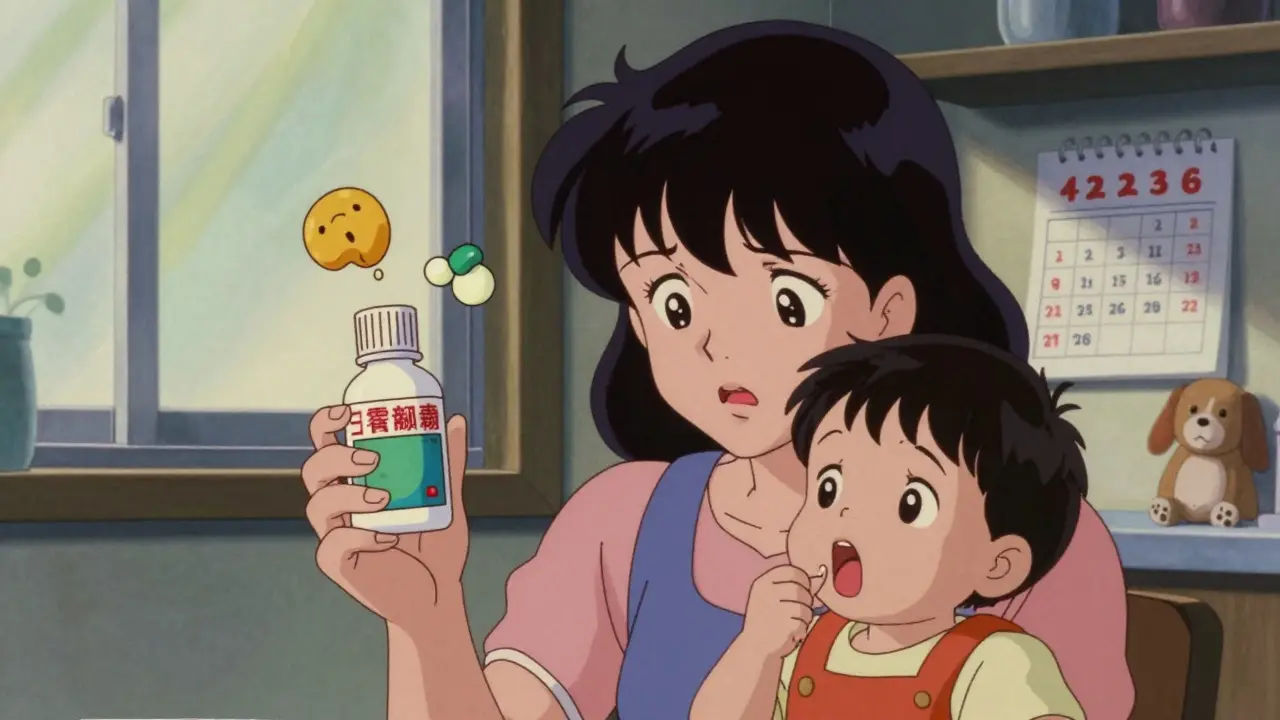
When a pharmacist hands you a pill that looks different from what you’ve been taking for years, it’s natural to feel uneasy. For seniors who’ve been on the same blood pressure pill for a decade, or parents giving their toddler liquid antibiotics every day, that change can spark fear, confusion, or even refusal to take the medicine. The truth? The generic version is chemically identical to the brand-name drug. But generic substitution isn’t just about chemistry-it’s about trust, perception, and how you explain it.
Why Generic Substitution Feels Risky to Families and Seniors
Many people assume that if a drug looks different, it must be different. That’s not just a myth-it’s a real barrier to adherence. In one 2021 study, 58% of older adults reported feeling side effects after switching to a generic, even when no actual change in the drug’s effect occurred. This is called the nocebo effect: expecting harm leads to experiencing harm. For parents, the worry is often about taste and form. Brand-name amoxicillin for kids often comes in a sweet, fruity suspension. The generic? Sometimes it’s bitter, chalky, or only available as a tablet. One parent on Reddit shared that their 2-year-old refused the generic version entirely, forcing them to pay more for the brand. That’s not just inconvenience-it’s a risk to treatment. Seniors face different challenges. On average, they take 4.8 prescription medications. When multiple drugs switch generics at different times-different colors, shapes, sizes-it’s easy to mix them up. One 78-year-old told a pharmacist: “My blood pressure pill changed three times in six months. I stopped taking it because I thought it wasn’t the same.” He didn’t know it was still the same drug. He just knew it didn’t look right.What the Law Actually Says About Generic Drugs
The FDA requires generics to meet strict standards. They must have the same active ingredient, strength, dosage form, and route of administration as the brand. They must also be bioequivalent-meaning they absorb into the body at the same rate and amount, within a narrow range of 80% to 125% of the brand. That sounds precise, right? But here’s the catch: that 20% variation is allowed. For most drugs, it doesn’t matter. For drugs with a narrow therapeutic index-like seizure medications, blood thinners, or thyroid hormones-it can. A 2017 Danish study found some epilepsy patients had seizure relapses after switching generics, even though the switch met FDA rules. And here’s another hidden issue: pediatric and geriatric labeling. Only 38% of generic drugs have specific labeling for children. Just 22% have dosing guidance for seniors. That means most generics were tested on healthy adults-not toddlers or 80-year-olds with kidney changes.How to Talk to Parents About Generic Medications for Kids
Don’t just say, “This is the same medicine.” That’s not enough. Parents have heard that before-and they’ve seen their child refuse the generic because it tastes awful. Start with empathy: “I know you’ve been giving your child the blue liquid for months. It’s hard to switch.” Then explain: “The active ingredient is the same. The only difference is the flavoring and how it’s made. Sometimes the generic doesn’t have the same sweet taste, which can make it harder for kids to take.” Offer solutions: “We can ask the pharmacy for a different generic brand that’s better flavored. Or we can get a flavor additive to mix in.” Use the teach-back method: “Can you tell me how you’ll give this new medicine to your child?” If they say, “I’ll mix it with juice,” but the instructions say not to, you’ve caught a mistake before it happens. Also, warn them about formulation changes. Some generics come as tablets instead of liquids. For a 1-year-old, that’s not just inconvenient-it’s unsafe. Always ask: “Is this formulation appropriate for your child’s age?”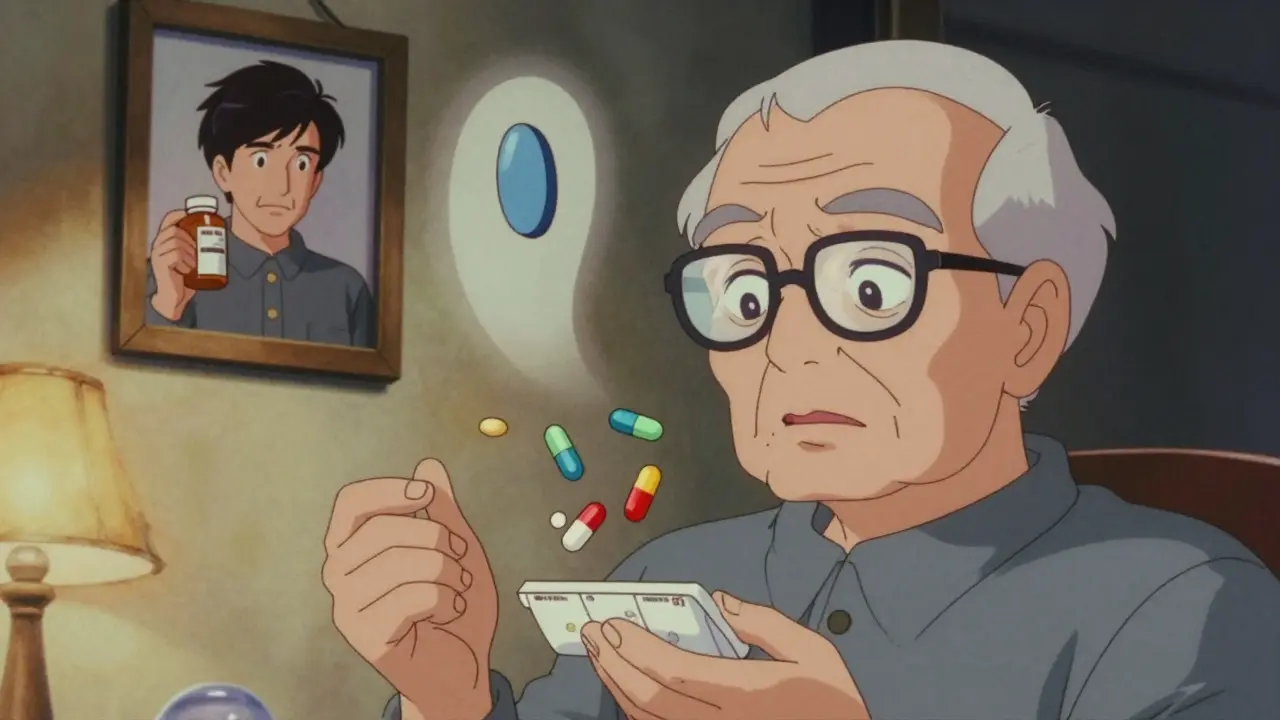
How to Talk to Seniors About Generic Medications
Seniors often take pride in knowing their meds. They’ve been on the same pill for years. A sudden change feels like a betrayal. Start by acknowledging their routine: “You’ve been taking this blue oval pill every morning for five years. I know how important that consistency is.” Then explain the change clearly: “This new pill has the same active ingredient. It’s just made by a different company. The color and shape changed because the manufacturer changed. But the medicine inside is the same.” Avoid jargon. Don’t say “bioequivalent.” Say: “It works the same way in your body.” Use visuals. Show them a picture of the old and new pill side by side. Many pharmacies now offer free pill identifier cards with photos and names. Give one to the patient. Involve caregivers. If the senior lives with a spouse or adult child, include them in the conversation. Seniors with memory issues may forget the explanation. A caregiver can help track changes and spot confusion. Check for confusion: “Which pills do you take in the morning? Can you show me?” If they hesitate or point to the wrong one, you’ve found a risk.What You Should Never Say
There are phrases that backfire, even if they’re technically true:- “It’s just as good.” → Sounds dismissive. Implies the brand was better.
- “It’s cheaper.” → Makes patients think quality dropped.
- “The law says we have to switch.” → Makes them feel powerless.
- “It’s the same thing.” → Too vague. Doesn’t address their fear.
- “This is the same medicine, just made differently.”
- “We’re switching to save money, but your health comes first. If you notice anything unusual, let us know right away.”
- “You have the right to ask for the brand if you’re uncomfortable. We can help you find out if it’s covered.”
When to Avoid Generic Substitution Altogether
Not every patient should get a generic. Some situations require caution:- Narrow therapeutic index drugs: Like warfarin, levothyroxine, or phenytoin. Even small absorption changes can cause harm. Many states now require explicit consent before switching these.
- Pediatric formulations: If the brand is a flavored suspension and the generic is only a tablet, don’t switch unless the child can swallow pills.
- Patients with history of adverse reactions: If they had a problem after a previous switch, honor their experience.
- Seniors with cognitive decline: If they struggle to remember what pills they take, consistency matters more than cost.
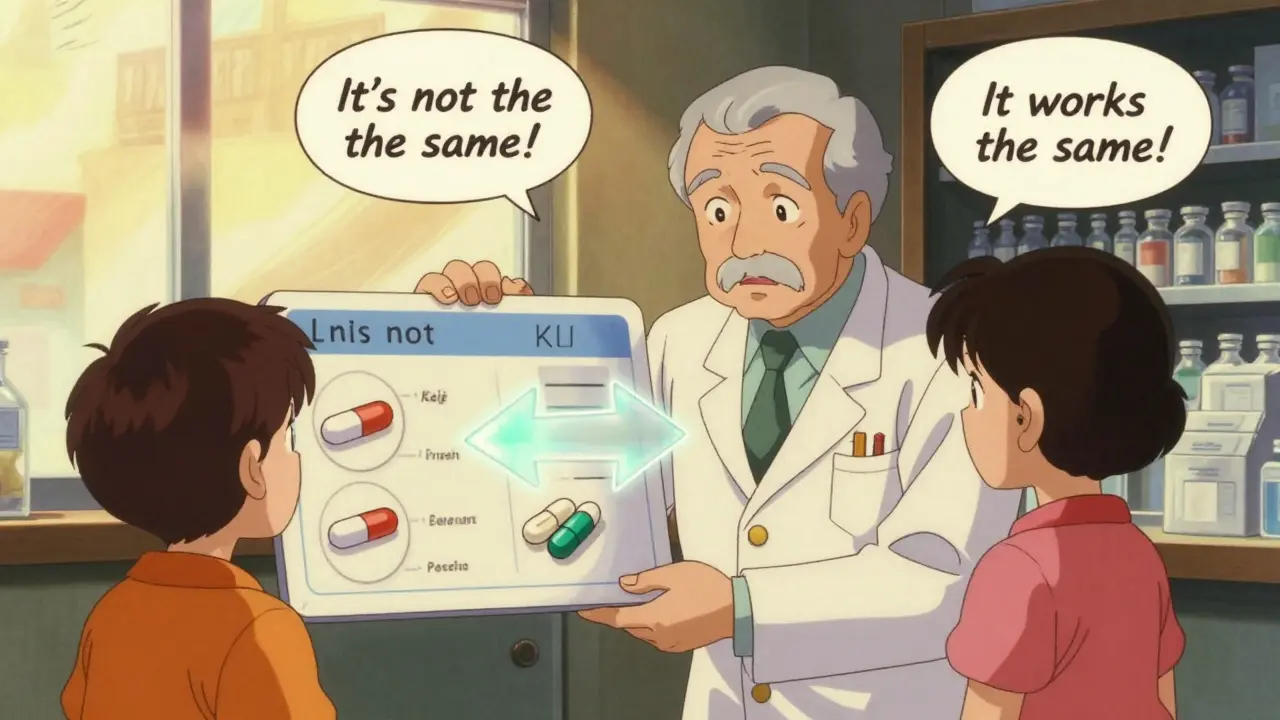
What Works: Real Strategies That Improve Adherence
The most effective communication isn’t just about information-it’s about building trust.- Teach-back method: Ask the patient to explain the switch in their own words. Studies show this reduces errors by 29%.
- Proactive counseling: Talk to patients before the pill changes. Don’t wait for them to notice and panic.
- Consistent packaging: If possible, ask the pharmacy to stick with the same generic brand. Avoid switching between multiple generics.
- Digital tools: Apps that scan pill images help seniors identify changes. One study found 67% of seniors felt more confident using them.
- Written notes: Give seniors a simple card with the drug name, purpose, and what the pill looks like now. Use large font.
The Bigger Picture: Why This Matters
Generic drugs save the U.S. healthcare system $373 billion a year. That’s huge. But if patients stop taking their meds because they’re confused or scared, those savings vanish. Emergency visits, hospitalizations, and uncontrolled conditions cost more than any pill. The goal isn’t just to switch drugs. It’s to keep people healthy. That means listening. That means adapting. That means treating the person, not just the prescription. For parents, it’s about making sure their child gets the medicine they need without a fight. For seniors, it’s about preserving dignity, routine, and safety. The science says generics work. But the human side? That’s where real care begins.Are generic drugs really as effective as brand-name drugs?
Yes, for most people, generic drugs work just as well. The FDA requires them to have the same active ingredient, strength, and dosage form as the brand. They must also be absorbed into the body at the same rate and amount, within a strict range of 80% to 125%. But for certain drugs-like seizure medications, blood thinners, or thyroid pills-even small differences can matter. That’s why it’s important to talk to your doctor or pharmacist before switching.
Why does my child’s generic antibiotic taste so bad?
Brand-name pediatric medications often include special flavorings to make them palatable for kids. Generic versions may not have the same taste additives, especially if they were developed for adults. Some generics come as tablets instead of liquids, which can be hard for toddlers to swallow. If your child refuses the generic, ask your pharmacist for a different brand or a flavoring agent to mix in. You can also ask if the brand version is covered under your insurance.
My senior parent keeps mixing up their pills after switching to generics. What should I do?
Consistency is key. Ask the pharmacy to stick with the same generic manufacturer whenever possible. Request large-print labels and a pill identifier card with photos of each medication. Consider using a pill organizer labeled with the day and time. Involve a family member in checking meds daily. If your parent is confused or forgetful, talk to their doctor-some medications may need to stay as brand-name to avoid dangerous errors.
Can I ask for the brand-name drug instead of the generic?
Yes, you can always ask. Your doctor can write “Dispense as Written” or “Do Not Substitute” on the prescription. Insurance may require you to pay more, but for children, seniors, or people on narrow therapeutic index drugs, the extra cost may be worth it to avoid confusion or adverse effects. Many pharmacies can help you check if the brand is covered under your plan.
Why do generic pills look different every time I refill?
Different generic manufacturers make the same drug, and each one uses different colors, shapes, and markings. That’s normal. But for seniors or parents, this can be confusing or scary. To help, ask your pharmacist for a consistent brand. Keep a list or photo of what each pill looks like. Some pharmacies now offer free pill ID cards with pictures. If the changes happen too often, talk to your doctor-your medication routine matters just as much as the medicine itself.



12 Comments
bro the generic just tastes like chalk and my kid threw up
they dont care if your 2 year old cries
just save a buck
I work in pediatrics and this is 100% spot on. The flavor thing is real-some generics are basically powdered regret. We keep a stash of Orajel and apple sauce on hand to mask the bitterness. Also, never assume a kid can swallow a pill just because they’re 4. Some toddlers still think medicine is a monster.
Teach-back saves lives. Ask them to show you how they’ll give it. You’d be shocked how often they mix it with milk when the label says ‘do not mix.’
I’ve been a pharmacist in Manchester for 18 years and let me tell you-seniors don’t care about bioequivalence. They care if their pill went from blue oval to yellow triangle. One lady cried because her ‘heart pill’ changed shape. I gave her a photo card and now she hugs me every time she comes in. Human stuff matters more than FDA stats.
Let’s be real-this whole generic debate is a corporate shell game. The FDA’s 80-125% bioequivalence window is a joke. That’s a 45% swing in absorption. You think that doesn’t matter for someone on warfarin? Or levothyroxine? The system is rigged to push generics because Big Pharma owns the generics too. It’s the same players, different labels.
And don’t get me started on pediatric labeling. 38%? That’s not oversight-that’s negligence. They test on healthy 25-year-old men and then hand it to 8-month-olds. That’s not science. That’s capitalism with a stethoscope.
I am Indian and I have seen this in my own family-my grandmother stopped her thyroid meds because the pill turned from white to green. She thought it was poison. We had to show her the bottle label, the pharmacy receipt, and the doctor’s note. Then she cried and said, ‘Why do they change my medicine like it’s a new phone?’
And yet, here in India, we have 8 different generics of the same drug, each with a different color, shape, and taste. No consistency. No education. Just profit. This article is not just helpful-it’s a moral imperative.
i had a kid who refused the generic amoxicillin so bad we ended up paying $80 for the brand
she’d gag and spit it out like it was poison
turns out the generic had this weird chemical aftertaste
pharmacist said ‘it’s the same’
i said ‘yeah but my daughter’s not a chemist’
we switched back
she took it like candy
money’s nice but my kid’s not a cost center
so the system says generics are fine but then we get a 78 year old who thinks his blood pressure pill changed because it’s now purple instead of blue
and he stops taking it
and then he ends up in the ER
and we blame him for noncompliance
but we never showed him the pill card
or told him why it changed
or gave him a damn sticker to put on his calendar
we’re not bad people
we’re just lazy
In India, we call this ‘patent expiry chaos.’ The same drug comes in 12 versions, each with a different name, color, and price. Elderly patients get confused. Children refuse. Caregivers panic. We’ve started using WhatsApp groups-families send photos of pills to our clinic. We reply with the name and purpose. Simple. Low-tech. Works. No app needed. Just human connection.
bro the system is rigged 😭
they switch your pill and you don’t even know
then you feel weird
you think it’s the medicine
but it’s just your brain going ‘this don’t look right’
then you stop taking it
and now you got a stroke
and they say ‘you should’ve taken it’
nah bruh
you didn’t tell me it was the same thing
you just gave me a new rock
have you ever heard of the ‘generic drug surveillance program’? no? because it doesn’t exist. the FDA doesn’t track adverse events by generic manufacturer. so if 500 people get seizures after switching to Generic X from Company Y, nobody notices. it’s all lumped under ‘levetiracetam’. that’s not oversight. that’s a cover-up. they don’t want you to know that the same drug from different factories can behave differently. they want you to trust the system. but the system doesn’t care about you.
I’m a veteran and I’ve been on the same blood thinner for 12 years. Last year, they switched me to a generic. Within a week, my INR went wild. I had to go to the ER. Turns out, the generic had a different filler that affected absorption. I fought for months to get my brand back. Insurance said no. I paid out of pocket. Was it worth it? Yes. Because I didn’t want to bleed out because some accountant thought a $0.12 difference mattered.
my mom’s 84 and she takes 9 pills a day. last month she started mixing them up again. i found her holding her blood pressure pill like it was a ghost. she said ‘this one doesn’t feel right’ and she was right. the color changed. i cried. we got her a pill organizer with pictures. now she smiles when she sees her pills. it’s not about chemistry. it’s about love. and remembering.