28 Nov
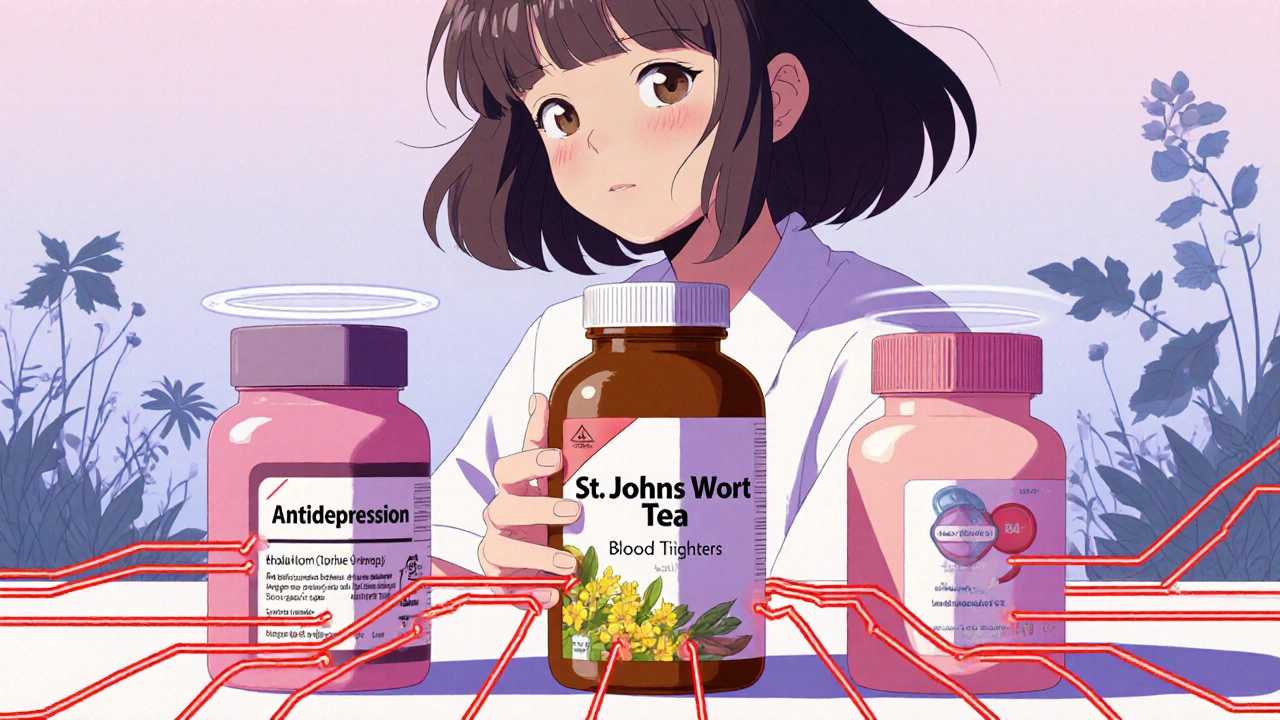
Every year, millions of people in North America take herbal supplements thinking they’re harmless because they’re ‘natural.’ But here’s the truth: herbal supplements aren’t harmless. They’re powerful biological agents that can interfere with your prescription medications in ways that are dangerous, sometimes life-threatening. If you’re on blood thinners, heart meds, antidepressants, or even birth control, what you’re taking in a capsule or tea could be quietly undermining your treatment-or making you sick.
Why Herbal Supplements Aren’t Safe Just Because They’re Natural
People assume that if something comes from a plant, it’s gentle. But plants evolved chemicals to defend themselves-some of those same chemicals interact with human biology in powerful ways. St. John’s wort, for example, isn’t just a calming tea. It’s a potent enzyme inducer that speeds up how your body breaks down drugs. One study showed it dropped cyclosporine levels in transplant patients by 57%. That’s not a minor drop-it’s enough to trigger organ rejection. The FDA doesn’t test herbal supplements for drug interactions before they hit shelves. Under the 1994 Dietary Supplement Health and Education Act (DSHEA), manufacturers don’t need to prove safety or interaction risks. That means you’re essentially part of an uncontrolled experiment. A 2022 FDA review found only 15% of herbal products even mention interaction warnings on their labels.St. John’s Wort: The Most Dangerous Herbal Supplement
If you’re taking one herbal supplement, avoid St. John’s wort unless you’ve talked to your doctor. It’s the most studied-and most dangerous-herb when it comes to drug interactions. It activates two key systems in your liver and gut: CYP3A4 and P-glycoprotein. These systems handle about half of all prescription drugs. Here’s what happens when you mix it with common meds:- Birth control: 10-15 documented cases of pregnancy in women taking St. John’s wort while on oral contraceptives.
- Antiretrovirals: HIV medications like indinavir drop by 40-80%, leading to treatment failure and drug-resistant strains.
- Digoxin: Levels fall by 25%, increasing heart failure risk.
- Antidepressants: Can cause serotonin syndrome-a potentially fatal condition with high fever, seizures, and irregular heartbeat.
Other High-Risk Herbs You Might Be Taking
St. John’s wort isn’t the only problem. Other common supplements carry serious risks:- Ginkgo biloba: Often taken for memory or circulation. But it inhibits enzymes that break down blood thinners like warfarin. A 2009 meta-analysis found it increases bleeding risk by 30% when combined with warfarin. Doctors report multiple cases of unexplained bruising and internal bleeding tied to ginkgo use.
- Danshen (Salvia miltiorrhiza): Used in traditional Chinese medicine for heart health. But its tanshinones inhibit platelet function. A 2012 study showed it increases bleeding risk by 25-30% when taken with aspirin, clopidogrel, or warfarin. The Mayo Clinic warns it can raise the risk of irregular heartbeat by 35% when mixed with digoxin.
- Garlic: Sold as a heart-healthy supplement. But it induces CYP3A4, slashing saquinavir (an HIV drug) levels by 51%. It also thins blood, increasing bleeding risk during surgery or with anticoagulants.
- Goldenseal: Marketed as an immune booster. It blocks CYP3A4 and CYP2D6, causing drugs like metoprolol (a beta-blocker) and dextromethorphan (a cough suppressant) to build up to toxic levels. A 2020 review documented 23 dangerous interactions with this one herb.
- Hawthorn: Used for mild heart failure or high blood pressure. But it can lower blood pressure too much when combined with beta-blockers or ACE inhibitors. One patient in a 2024 AHA forum had systolic pressure drop to 85 mmHg after combining hawthorn with lisinopril-requiring emergency care.
What About ‘Safe’ Herbs Like Ginseng or Milk Thistle?
Some herbs are considered low-risk-but that doesn’t mean zero risk. American ginseng, for example, has vitamin K-like effects that can reduce the effectiveness of warfarin. A 2011 case study showed a patient’s INR (a blood clotting measure) dropped from 4.9 to 1.9 after taking 1,000 mg daily. That’s a huge shift-enough to turn a carefully managed anticoagulant regimen into a ticking time bomb. Milk thistle is often taken for liver support. It’s generally low-risk, but it can interfere with drugs metabolized by CYP3A4, like statins or certain chemotherapy agents. Black cohosh and cranberry are mostly safe, but even cranberry has been linked to increased bleeding when taken with warfarin in sensitive individuals. Valerian root, used for sleep, can make sedatives like benzodiazepines or sleeping pills too strong. That’s not a theoretical risk-it’s been documented in ER visits where patients overdosed on combined sedatives without realizing the herbal supplement was the hidden factor.Why Doctors Don’t Always Know What You’re Taking
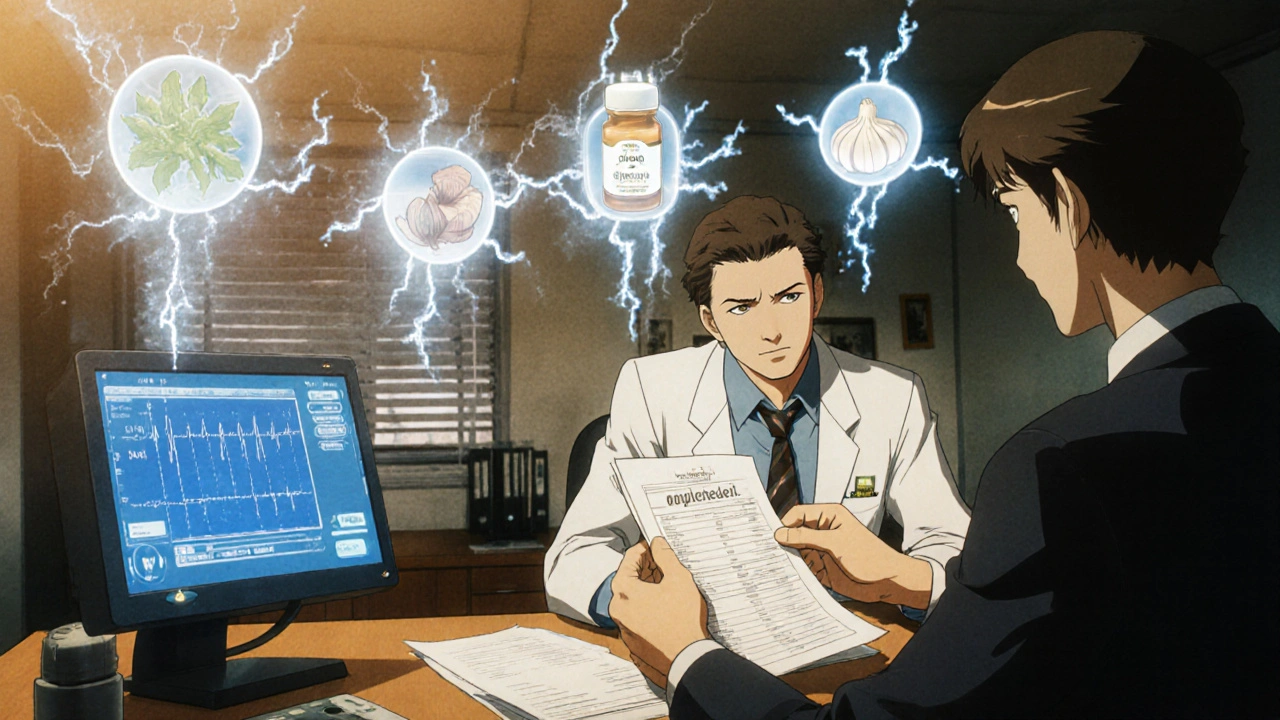
Here’s the scary part: your doctor probably doesn’t know you’re taking these supplements. In a 2016 study of 299 hospital patients, 25% were using herbal products-but doctors missed it in 72% of cases. Why? Because patients don’t volunteer the info. They think herbs are “just supplements,” not medicine. And doctors don’t always ask. A 2021 study found that when clinicians asked, “Do you take any teas, herbs, or natural products?”-not just “Do you take supplements?”-they caught 35% more users. Even better: showing patients pictures of common herbal products increased disclosure by 47%. Consumer Reports’ 2022 survey found 68% of supplement users never told their doctor. And 22% had side effects they later linked to herb-drug interactions. That’s not ignorance-it’s a systemic failure in communication.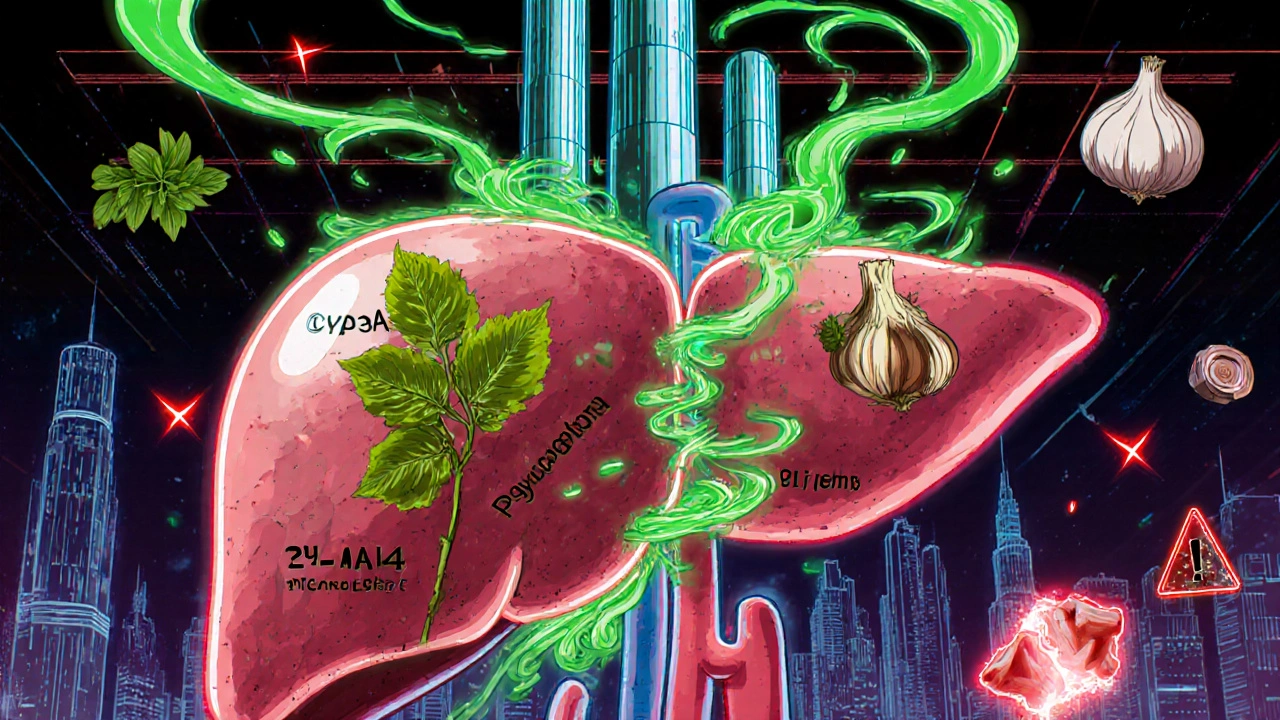
What You Should Do Right Now
If you take any prescription medication and any herbal product, here’s what to do:- Make a list. Write down every supplement, tea, tincture, or capsule you take-even if you think it’s harmless.
- Bring it to your next appointment. Don’t wait for your doctor to ask. Show them the list. Say: “I’m taking these herbs. Can you check if they interact with my meds?”
- Be specific. Don’t say “I take ginkgo.” Say “I take 120 mg of ginkgo biloba daily.” Dosage matters.
- Don’t assume ‘natural’ means safe. If it affects your body, it can interact with your meds.
- Check with a pharmacist. Pharmacists are trained in drug interactions. Many offer free consultations.



12 Comments
Oh wow, a post that actually doesn’t suck for once. St. John’s wort making birth control useless? That’s not ‘natural healing,’ that’s a biological betrayal. I’ve seen people on Reddit bragging about ‘boosting their mood’ with it while on SSRIs-next thing you know, they’re in the ER screaming about ‘the lights talking to them.’ And no, the label doesn’t say ‘this might kill you.’ Because why would a $12 bottle of dried leaves need a warning? 😏
This is not just important-it’s a public health emergency. We are living in an age where people treat herbal supplements like candy, while ignoring the fact that they are pharmacologically active substances with half the regulatory scrutiny of aspirin. The FDA’s hands are tied by a 1994 law that treats your grandmother’s chamomile tea the same as a biotech drug. We need mandatory interaction labeling. We need pharmacist-led screenings. We need to stop pretending ‘natural’ means ‘safe.’ This isn’t fearmongering-it’s science. And it’s time we treated it that way.
st johns wort is bad? lol i take it with my antidep and my blood presser and im fine. also ginkgo is just tree juice. u guys are so scared of plants. maybe ur body just needs to chill out. also i heard garlic cures cancer so u can all stop worrying and eat more garlic. 😎
Herb-drug interactions are a pharmacokinetic nightmare. CYP450 modulation, P-gp efflux, enzyme induction-these aren’t theoretical. They’re measurable. And yet, 72% of clinicians don’t screen. That’s a systemic failure in clinical pharmacology. Patients aren’t lying-they’re not informed. We need standardized intake forms with visual aids. Not just ‘any supplements?’-but ‘show me your bottle.’
But... what if... plants... are trying to communicate with us? I mean, think about it. They’ve been evolving chemical warfare for 400 million years. Maybe St. John’s wort isn’t ‘interfering’-maybe it’s trying to tell us we’re too dependent on synthetic chemicals? Maybe our bodies are screaming for balance, and we’re just... ignoring the whispers? I don’t know. But I did cry while drinking hawthorn tea last Tuesday. And I think it understood me. 🌿💔
I used to take ginkgo for ‘brain fog’ and didn’t tell my doc. Then I got a nosebleed that wouldn’t stop after a cold. Turned out it was the ginkgo + warfarin. Scared the hell out of me. Now I show my bottle to every doctor. No shame. Just safety. If you’re on meds, just ask. Seriously. It’s easier than you think.
The lack of regulation in the supplement industry is indefensible. Patients deserve transparency. Manufacturers should be required to disclose active compounds and known interactions. The burden should not fall on the consumer to become a pharmacologist before buying a bottle labeled 'natural'. This is not about demonizing herbs-it’s about demanding accountability.
I’ve been taking milk thistle for 12 years. My liver is fine. But I also take a statin. I never asked if it was safe. Now I’m scared. What if I’ve been quietly poisoning myself? 😔 I don’t want to stop the supplement-I want to understand. Maybe the real issue isn’t the herbs… it’s that we’ve been taught to treat our bodies like machines that don’t talk back. But they do. They just don’t speak English.
Hey everyone-this is a tough topic, but we can talk about it without fear. If you’re taking herbs, you’re not dumb. You’re trying to care for yourself. The system just didn’t give you the tools. Let’s make it easier. Bring your bottle to your next appointment. Take a pic. Ask your pharmacist. We’ve all got this. No judgment. Just better choices.
WHY IS NO ONE TALKING ABOUT THIS?! I just found out my mom’s hawthorn + lisinopril combo dropped her BP to 80/50. She was dizzy for three days. She thought it was ‘just aging.’ This isn’t a ‘maybe’-it’s happening to people RIGHT NOW. We need public service announcements. TV spots. Billboards. ‘Your tea could kill your meds.’
ok so i took garlic pills before surgery and they said my blood was too thin so they had to delay it. i thought it was just a ‘cleanse’ lol. now i know. never again. also i told my doc and he just nodded and said ‘cool.’ so i’m telling u all: show the bottle. don’t assume they know.
Big Pharma hates this post. They’re scared you’ll find out herbs are cheaper, more effective, and not patented. St. John’s wort? It’s been used for centuries. The FDA only cares if it’s profitable. They’ll ban it tomorrow if it threatened their billion-dollar antidepressant empire. You’re not being warned because they want you addicted to pills. Wake up. 🌱👁️