
Switching from a brand-name medication to a generic version can feel like a leap into the unknown-especially when you’re managing a chronic condition like diabetes, high blood pressure, or hypothyroidism. You’ve been stable for months, maybe years. Your symptoms are under control. Then your pharmacy calls: generic is all that’s covered now. Should you be worried? The short answer: for most people, no. But there are smart ways to make the switch work for you.
What Are Maintenance Medications?
Maintenance medications are the drugs you take every day-or several times a week-to keep a long-term health condition from getting worse. These aren’t for quick fixes. They’re for life. Think of them like a daily tune-up for your body.Common examples include:
- Atorvastatin (for high cholesterol)
- Metformin (for type 2 diabetes)
- Levothyroxine (for underactive thyroid)
- Lisinopril or amlodipine (for high blood pressure)
- Fluticasone inhalers (for asthma)
- SSRIs like sertraline (for depression or anxiety)
These drugs are taken regularly, often for decades. And here’s the kicker: 85% of all prescriptions for these conditions in the U.S. are now filled with generics, according to the Association for Accessible Medicines. That’s not a trend-it’s the new standard.
Why Generics Work Just as Well
The FDA doesn’t approve generics lightly. Before a generic drug hits the shelf, it must prove it delivers the same amount of active ingredient into your bloodstream, at the same speed, as the brand-name version. That’s called bioequivalence. The standard? The generic’s concentration in your blood must fall within 80-125% of the brand’s. That’s not a wide margin-it’s tight enough to ensure your body reacts the same way.
That means:
- The same active ingredient
- The same strength
- The same dosage form (tablet, capsule, inhaler)
- The same route of delivery (oral, injection, patch)
The only differences? Inactive ingredients-the fillers, dyes, or coatings that don’t affect how the drug works. For most people, these make zero difference. But for a small number, they can cause minor reactions like stomach upset or skin rashes.
The Real Cost Difference
Let’s talk numbers. In September 2023, a 30-day supply of brand-name Lipitor (atorvastatin) cost $378.50 at a major pharmacy chain. The generic? $0.99. Same drug. Same effect. Same FDA approval.
For insulin, the gap is still wide but shrinking. Brand-name Lantus costs around $345 per vial. The authorized generic? $98.50. The biosimilar Semglee? $285. Even with the higher price, the generic version is still more affordable than the brand-and just as effective for most.
And it’s not just about saving money. Studies show patients on generics are 12-15% more likely to stick with their medication because they can actually afford it. That leads to 23% fewer hospital visits for complications like heart attacks, strokes, or diabetic emergencies.
When Generics Might Cause Problems
There’s a small group of drugs where even tiny changes in how your body absorbs the medication can matter. These are called narrow therapeutic index drugs. The margin for error is slim.
Examples:
- Levothyroxine (for thyroid)
- Warfarin (blood thinner)
- Phenytoin (for seizures)
For these, switching between different generic manufacturers-even if both are FDA-approved-can sometimes cause small shifts in blood levels. A 2021 study in the Journal of Managed Care & Specialty Pharmacy found that 1-3% of patients needed to stay on brand-name versions to maintain stable control.
For thyroid patients, switching generics can lead to fluctuating TSH levels. That doesn’t mean the drug isn’t working-it means your body might need a tiny adjustment. Your doctor can check your blood levels 4-6 weeks after switching and tweak your dose if needed.
What Patients Are Really Saying
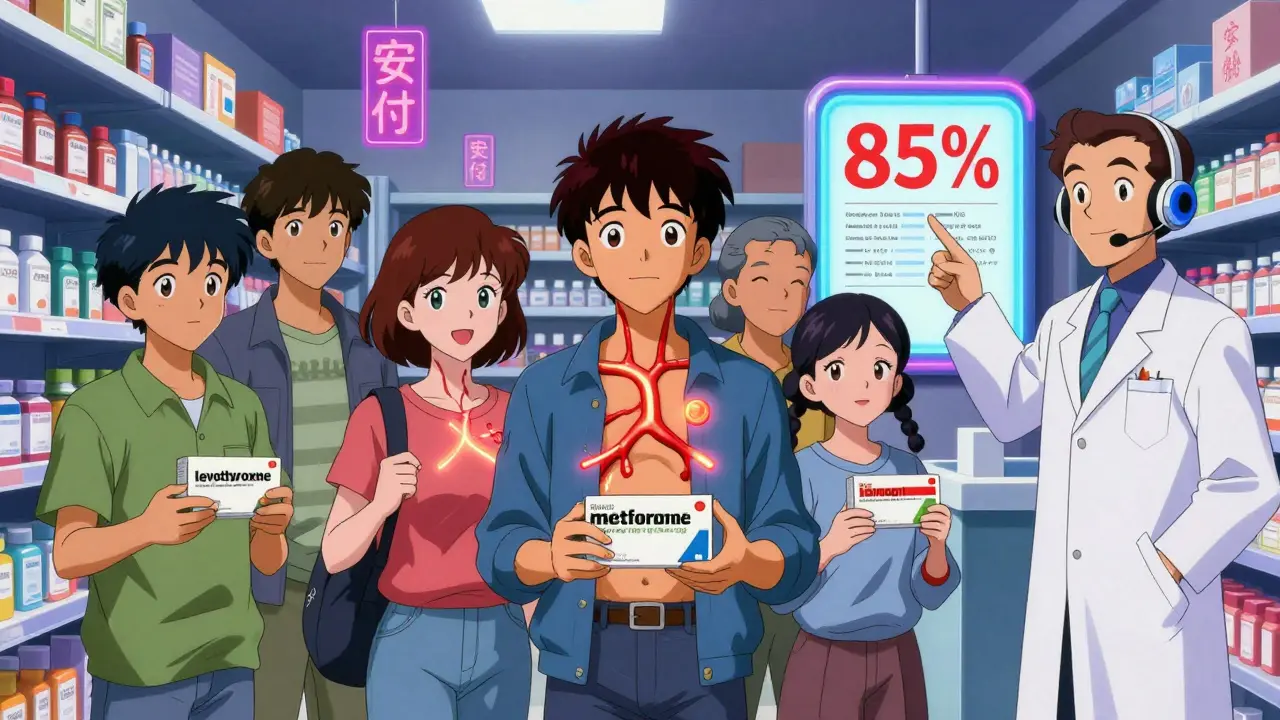
Online forums are full of stories. On Reddit, a thread titled “Switched from Synthroid to generic levothyroxine and feeling worse” had over 140 comments. Sixty-three percent said they felt sluggish, gained weight, or got headaches after switching. Thirty-seven percent said they noticed nothing.
A Drugs.com survey of 2,450 people taking maintenance meds found:
- 41% noticed no difference
- 32% said they felt better because they could finally afford their meds
- 19% had minor side effects that faded after a few weeks
- 8% stopped taking the generic because they believed it wasn’t working
Here’s the thing: most of the people who felt worse didn’t get their blood tested. They assumed the generic was the problem. But often, stress, sleep changes, diet, or natural disease progression were the real culprits.
How to Make the Switch Safely
If you’re switching to a generic, here’s how to do it right:
- Ask your pharmacist which manufacturer makes the generic you’re getting. Stick with that brand if you can. Some pharmacies let you request a specific manufacturer.
- Track your symptoms for the first 30 days. Use a notebook or the FDA’s free Medication Tracker app. Note energy levels, mood, weight, sleep, or any new symptoms.
- Don’t panic over small changes. Your body might need a few weeks to adjust. Many side effects fade on their own.
- Get a blood test if you’re on levothyroxine, warfarin, or phenytoin. Your doctor should check your levels 4-6 weeks after the switch.
- Speak up. If you feel worse after 6 weeks, tell your doctor. You’re not being difficult-you’re being smart.
Pharmacists are your allies here. They know which generics have had fewer reports of issues. They can also help you spot if your pill looks different because of a new manufacturer-not because the drug changed.
What Your Insurance Wants You to Know
Most insurance plans, including Medicare Part D, now require you to try generics first. Blue Cross Blue Shield of Kansas, for example, mandates generic substitution for all maintenance drugs unless your doctor proves a medical reason not to.
Getting a brand-name drug approved after a generic is rejected? Only 14% of requests get approved, according to the Healthcare Financial Management Association. You’ll need documentation showing you tried at least two generic versions and still had problems.
The Inflation Reduction Act of 2022 capped insulin costs at $35/month for Medicare users. That’s helped push more people toward generics and biosimilars-but it also means insurers are even less likely to pay for brand-name drugs unless absolutely necessary.

What Experts Say
Dr. Aaron Kesselheim, a Harvard professor and former FDA advisor, put it plainly: “For the vast majority of maintenance medications, generics are therapeutically equivalent and represent a tremendous value.”
The American College of Physicians recommends generic substitution as standard practice. They estimate a patient with three chronic conditions can save over $1,200 a year by switching.
But Dr. Elizabeth Pearce, former president of the American Thyroid Association, warns: “For levothyroxine, patients stabilized on a specific brand should maintain that product.”
That’s not a blanket rule. It’s a caution for a small group. If you’ve been on the same thyroid med for years and feel great, don’t switch unless your doctor says it’s safe.
What’s Changing in 2026
More generics are coming. In early 2023, the FDA approved the first generic versions of Jardiance (for diabetes) and Entresto (for heart failure). In 2026, Eliquis-a top-selling blood thinner-loses its patent. That’ll open the floodgates for dozens of new generic options.
The FDA’s new GDUFA III rules mean stricter oversight for complex generics like inhalers and injectables. That’s good news. It means fewer bad batches and better consistency.
But there’s a warning: the number of manufacturers for some generics has dropped from 15 in 2010 to just 8 today. That means if one factory has a problem, shortages can happen. That’s why sticking with one manufacturer matters.
Final Thoughts
Switching to a generic isn’t a compromise. It’s a smart, evidence-based choice for 97% of people with chronic conditions. The science is clear. The savings are huge. And the safety record is strong.
But it’s not one-size-fits-all. If you’re on a narrow therapeutic index drug, pay attention. Track your body. Test your levels. Talk to your doctor and pharmacist.
For the rest? You’re not risking your health-you’re protecting it. By making your meds affordable, you’re more likely to take them. And that’s the real win.


8 Comments
I switched to generic levothyroxine last year and didn’t notice anything at first
Then one Monday I felt like a zombie
Turned out my TSH was off by 1.2
My doctor adjusted the dose and now I’m fine
Don’t assume it’s the drug
Check your numbers
Why do people think generics are dangerous?!
It's the same chemical! The FDA says so! Why do you think you're special?!
You're not! You're just scared of saving money!
Stop being dramatic and take your pills!
My uncle took generic metformin for 12 years and never had a problem!
Stop being lazy and stop complaining!
Back home in Kerala, we’ve been using generics for decades-no drama, no panic
My grandmother takes her blood pressure med, same generic since 2010
She doesn’t know what a brand is
She knows her pulse, her energy, her doctor’s voice
That’s the real test-not the label
Here in the States, we turn medicine into a brand war
But in places where you choose between food and pills
You don’t overthink the capsule
You just take it
And live
If you're not taking your generic meds you're not serious about your health
Period
This isn't a luxury product
It's a medical necessity
Insurance isn't asking you to compromise
They're asking you to be responsible
Stop treating your medication like a status symbol
Get your labs done
Adjust if needed
Move on
I was skeptical too
Switched from brand-name Lipitor to generic
First week I felt weird
Thought it was the pill
Turned out I was sleeping less and eating more junk
After 3 weeks I realized-my habits changed
Not the drug
Now I track everything
And I save $300 a month
That’s a vacation
Or groceries
Or both
The FDA’s bioequivalence standard is 80-125 percent
That’s a 45 percent variance
That’s not precision
That’s a gamble
And you’re telling people to trust it
Meanwhile, the same agency approves supplements with no testing
And calls it ‘dietary’
So why should I trust them on this?
It’s not science
It’s cost-cutting dressed up as policy
So let me get this straight
You’re telling me a $0.99 pill is identical to a $378 pill
And the only difference is the dye
But somehow, 19% of people report side effects
And 8% stop taking it
And you think that’s just ‘stress’
Or ‘diet’
Or ‘natural progression’
Meanwhile the same company that makes the brand also makes the generic
And they’re profiting either way
So who’s really benefiting here
Not me
Not my body
Just the balance sheet
They’re switching us to generics because Big Pharma and the government are in bed together
They don’t care if you feel worse
They just want you quiet
They want you taking cheap pills so you don’t complain
They want you too broke to fight back
And they’re using your diabetes and thyroid as an excuse
Next they’ll make your insulin generic
Then your heart meds
Then your antidepressants
And one day you’ll wake up
And your body will be broken
And they’ll say ‘you didn’t follow the protocol’
But you didn’t even get a choice