
Decongestant Safety Checker
Every year, millions of people reach for nasal decongestants when they get a cold. It’s quick, it’s easy, and it seems harmless-until you’re on blood pressure medication. That’s when things can go wrong, fast. You might not realize it, but the spray or pill you’re using to clear your nose could be quietly spiking your blood pressure, making your heart work harder, or even canceling out the medicine you take every day to stay healthy. This isn’t a rare risk. It’s a common, preventable mistake that sends people to the ER-and it’s happening because most people don’t know what’s in those over-the-counter bottles.
How Decongestants Actually Work (and Why That’s Dangerous)
Nasal decongestants like pseudoephedrine and phenylephrine don’t just shrink swollen nasal passages. They tighten blood vessels all over your body. That’s how they reduce stuffiness: less swelling in your nose. But that same effect also forces your arteries to narrow, which raises your blood pressure. It’s not a small bump. Studies show that even a single dose of pseudoephedrine can raise systolic blood pressure by 5 to 10 points in people with hypertension. For someone already struggling to keep their numbers under control, that’s enough to trigger chest pain, dizziness, or worse.
These drugs activate alpha-adrenergic receptors, which are the same ones your body uses to respond to stress. That’s why you might feel jittery, get a racing heart, or notice your pulse pounding after taking them. For people with heart disease, irregular rhythms, or uncontrolled high blood pressure, this isn’t just uncomfortable-it’s dangerous. The American Heart Association says this risk is real enough that they explicitly warn patients to avoid these meds unless a doctor says it’s okay.
Which Decongestants Are the Biggest Risk?
Not all decongestants are created equal, but the most common ones are all risky for people on blood pressure meds. Here’s what to watch for:
- Pseudoephedrine - Found in Sudafed and dozens of multi-symptom cold pills. It’s the most potent and has the strongest evidence linking it to blood pressure spikes.
- Phenylephrine - Now the main decongestant in most store-brand cold meds after pseudoephedrine was moved behind the counter. It’s less effective for congestion, but just as risky for your blood pressure.
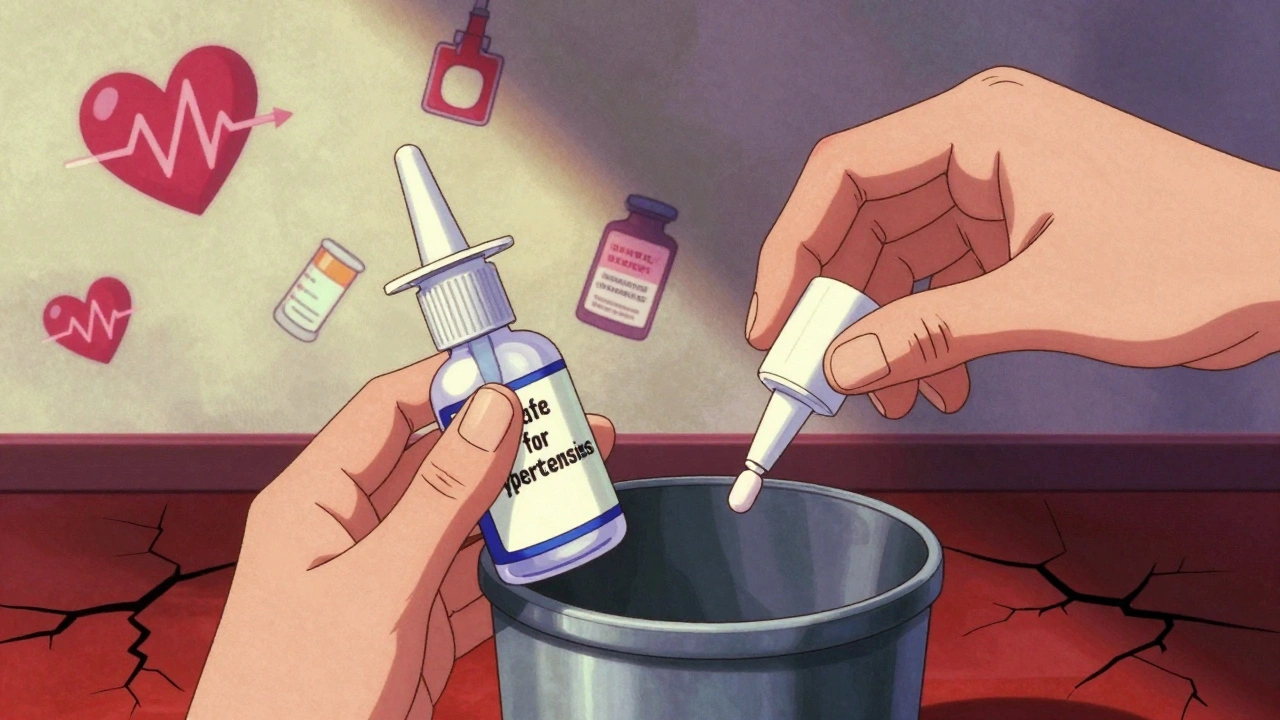
- Oxymetazoline - The active ingredient in Afrin and other nasal sprays. Many think topical means safe, but studies show it still enters your bloodstream. Using it for more than 3 days can cause rebound congestion and dangerous pressure spikes.
- Ephedrine - Rare in OTC products now, but still found in some herbal weight-loss or energy supplements. Extremely dangerous with blood pressure meds.
Check the label. If you see any of these names, put the product down. Even if the bottle says “for sinus relief” or “cold & flu,” it might contain one of these. And don’t assume “natural” or “herbal” means safe-some supplements contain ephedra or other stimulants that act just like decongestants.
How Decongestants Interfere With Your Blood Pressure Meds
It’s not just about raising your numbers. Decongestants can mess with how your blood pressure medications work. For example:
- With beta-blockers like metoprolol, decongestants can override their ability to slow your heart rate, leading to palpitations or arrhythmias.
- With calcium channel blockers like nifedipine or felodipine, decongestants can block their relaxing effect on blood vessels, making them less effective.
- With ACE inhibitors or ARBs, decongestants can reduce kidney blood flow, which may cause fluid retention and higher pressure.
It gets worse with certain other drugs. Mixing decongestants with tricyclic antidepressants, linezolid (an antibiotic), or even some migraine meds can cause sudden, life-threatening spikes in blood pressure. This isn’t a guess-it’s documented in case studies and medical journals. One 2024 study found that over 22% of emergency visits for uncontrolled high blood pressure in adults over 50 were tied to OTC decongestant use.
What to Use Instead: Safe Alternatives for Congestion
You don’t need to suffer through a stuffy nose. There are safer, effective ways to get relief without risking your heart health:
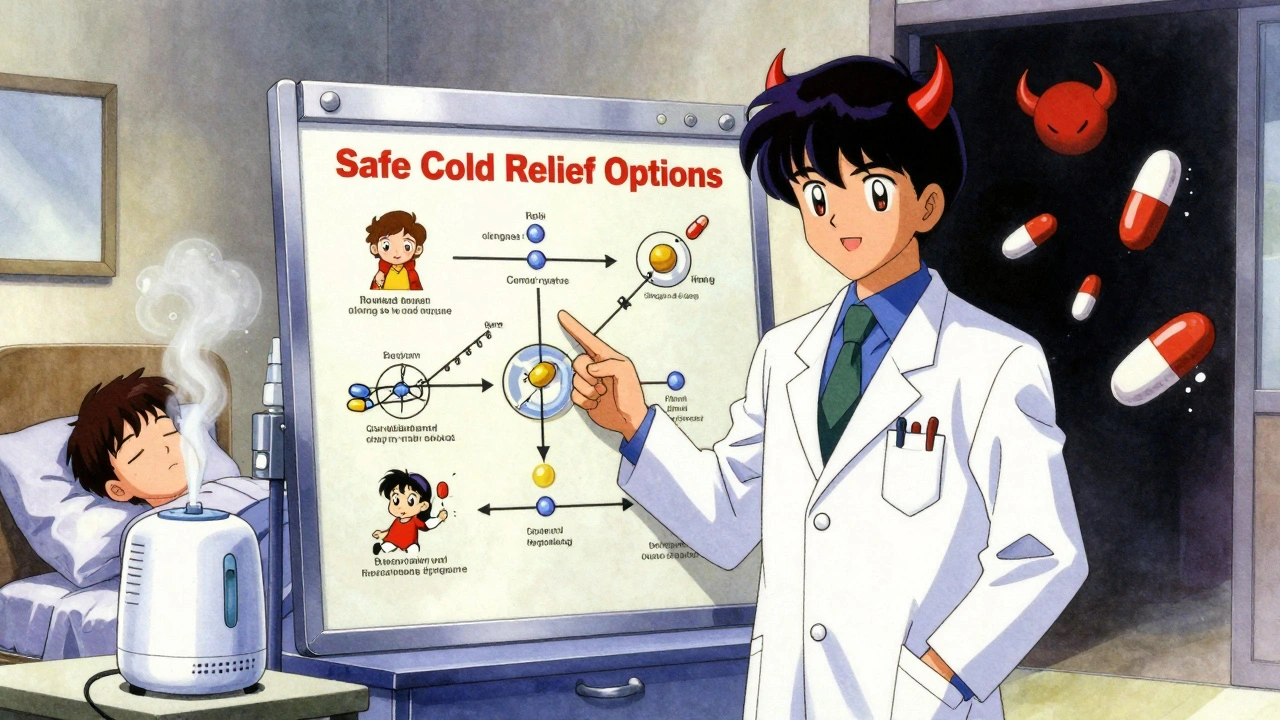
- Saline nasal spray or rinse - Plain saltwater sprays (like Neti pots or pre-filled bottles) flush out mucus and irritants without any drugs. Use them several times a day. No side effects. No risk.
- Humidifiers and steam - Hot showers, steam bowls, or a cool-mist humidifier add moisture to your air, helping your nasal passages open naturally.
- Antihistamines - If your congestion is from allergies or post-nasal drip, drugs like loratadine (Claritin) or cetirizine (Zyrtec) can help. They don’t raise blood pressure like decongestants do, though they may cause drowsiness.
- Stay hydrated - Drinking water thins mucus and helps your body clear congestion faster.
- Elevate your head - Sleeping with an extra pillow reduces nighttime congestion without any meds.
These methods might take longer than a decongestant pill, but they’re proven, safe, and won’t undo the work your blood pressure meds are doing.
How to Avoid Hidden Decongestants in Multi-Symptom Products
Most cold and flu pills combine multiple drugs: a pain reliever, a cough suppressant, an antihistamine, and-often-a decongestant. You might think you’re just taking something for your cough, but you’re unknowingly getting a blood pressure spike.
Here’s how to spot them:
- Look at the Active Ingredients section on the label-not the marketing claims.
- If you see pseudoephedrine, phenylephrine, or oxymetazoline, walk away.
- Check for terms like “sinus,” “congestion,” “nasal,” or “full spectrum”-they’re red flags.
- Some brands hide decongestants in the ingredient list under names like “Cold & Flu Relief” or “Daytime Formula.” Don’t be fooled.
There are decongestant-free options. Look for products labeled “for high blood pressure” or “without decongestant.” Brands like Coricidin HBP are made specifically for people with hypertension. But even then, read the label. Not all “HBP” products are safe-some still contain other risky ingredients.
When You Absolutely Need a Decongestant: What to Do
There are rare cases-like severe sinus infection or blocked Eustachian tubes-where a doctor might approve a short course of a decongestant. If that’s you:
- Only use the lowest dose possible.
- Take it for no more than 3 days.
- Monitor your blood pressure twice a day during use.
- Stop immediately if your pressure rises above your target range by more than 15 points.
- Never combine with alcohol, caffeine, or stimulants-they multiply the risk.
And always, always tell your doctor what you’re taking-even if you think it’s “just a little.”
Ask Your Pharmacist-They’re Your Best Defense
In the U.S., pseudoephedrine is kept behind the counter. That’s not just to stop meth production-it’s a safety feature. The pharmacist is supposed to ask if you have high blood pressure, heart disease, or other conditions. Use that moment.
Don’t just hand over your ID and walk away. Say: “I’m on blood pressure medication. Is this safe?” Ask if there’s a decongestant-free alternative. Ask if your current meds might interact. Pharmacists are trained for this. Studies show that when patients get this kind of counseling, inappropriate decongestant use drops by nearly half.
Keep a Medication List-and Share It
Many people don’t realize they’re taking something risky because they forget about the cold meds they took last week. Keep a written or digital list of everything you take: prescriptions, OTC pills, vitamins, herbal supplements. Update it every time you start or stop something. Bring it to every doctor visit. If you’re seeing a new specialist, give them a copy. This simple habit has prevented countless dangerous interactions.
What’s Changing? New Guidelines and Future Solutions
The medical community is waking up to this problem. The American Heart Association updated its guidelines in 2023 to be even stricter about decongestant warnings. The FDA now requires all decongestant packages to say: “Ask a doctor before use if you have high blood pressure.” That’s progress.
Some companies are working on new, safer alternatives. As of mid-2025, several are in Phase 2 trials for non-vasoconstrictive decongestants that target nasal inflammation without affecting blood vessels. These could be game-changers. But until they’re available, the safest choice is still the one you already have: skip the decongestant unless your doctor says it’s okay.
Bottom Line: Your Blood Pressure Matters More Than a Stuffy Nose
It’s tempting to reach for the quickest fix. But if you’re on blood pressure medication, the quickest fix could be the most dangerous one. Decongestants aren’t harmless-they’re powerful drugs with serious side effects. The good news? You don’t need them. Saline sprays, steam, hydration, and time work. They’re slower, yes. But they won’t put your heart at risk.
Read every label. Talk to your pharmacist. Ask your doctor before trying anything new. Your blood pressure is too important to leave to chance.
Can I use a nasal spray like Afrin if I have high blood pressure?
No. Even topical nasal sprays like Afrin (oxymetazoline) can be absorbed into your bloodstream and raise your blood pressure. They’re not safe for people with uncontrolled hypertension. If you must use one, limit it to 3 days max and only after talking to your doctor. Long-term use can also cause rebound congestion, making your stuffiness worse.
Is phenylephrine safer than pseudoephedrine for high blood pressure?
No. While phenylephrine is less effective at relieving congestion, it’s just as risky for blood pressure as pseudoephedrine. Studies show both cause similar increases in systolic pressure. The switch from pseudoephedrine to phenylephrine in many products was about drug control, not safety. Neither is safe for people with hypertension without medical approval.
Can I take decongestants if my blood pressure is controlled?
Even if your blood pressure is controlled, decongestants can still cause dangerous spikes. Many people with “controlled” hypertension are on multiple medications, and decongestants can interfere with how those drugs work. The American Heart Association and Mayo Clinic recommend avoiding them entirely unless your doctor specifically approves a short-term, low-dose use. Don’t assume control means safety.
Do decongestants interact with other medications besides blood pressure drugs?
Yes. Decongestants can interact dangerously with tricyclic antidepressants (like amitriptyline), the antibiotic linezolid, certain migraine medications (ergotamines), and even some ADHD drugs. These combinations can cause sudden, severe spikes in blood pressure. Always check with your pharmacist or doctor before combining any new OTC medicine with your regular prescriptions.
Are there any cold medicines safe for people with high blood pressure?
Yes-but you have to read labels carefully. Look for products labeled “HBP” (high blood pressure) that don’t contain pseudoephedrine, phenylephrine, or oxymetazoline. Coricidin HBP is one example. But even these may contain other ingredients like dextromethorphan or guaifenesin, which are generally safe. Avoid anything with “sinus,” “congestion,” or “decongestant” in the name. When in doubt, ask your pharmacist.



14 Comments
Wow, this is one of those posts that makes you stop and think-like, why is this not on every OTC box in giant red letters? I had no idea phenylephrine was just as bad as pseudoephedrine. I’ve been grabbing those ‘sinus relief’ pills for years, thinking I was being smart by avoiding Sudafed. Turns out, I was just switching one danger for another. Thanks for laying this out so clearly.
People need to stop being lazy and just deal with a stuffy nose. Back in my day, we didn’t have all these fancy meds-we just breathed through our mouths and got over it. Now everyone wants a quick fix, and then blames the system when it backfires. It’s not the drug’s fault-it’s your poor choices.
So you’re saying I can’t use Afrin anymore even if I only use it once a week? That’s ridiculous. My nose gets blocked at night and I can’t sleep. I don’t care what the studies say I need to breathe
The real issue here isn’t just decongestants-it’s the systemic failure of pharmaceutical labeling and consumer education. We’ve normalized the idea that OTC means harmless, but that’s a dangerous myth. These are pharmacologically active compounds with receptor-level effects. The fact that they’re sold next to aspirin is a regulatory failure. We need mandatory pharmacist counseling, plain-language warnings, and public health campaigns. This isn’t about personal responsibility-it’s about design. If the system doesn’t protect people, it’s broken.
Saline spray + humidifier = game changer. I used to rely on Sudafed every winter, now I just breathe steam before bed and I’m fine. No jitters, no crashes, no scary BP spikes. Seriously, try it. Your heart will thank you 😊
...and yet, the FDA still allows this. It’s not negligence-it’s corruption. Big Pharma doesn’t want you to know that decongestants are just adrenaline in disguise. They profit from your dependence. The ‘HBP’ labels? Marketing ploys. The ‘natural’ supplements? Loaded with ephedra analogs. You think you’re being smart by reading labels-but they’re designed to confuse you. This is a slow poison, and no one’s holding them accountable.
Wait-so you’re telling me the government moved pseudoephedrine behind the counter NOT to stop meth, but to make people think it’s safer? And now they replaced it with phenylephrine-which is just as bad? That’s not policy. That’s a scam. Someone’s getting paid to keep us sick. I’m starting a petition. This is a cover-up.
OMG I just checked my cold medicine and it had phenylephrine 😱 I thought it was safe bc it said ‘for colds’... I’m switching to saline now. Thanks for the wake up call!!
This is very important information. In India, many people buy cold medicines without prescription. They do not know about the risks. Doctors should educate patients. Pharmacists should ask questions. Simple solutions like saline spray are often ignored because they require time and patience. But safety must come before convenience.
I’ve been reading up on this for years, and honestly, the most underappreciated solution is just elevating your head at night. It’s so simple, it feels almost too easy-but it works. I used to wake up gasping for air, then I started sleeping on two pillows. No meds, no side effects, no anxiety about my BP. And the saline rinse? I do it every morning now. It’s like a reset button for my sinuses. I know it’s not glamorous, but sometimes the most powerful interventions are the ones that don’t come in a bottle.
so… phenylephrine is bad? i thought it was the ‘new’ safe one? i mean… i guess i should’ve read the fine print. my bad. but like… why do they even make it if it’s useless and dangerous? someone’s gotta be making money off this…
It is imperative to note that the pharmacokinetic interaction between alpha-adrenergic agonists and antihypertensive regimens is not merely theoretical-it is empirically validated in peer-reviewed literature. One must exercise due diligence when selecting OTC pharmaceuticals, as the concomitant administration may precipitate a hypertensive crisis. I recommend consulting the Physicians’ Desk Reference prior to ingestion.
I had a scary scare last winter-BP shot up to 180/100 after a cold med. I thought I was having a stroke. Turned out it was just phenylephrine. Now I only use saline, steam, and honey lemon tea. My doctor said I’m the first person who actually listened. Don’t be like me-wait until it’s too late. You’ve got this! 💪❤️
As a clinical pharmacist in Mumbai, I see this daily. Patients come in with uncontrolled HTN, and when we review their meds, 70% are using OTC decongestants. They say, ‘But it’s just a nasal spray!’ We need community awareness campaigns, not just warning labels. Simple education saves lives.