
What Real-Ear Measurement Actually Does
When you get hearing aids, you expect them to help you hear better. But here’s the thing: real-ear measurement (REM) is the only way to know if they’re actually working the way they should in your ear. Most people think hearing aids are just turned up until they sound loud enough. That’s not how it works. Every ear is different. The shape, size, and even the wax buildup in your ear canal change how sound travels. Without REM, you’re guessing. With it, you’re measuring.
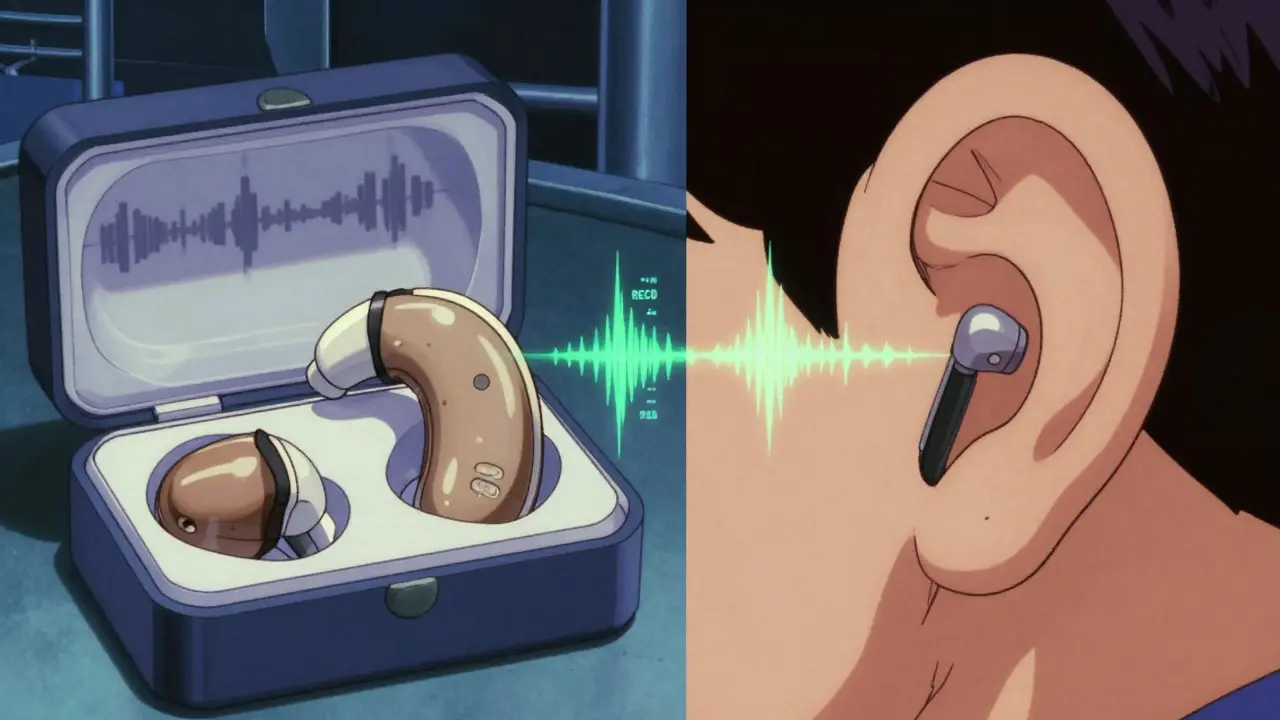
REM uses a tiny microphone placed inside your ear canal-right next to your eardrum-to capture exactly what sound is reaching your eardrum when the hearing aid is in place. This isn’t a simulation. It’s not a guess based on averages. It’s real-time data. The system compares what your hearing aid is producing to a scientifically proven target based on your specific hearing loss. If the sound is too quiet at high pitches? Too loud in the middle? It shows up on the screen. Then the audiologist adjusts it. Right there. In front of you.
Why Your Ear Isn’t Like Anyone Else’s
Think of your ear canal like a musical instrument. A flute and a tuba both make sound, but they sound completely different because of their shape. Your ear canal is the same way. Research shows that the natural amplification in your ear can vary by up to 20 decibels between people. That’s like turning the volume up or down by half a room. If your hearing aid was programmed using a generic model-like the ones used in test boxes at the factory-it could be missing speech sounds you need to understand conversations, or blasting sounds that make you wince.
That’s why manufacturer "first fit" settings, used in nearly 80% of hearing aid fittings, only get about half the target right. REM fixes that. It accounts for your unique ear anatomy using something called the real-ear-to-coupler difference, or RECD. This number is different for almost everyone. One person might need 8 dB more amplification in the high frequencies. Another might need less. REM finds that number for you. Without it, you’re fitting hearing aids based on what works for an average person-not you.
How REM Is Done, Step by Step
The process is simple, but precise. First, your audiologist checks your ear canal with an otoscope to make sure there’s no blockage or damage. Then, a thin, flexible probe tube-about the width of a human hair-is gently placed inside your ear, about 5 millimeters from your eardrum. The hearing aid is inserted while the probe stays in place. A speaker plays speech sounds at different volumes-like 50 dB (quiet), 65 dB (normal conversation), and 80 dB (loud). The probe picks up exactly what your ear is hearing through the hearing aid.
The software compares those measurements to your target, which is usually based on either the NAL-NL2 or DSL v5.0 formulas. These aren’t random numbers. They’re based on decades of research into how people with hearing loss best understand speech. If the hearing aid is under-amplifying speech in the 2000-4000 Hz range-the frequencies where consonants like "s," "f," and "th" live-the audiologist adjusts the settings. You’ll hear the difference immediately. Sometimes it’s subtle. Sometimes it’s dramatic. But you’ll know it’s right because you’ll finally hear what you’ve been missing.
REM vs. Everything Else
There are other ways to fit hearing aids. Some stores use software that simulates what the ear canal might do. Others rely on manufacturer presets. A few even sell hearing aids online with no professional help at all. But here’s the data: REM is 92% accurate in hitting target amplification. Software simulations? Around 65%. OTC hearing aids without verification? The FDA says they’re not designed to replace professional fitting.
One study found that patients who had REM during their fitting understood speech in noisy places-like restaurants or family gatherings-35% better than those who didn’t. That’s not a small difference. That’s the difference between joining a conversation and sitting quietly. It’s the difference between feeling included and feeling left out.
And it’s not just about speech. People who get REM report less listening effort. Their brains don’t have to work as hard to fill in missing sounds. That means less fatigue, less frustration, and more energy for the things you care about.
What Patients Actually Say
On HealthyHearing.com, 87% of people who had REM said their hearing aids were "very effective." Only 52% of those without REM felt the same. Reddit users in r/hearingloss talk about how REM turned their experience around. One person wrote: "I went from struggling in restaurants to understanding 90% of conversations." Another said they bought cheap OTC aids online, saved $1,000, but they whistled constantly and didn’t help at all.
The discomfort? A quick, mild tickle during probe tube insertion. About 22% of first-timers notice it. But 98% say it’s over in seconds and totally worth it. No one regrets REM. People regret skipping it.
Why Professionals Won’t Skip It
Every major audiology group in the U.S.-the American Speech-Language-Hearing Association, the American Academy of Audiology, even the American Medical Association-says REM is the gold standard. It’s not optional. It’s the standard. That’s why 97% of audiologists use it for every fitting. The American Medical Association even created a billing code for it: CPT 92597. Insurance covers it because it’s medically necessary.
Here’s the catch: not every provider is an audiologist. Some hearing aid retailers are salespeople, not clinicians. Only 12% of them use REM consistently. That’s why where you go matters. If you’re getting hearing aids, ask: "Will you use real-ear measurement?" If they say no, walk out. You’re not just buying a device. You’re investing in your ability to connect with people. Don’t settle for guesswork.

What’s Changing in the Field
REM isn’t staying the same. New systems now use AI to speed up the process. Widex’s 2023 platform cuts fitting time by 30% by predicting adjustments before the audiologist even makes them. In Europe, new rules now require REM for every hearing aid sold. The FDA has made it clear: OTC hearing aids aren’t a replacement for professional care. And research is moving toward combining 3D ear scans with REM to make the process even more precise.
But here’s the truth: no matter how advanced the tech gets, you still need to measure what’s happening in the real ear. As Dr. Pamela Souza said, "No matter how advanced our modeling becomes, we’ll always need to verify what’s actually happening in the real ear."
What to Ask Before You Buy
- Will you use real-ear measurement during my fitting?
- What prescriptive target are you using-NAL-NL2 or DSL v5.0?
- Can I see the results on the screen during the test?
- Will you test at multiple volumes-quiet, normal, and loud?
- Do you have a sound-treated booth for accurate measurements?
If any of these answers are "no," you’re not getting the standard of care. Don’t be fooled by low prices or quick appointments. The real cost of skipping REM isn’t money. It’s missed conversations, frustration, and a hearing aid that doesn’t work the way it should.
Final Thought: It’s Not About the Device. It’s About the Fit.
Hearing aids are powerful tools. But they’re not magic. A $3,000 hearing aid in a poorly fitted ear won’t help you any more than a $300 one that’s properly calibrated. The difference isn’t the brand. It’s the verification. REM turns a generic device into a personalized solution. It’s the only way to know you’re getting the right sound, at the right level, in the right place. Don’t let anyone tell you otherwise. Your ears deserve more than a guess.




12 Comments
This is why American healthcare still has some integrity left. Real-ear measurement isn't a luxury-it's basic science. If you're getting hearing aids without it, you're being scammed. Period.
Stop letting salespeople push cheap devices. Your ears don't care about your budget.
Oh wow, so we're supposed to believe that 97% of audiologists actually do this? Funny how the same people who push REM also charge $6000 for a hearing aid and call it 'personalized care.'
Meanwhile, I got my OTCs for $299 and they work fine. Maybe the real problem is profit margins, not ear anatomy.
92% accuracy? That’s still 8% wrong. And you think that’s acceptable for something that goes in your ear?
Also, who funded this study? The same companies selling the probes?
I had REM done last year. Honestly? The difference was insane. I didn’t realize how much I was missing until I heard my dog’s collar jingle clearly for the first time in 10 years 😊
Worth every second of the 15-minute test.
OMG I’m crying. 🥹 I went to this ‘hearing center’ and they said REM was ‘optional’ and I believed them. I thought I was just getting old. Turns out I was getting ripped off. Now I’m 6 months in with proper fitting and I actually laugh at my kids’ jokes again. Thank you for posting this. I’m telling everyone.
In India, access to REM is still limited to metro cities. But I’ve seen patients in rural clinics who traveled 300km just to get this done. The transformation is immediate. One man said he heard his granddaughter say ‘Papa’ for the first time. No device, no matter how expensive, replaces verification. This is medicine, not retail.
I got my hearing aids last year and skipped REM because the audiologist said it was ‘not necessary’ and I trusted them
Turns out I was missing half the conversation at family dinners. Now I’m going back and demanding it. Why is this even a debate?
I saved $2000 buying online. Got whistling, feedback, zero clarity. Then I paid $500 to get REM done at a real clinic. Best $500 I ever spent. The device didn’t change. The fit did.
All this REM hype is just marketing dressed up as science. The human ear isn’t that variable. The algorithms are good enough. You’re paying for a placebo effect wrapped in a probe tube.
Please, please, PLEASE-ask your provider if they use NAL-NL2 or DSL v5.0. Don’t let them say ‘we use the best settings.’ Ask for the name. Write it down. If they don’t know, walk out. You deserve evidence-based care, not vibes.
I work in med sales and I’ve seen the data. REM is overrated. Most people don’t even notice the difference. The real issue is that audiologists need to justify their fees so they push this as mandatory. It’s not. It’s a money grab.
I’m from a small town in Mississippi. We didn’t have REM until last year. My mom got hers done and now she calls me every Sunday just to tell me she heard the birds outside her window again. I cried. Not because of the tech. Because she finally felt heard.