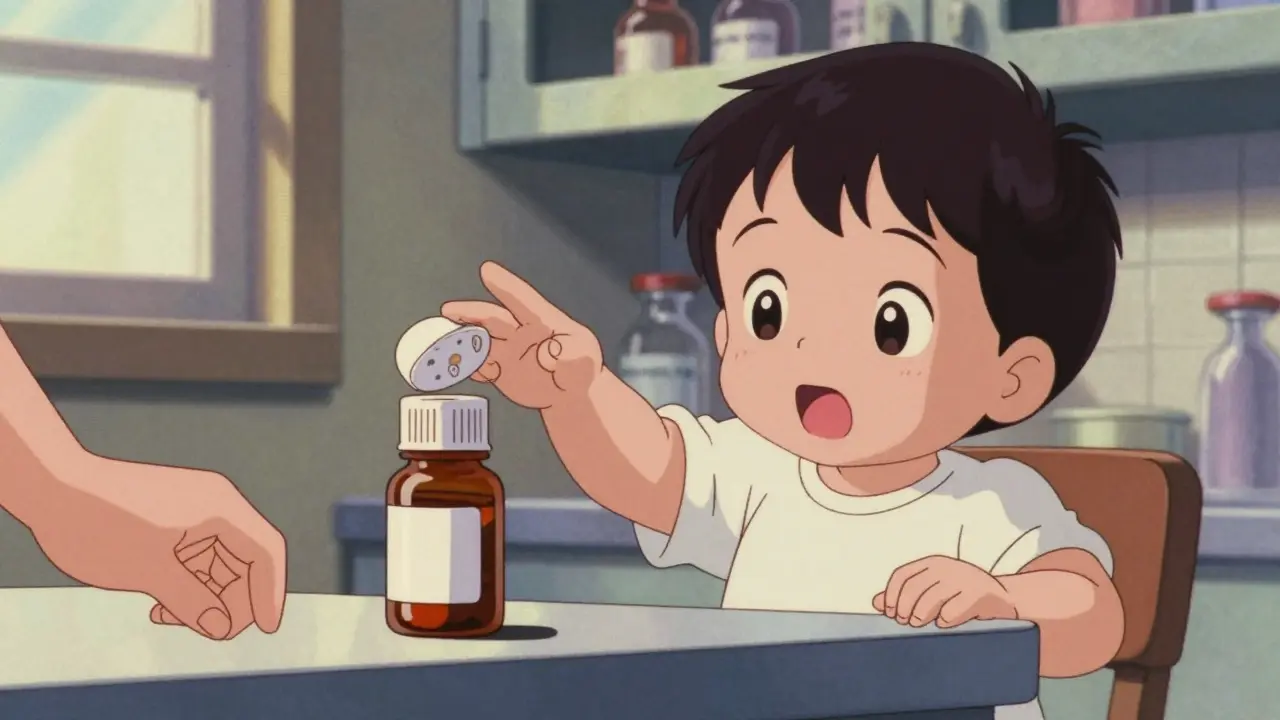
Every year, thousands of children under five accidentally get into medicines left within reach. It’s not because they’re curious little explorers - it’s because the containers they’re stored in aren’t designed to stop them. That’s where child-resistant packaging comes in. But here’s the thing: it’s not magic. It doesn’t make medicine impossible for kids to open. It just makes it hard enough to give adults time to react. And that’s the whole point.
Why Child-Resistant Packaging Exists
In the 1960s, accidental poisoning was one of the top causes of death for young children in the U.S. Between 1961 and 1966, more than 5,000 kids died from swallowing pills, liquids, or chemicals they found at home. The numbers were terrifying. Parents didn’t think their medicine cabinets were dangerous - until it was too late. In 1970, Congress passed the Poison Prevention Packaging Act (PPPA). It didn’t ban dangerous products. It didn’t tell parents to lock everything up. Instead, it forced manufacturers to design containers that kids under five couldn’t easily open. The goal wasn’t perfection. It was time. Time for a parent to hear a crash, run into the room, and stop the ingestion before it became fatal. Today, this law still stands. It covers prescription drugs, over-the-counter meds like ibuprofen and acetaminophen, pesticides, and even some household cleaners. If a product has ingredients that can kill a child in small doses, it needs a special cap.How Child-Resistant Caps Actually Work
You’ve probably seen them - the caps that require you to push down while twisting. That’s not just a design quirk. It’s a safety mechanism built on science. The U.S. Consumer Product Safety Commission (CPSC) requires every child-resistant (CR) cap to pass two tests. First, 50 kids aged 42 to 51 months get 10 minutes to open the container. At least 85% of them must fail. Then, those same kids are shown how to open it - and they still can’t do it in the next 5 minutes. If even one child opens it easily, the design fails. But here’s the twist: it also has to be easy for adults. That’s where the senior-friendly test comes in. One hundred adults between 50 and 70 years old get 5 minutes to open and re-close the cap. At least 90% must succeed. If your arthritis makes it hard to grip, twist, or press - you’re not supposed to struggle. Common designs include:- Push-and-turn caps (like Aptar’s Mini+cr system)
- Squeeze-and-turn caps (common for liquid antibiotics)
- Interlocking caps that need two different motions at once
Not All Medicines Are Created Equal
Some meds are easier to package safely than others. Solid pills in a plastic bottle? Easy. CR caps work well here - over 97% of these meet standards. But liquids? That’s where things get messy. About 39% of non-compliant packaging incidents involve liquid meds. Why? Because the caps often leak if tightened too hard, or the child can squeeze the bottle and spill it. Even if the cap won’t open, the bottle itself might be too easy to crush or puncture. Blister packs are another option. But standard blister packs? Not enough. A child can peel back foil with their teeth or nails. To count as child-resistant, the foil must require at least 15 pounds of force to break - that’s like lifting a gallon of milk with your fingers. Nasal spray pumps are the worst offenders. In 2012, the CPSC made it clear: a spray nozzle alone doesn’t count. The entire device - pump and cap - must be child-resistant. Only 22% of nasal sprays on the market met that standard before special CR pumps were developed. Now, newer models like Aptar’s CR metering spray systems are changing the game.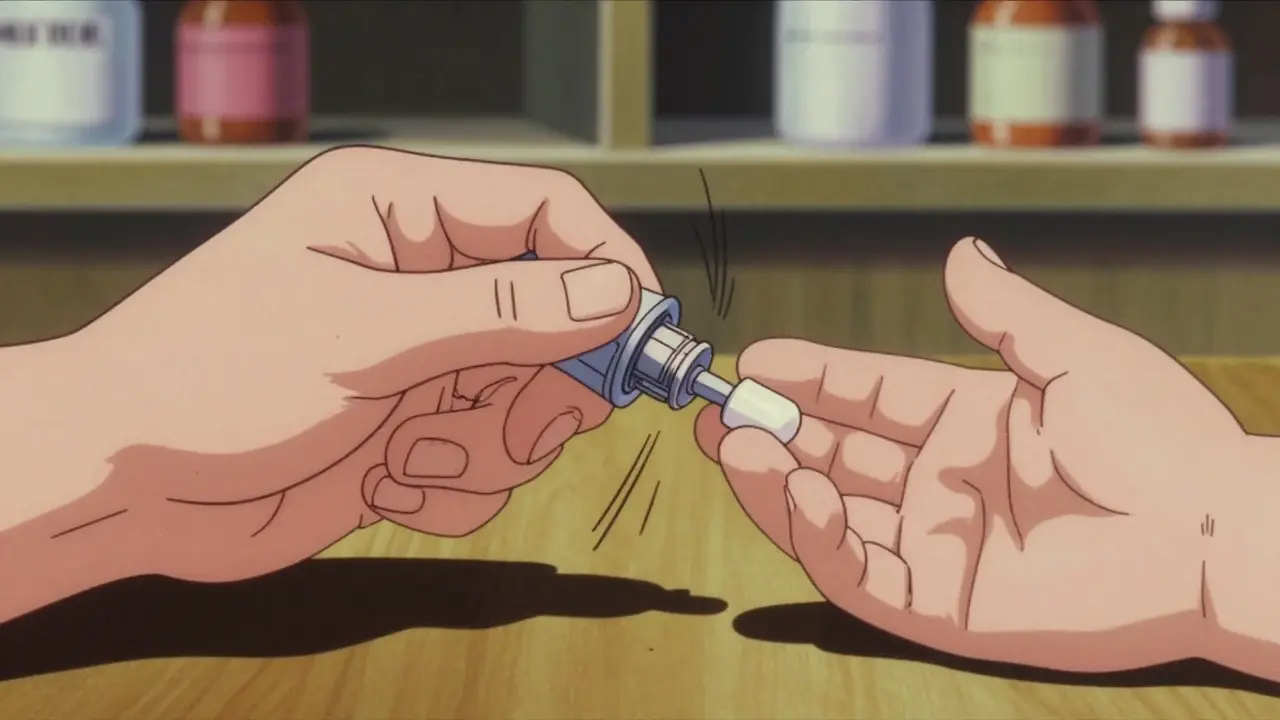
It’s Not Foolproof - And That’s the Point
No one calls these caps “child-proof.” That’s intentional. The FDA and CPSC are very clear: child-resistant doesn’t mean child-proof. Kids have broken into CR containers. Parents have left them on the counter. Grandparents have opened them once and forgotten to re-lock them. Here’s the hard truth: after the first time you open a CR cap, its effectiveness drops by about 15%. Why? Because people don’t re-close them properly. A 2019 CPSC report found that 73% of child poisonings involving CR packaging happened because the cap was left loose or partially twisted. In 2022 alone, over 12,800 incidents were reported where children got into medicine despite CR packaging. Most of those weren’t due to bad design. They were due to human error. And it’s not just kids. Seniors and people with arthritis struggle too. A 2022 Arthritis Foundation survey showed 68% of people with hand impairments had trouble opening CR caps. Some need help from caregivers. Others end up leaving meds in open containers just to get their pills out.What’s New in Medication Safety
Technology is stepping in. In January 2023, Aptar Pharma launched the first FDA-cleared smart CR cap: SmartDose. It looks like a regular cap - but it has Bluetooth. It records every time someone opens the bottle. If your child gets into it, you get a notification. If you forget to take your own pill, it reminds you. That’s not sci-fi. It’s real. And it’s just the beginning. Regulators are also expanding the rules. In 2023, the CPSC proposed new rules for cannabis edibles. Any product with more than 2mg of THC per serving must now have CR packaging. That includes gummies, chocolates, and drinks - things kids might mistake for candy. Laundry detergent pods are next. Right now, they’re only covered by voluntary standards. But with over 20,000 child poisonings from pods since 2012, the CPSC is pushing to make CR packaging mandatory.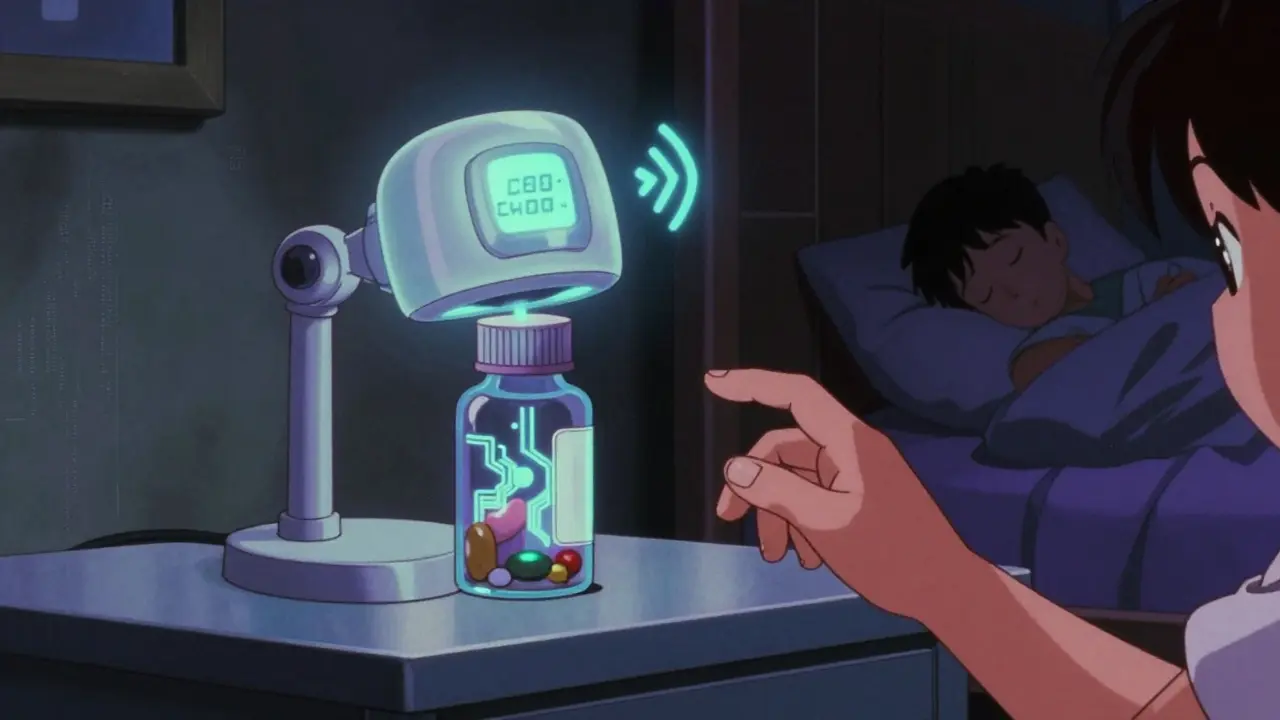
What You Can Do
CR packaging is a tool - not a solution. Here’s how to use it right:- Always re-lock the cap after use - even if you’re in a hurry.
- Store meds up high, out of sight - not on the counter or in a purse.
- If your parent or grandparent struggles to open the cap, ask your pharmacist for a non-CR version. They can give you one with a signed waiver.
- Don’t transfer pills to pill organizers unless they’re also child-resistant.
- Teach kids that medicine isn’t candy - even if it looks like it.
Global Trends and the Future
The U.S. isn’t alone. Brazil started requiring CR packaging for all medications in 2021. India followed in 2022. The EU uses similar standards under EN ISO 8317:2023. The global market for CR packaging is expected to hit $4.87 billion by 2028. Why? Because populations are aging. More seniors need meds. More kids are being born. And more dangerous substances - from vape liquids to high-dose vitamins - are hitting the market. The future isn’t just about harder caps. It’s about smarter ones. Caps that track use. Caps that connect to apps. Caps that remind you to lock them. But the core goal hasn’t changed since 1970: give adults time to act. Give kids a second chance. Give families peace of mind.Are child-resistant caps really effective?
Yes, but only if used correctly. Since the 1970s, child-resistant packaging has reduced pediatric poisoning deaths by 45%. It prevents an estimated 900,000 accidental ingestions each year. But effectiveness drops by about 15% after the first opening if the cap isn’t re-locked properly. It’s not foolproof - it’s a safety layer.
Can I get non-child-resistant caps for elderly family members?
Yes. Pharmacists can provide non-child-resistant packaging if the patient or caregiver has difficulty opening CR caps due to arthritis, tremors, or other disabilities. You’ll need to sign a form acknowledging the risk, but it’s a legal option. Many seniors rely on this to take their meds safely and independently.
Why do some CR caps feel easier to open than others?
Not all CR caps are made the same. Brand-name manufacturers often invest in better designs that balance child resistance and senior usability. Generic brands sometimes cut corners. Consumer Reports found that CVS Health’s CR caps failed child resistance tests 22% of the time, while some manufacturer-specific caps failed only 8%. If a cap feels too easy, it might not meet standards.
Do liquid medications need child-resistant packaging?
Yes, if they contain regulated ingredients like acetaminophen, ibuprofen, or iron. But liquid meds are harder to secure. About 39% of non-compliant packaging incidents involve liquids. The cap might be CR, but the bottle could be squeezable or leaky. Always check the label - if it’s a prescription or OTC drug with a warning, it should have CR packaging.
What about nasal sprays and inhalers?
Nasal spray pumps alone don’t count as child-resistant. Since 2012, the CPSC requires the entire device - including the spray nozzle and cap - to prevent children from activating it. Many older models don’t meet this. Newer ones use special CR metering pumps that require a two-step action. Always check the box or ask your pharmacist if your nasal spray is CR-compliant.
Is CR packaging required for vitamins and supplements?
Only if they contain certain high-risk ingredients. Iron supplements, for example, must have CR packaging because even a few pills can kill a child. High-dose vitamin D (over 10,000 IU) is under review for mandatory CR packaging. Most other vitamins and herbal supplements are not required to have CR caps - so store them carefully anyway.
What should I do if my child opens a CR container?
Call Poison Control immediately at 1-800-222-1222 (U.S.) - even if your child seems fine. Many poisons don’t show symptoms right away. Do not wait for vomiting or drowsiness. Do not try to induce vomiting unless instructed. Keep the container handy so you can tell the poison specialist what was taken and how much.




9 Comments
Child-resistant caps saved my niece's life. She got into my dad's blood pressure pills last year-cracked the cap, swallowed three. We got to the ER in 12 minutes. The cap slowed her down just enough. Not perfect, but enough.
Now I always double-lock them. Even if I’m tired. Even if I’m in a hurry. It’s not about inconvenience-it’s about survival.
in india, we dont even have proper child resistant caps for most medicines... my cousin's kid opened a bottle of paracetamol last month, and the cap was just twist off... no push down, no nothing... and the bottle was left on the kitchen counter like a snack...
why do we wait for deaths to happen before we act? we have 100 million kids under 5... and the pharma companies still use cheap caps to save 2 cents per bottle... sad.
These caps are engineering poetry. Push-down-and-twist isn’t just a design-it’s a psychological hack. Kids are tactile explorers. They don’t think in sequences. They don’t understand cause-and-effect chains. They see a cap. They grab. They twist. They pull. The CR cap says, ‘Nope. Try again. And again. And again.’
Meanwhile, adults? We’ve got muscle memory. We’ve got patience. We’ve got the cognitive bandwidth to do two things at once. That’s the gap. That’s the genius. That’s why it works.
It’s not about locking the world. It’s about buying seconds. And seconds are everything.
Isn't it ironic? We design these complex, multi-step mechanisms to protect children from themselves... yet we live in a world where adults can't even remember to close the damn thing after one use?
We outsource safety to plastic and rubber, then blame the system when it fails.
Maybe the real problem isn't the cap-it's our collective laziness disguised as convenience.
And don't get me started on how we treat medicine like candy. We teach kids that pills are 'yummy' because they're colored and shaped like gummies... then wonder why they eat them.
It's not the packaging that's broken. It's us.
AMERICA IS THE ONLY COUNTRY THAT DOES THIS RIGHT 😤
EVERY OTHER COUNTRY IS SLEEPWALKING INTO A POISONING EPIDEMIC!
Look at India-kids are swallowing pills like Skittles because their pharma companies are too cheap to spend $0.03 more per cap.
And don't even get me started on how the EU lets 'soft' caps slide. We're talking about CHILDREN'S LIVES here, not corporate profit margins!
Also, if you're too old to open a cap? That's your problem. Get a caregiver. Don't make the whole world bend to your arthritis. We didn't build this system for you to be lazy.
And yes, I know someone who left the bottle on the coffee table. And yes, their kid got into it. And yes, they're still mad the cap didn't do ALL the work.
STOP EXPECTING TECHNOLOGY TO FIX HUMAN STUPIDITY. 🇺🇸
From a pharmacovigilance standpoint, the current CR paradigm is a classic example of risk mitigation via engineered control, but with low fidelity to behavioral adherence dynamics. The 15% efficacy decay post-initial opening is not a design flaw-it's a systems-level failure of behavioral reinforcement.
Moreover, the CPSC’s 85% failure threshold for children is statistically robust, yet it ignores developmental heterogeneity. A child with motor delays may open it faster than a neurotypical peer due to compensatory strategies.
Also, the absence of mandatory CR for OTC supplements constitutes a regulatory gap. Iron toxicity is the leading cause of pediatric fatal overdose in the U.S.-yet we allow non-CR iron tablets to be sold like candy.
SmartDose is a step toward closed-loop safety systems, but without mandatory telemetry and parental alert integration, it remains a luxury, not a public health intervention.
Why do we even bother? Kids will always find a way. My cousin’s kid opened a bottle by smashing it on the floor. The cap didn’t matter.
Just lock your meds in a cabinet. That’s it. Stop pretending plastic caps are magic.
Also, why do we make it so hard for old people? My grandma cries trying to open her pills. She just leaves them out. Now she’s the danger.
It’s a mess. No one wins.
My mom has severe arthritis, and she uses non-CR caps because she can’t open the regular ones. We signed the waiver, and now we keep her meds in a locked drawer. But here’s the thing-she still forgets to lock it sometimes. So we added a small lockbox with a combination lock. It’s not fancy, but it works.
Also, I didn’t know that nasal sprays weren’t always CR until I read this. Mine’s from 2018. I’m going to call my pharmacist tomorrow.
And yes, I just checked-my kid’s vitamin D bottle doesn’t have a CR cap. That’s gonna change tonight.
Let’s be clear: the push-and-turn cap is a Class I medical device under FDA 21 CFR 801.440. It’s not just a cap-it’s a Class I device with performance standards tied to ASTM F439-18 and ISO 8317:2023. The 85% failure rate for children is based on a 95% confidence interval with a margin of error of ±5%.
But here’s what nobody talks about-the ‘senior-friendly’ test uses adults aged 50–70, yet 68% of people over 65 have osteoarthritis. The test is outdated. The population is aging. The cap design hasn’t kept up.
SmartDose? It’s a start. But it’s a $12 add-on. Insurance won’t cover it. That’s not innovation-that’s exclusion.
And for the love of God, stop calling them ‘child-proof.’ That’s a marketing lie. The FDA doesn’t even allow that term. It’s child-resistant. Period.