When you pick up a prescription, you might see two options: the brand-name drug you recognize from TV ads, or a much cheaper generic version with a plain label. You might wonder-how can they be so different in price but the same in effect? The answer isn’t magic. It’s economics, regulation, and competition. And it’s saving patients and insurers hundreds of billions every year.
Same Medicine, Different Price Tag
Generic drugs aren’t knockoffs. They’re exact copies. The FDA requires them to have the same active ingredient, strength, dosage form, and route of administration as the brand-name version. They work the same way. They’re absorbed the same way. They’re just cheaper. The reason? Brand-name drugs carry massive upfront costs. Developing a new drug can take over a decade and cost more than $2 billion. That includes clinical trials, regulatory filings, and marketing. Once approved, the company gets a patent-usually 20 years-to recoup that investment. During that time, they’re the only ones allowed to sell it. That’s why you see ads for drugs like Lipitor or Humira: they’re trying to build loyalty before generics hit the market. Once the patent expires, other companies can step in. They don’t need to repeat the expensive trials. Instead, they file an Abbreviated New Drug Application (ANDA) with the FDA. All they have to prove is that their version is bioequivalent-meaning it behaves the same in the body. That cuts development costs by 80% or more.How Competition Drives Prices Down
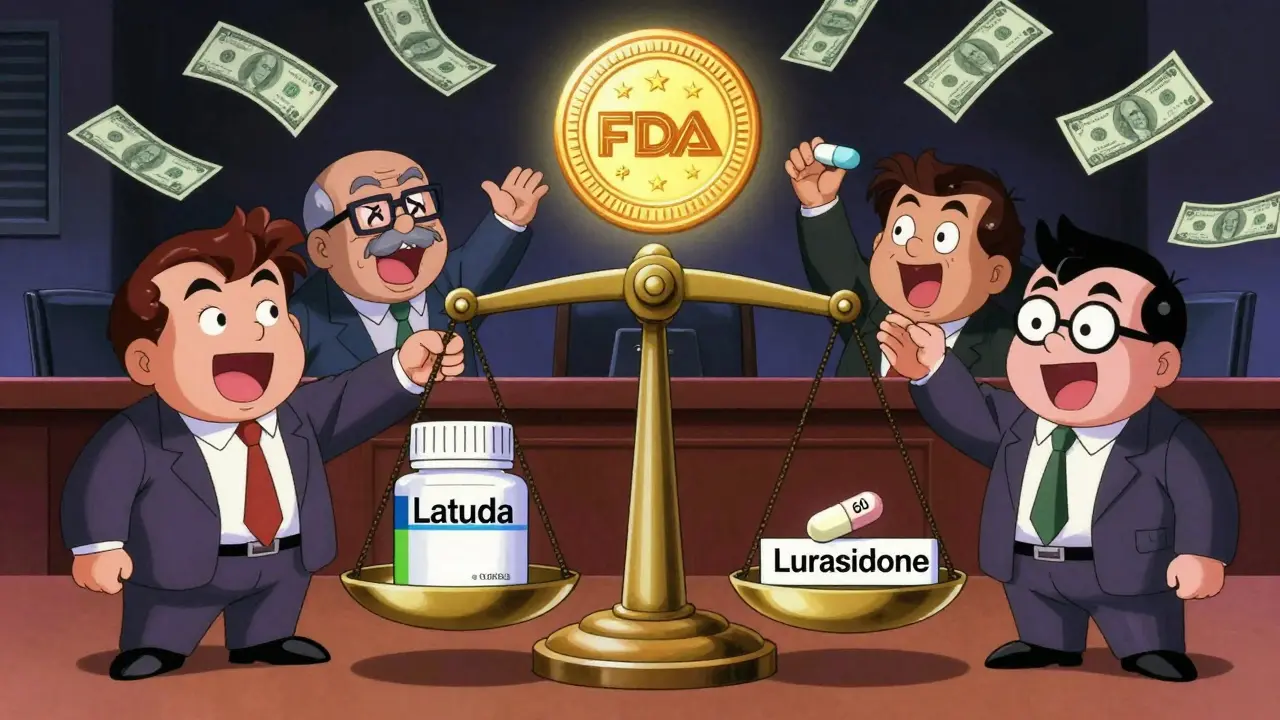
The real price drop happens when more companies start making the same generic. One company might sell it for 30% of the brand price. Add a second, and it drops to 20%. A third? It might fall to 10%. By the time five or six manufacturers are competing, the price often drops to just 5% of the original. Take lurasidone, a drug for schizophrenia. When the brand version, Latuda, was the only option, a 30-day supply cost about $1,400. After generics entered the market, that same prescription fell to under $60. That’s a 95% drop. Pemetrexed, used for lung cancer, went from $3,800 per month to $500. Those aren’t rare cases. The FDA says this pattern repeats for nearly every drug once generics arrive. In 2022 alone, generic and biosimilar drugs saved the U.S. healthcare system $408 billion. That’s up from $373 billion the year before. Over the last decade, that adds up to nearly $3 trillion in savings. Most of that goes to patients in lower copays and to insurers in reduced payouts.What You Pay at the Pharmacy
If you’ve ever compared your copay for a generic versus a brand-name drug, you’ve seen the difference firsthand. The average copay for a generic is $6.16. For a brand-name drug? $56.12. That’s almost nine times more. And 93% of generic prescriptions cost less than $20. Only 59% of brand-name prescriptions do. For common conditions, the savings are even clearer:- Depression meds: 67% cheaper as generics
- Hypertension drugs: 58% cheaper
- Weight loss medications: 57% cheaper
Not All Generics Are Created Equal
Here’s the catch: not every generic is cheap. Some are priced almost as high as the brand. Why? Because of how pharmacy benefit managers (PBMs) operate. PBMs are middlemen between insurers, pharmacies, and drug makers. They negotiate prices and create formularies-lists of approved drugs. But some PBMs use a trick called “spread pricing.” They tell the insurer they’re paying $10 for a generic, but they actually pay the pharmacy $6. They pocket the $4 difference. To maximize that spread, they sometimes push higher-priced generics onto the formulary-even if a cheaper, equally effective version exists. A 2022 study in JAMA Network Open found 45 high-cost generics that were 15.6 times more expensive than other generic alternatives with the same effect. In Colorado’s insurance plans, replacing just those 45 drugs would have cut spending from $7.5 million to under $900,000. That’s 88% in savings. So while most generics are affordable, you can’t assume every generic is the best deal. Always ask your pharmacist: “Is there a cheaper generic option?”How to Get the Lowest Price
You don’t have to pay whatever your insurance says. Here’s how to save:- Ask your doctor to write “dispense as written” on your prescription. That lets your pharmacist switch to a generic if available.
- Use free apps like GoodRx or SingleCare. They show cash prices at nearby pharmacies-often lower than your insurance copay.
- For long-term meds like blood pressure or diabetes drugs, consider mail-order pharmacies. They usually offer 90-day supplies at lower rates.
- If you’re uninsured or on a high-deductible plan, paying cash can be cheaper than using insurance. One study found 78% of people saved more by paying cash than using insurance for generics.
Who Benefits the Most?
The biggest winners? People without insurance and those on high-deductible plans. A 2023 study found uninsured patients saved $6.08 per generic prescription on average-more than anyone else. For people struggling to afford meds, even a $5 saving per pill adds up fast. That’s why services like the Mark Cuban Cost Plus Drug Company exist. They sell generic drugs at cost plus a small markup, with no middlemen. But they only carry about 26% of expensive generics, so they’re not a full solution. Still, they show what’s possible when transparency replaces profit-driven pricing.What’s Next?
More drugs are coming off patent every year. In 2023, the FDA approved over 650 new generic drugs. That means more competition, more savings. The Inflation Reduction Act is also helping by capping insulin costs at $35 per month for Medicare patients-and encouraging biosimilar competition for complex biologic drugs. But challenges remain. Some drug makers extend patents through minor tweaks (“evergreening”). Others pay generic companies to delay entry (“pay-for-delay”). The FTC is investigating both. And shortages of certain generics-like antibiotics or heart meds-can cause sudden price spikes. Still, the big picture is clear: generics are the most powerful tool we have to lower drug costs. They’re safe. They’re effective. And they’re drastically cheaper. You just need to know how to use them.What to Do Next
If you’re on a long-term medication, take five minutes today. Open GoodRx. Type in your drug name. Compare the cash price to your insurance copay. Ask your pharmacist if there’s a cheaper generic. You might be surprised how much you’re overpaying. You’re not just saving money. You’re taking control of your healthcare.Are generic drugs as safe and effective as brand-name drugs?
Yes. The FDA requires generic drugs to meet the same strict standards as brand-name drugs for quality, strength, purity, and performance. They must be bioequivalent, meaning they work the same way in your body. Millions of people use generics every day with the same results as the brand versions.
Why do some generic drugs cost more than others?
Not all generics are priced the same. Some are expensive because pharmacy benefit managers (PBMs) profit from the difference between what they charge insurers and what they pay pharmacies. This is called spread pricing. Some PBMs push higher-priced generics onto formularies to increase their own profits-even when cheaper, equally effective options exist.
Can I save money by paying cash instead of using insurance for generics?
Yes, often. Many people with high-deductible plans or no insurance save more by paying cash through services like GoodRx than by using their insurance. Insurance copays can be higher than the actual cash price, especially for older generics. Always compare both prices before paying.
Do generic drugs take longer to work?
No. Generic drugs are required to be bioequivalent to the brand-name version, meaning they enter your bloodstream at the same rate and to the same extent. They start working just as quickly. Any difference in how you feel is likely due to inactive ingredients, which don’t affect the drug’s effectiveness.
Why don’t doctors always prescribe generics?
Some doctors prescribe brand names out of habit, or because they’re unaware of cheaper alternatives. Others may be influenced by drug reps or marketing. But most will switch to a generic if you ask. Always say: “Is there a generic version available?” or “Can we use the cheapest option?”
Are there any risks in switching from a brand-name drug to a generic?
For most people, no. The FDA approves generics only after proving they’re identical in effect. Rare exceptions exist for drugs with a narrow therapeutic index-like warfarin or thyroid meds-where tiny differences matter. In those cases, your doctor may recommend sticking with one brand. But for the vast majority of drugs, switching is safe and effective.

15 Comments
Just saved $180 this month switching my blood pressure med to generic. I used GoodRx and paid $12 cash instead of $192 with insurance. My pharmacist laughed and said, 'Most people don’t even check.' Seriously, if you’re on long-term meds, this is free money.
Stop letting the system rob you. Five minutes = hundreds a year. Do it.
So we’re supposed to believe that the same molecule, manufactured in the same factory, sometimes in the same building, is magically cheaper just because the label doesn’t have a fancy logo?
It’s not economics. It’s corporate theater. The brand-name companies aren’t losing money-they’re just pretending to. They’ve already recouped their ‘$2 billion’ investment by charging $500 a pill for 15 years. Now they want us to feel guilty for saving money.
Genius.
Yeah but let’s be real-most people don’t care. I’ve seen friends pay $60 for a brand-name antidepressant because ‘it’s the one my doctor gave me.’ They’d rather keep paying than figure out how to save. It’s not about the money. It’s about comfort.
And don’t even get me started on PBMs. They’re the real villains. You think the pharmacy is ripping you off? Nah. They’re getting paid $6. The PBM charges your insurer $10. The $4 difference? That’s their ‘profit.’
Meanwhile, you’re still paying $50 because your insurance ‘covers’ it. It’s a scam wrapped in a spreadsheet.
And now I’m mad again. Thanks for that.
Good info. I didn’t know cash prices were often lower than insurance copays. Just checked my diabetes med-$14 cash vs $38 copay. I’m switching next refill.
Thanks for the reminder to ask.
⚠️ PSA: PBMs are working with Big Pharma to keep generics expensive. This is a controlled demolition of your wallet. 🕵️♀️💸
They’re literally choosing the MOST expensive generic to maximize their spread. It’s not an accident. It’s a business model. You’re being played. Don’t trust your insurance. Don’t trust your doctor. Check GoodRx. ALWAYS.
I’ve been using GoodRx for my thyroid med for two years. It’s $12 a month instead of $80. I never told anyone because I thought I was the only one who knew.
Turns out, I’m not. Just… didn’t want to jinx it.
STOP PAYING OVERPRICED BRANDS. Seriously. I used to think generics were ‘inferior’ until I switched my cholesterol med. Same exact results. My doctor didn’t even notice.
Now I’m on a mission. I tell everyone I know. If you’re spending more than $20 on a generic, you’re being scammed. Go to GoodRx. Do it now. Your future self will high-five you.
🔥💸
Interesting how the article spends 80% of its time explaining why generics are cheaper… but only 5% on why some are still expensive.
Kinda like a car ad that says ‘Our cars get 40 mpg!’ but doesn’t mention the 20% that have faulty fuel pumps.
Still, good reminder to check prices. I just saved $40 on my asthma inhaler. Not bad.
Let me tell you what nobody’s saying. The real reason generics are cheaper isn’t because they skip trials-it’s because the FDA lets them skip *enough* of them. You think they test every batch? Nah. They test one batch from one factory and say ‘it’s good enough.’
And don’t get me started on the overseas labs. I’ve seen reports-some generics are made in plants with zero FDA inspections. They just send samples and hope for the best.
Yeah, they’re ‘bioequivalent.’ But what does that even mean? Does it mean your body absorbs it the same? Or just that the blood test looks similar?
I’ve had two different generics for the same drug-one made me dizzy, the other didn’t. Coincidence? Maybe. But I’m not taking chances anymore.
And don’t tell me to ‘ask my pharmacist.’ They’re paid by the pharmacy. They don’t care if you live or die. They care if you buy your next refill.
So yeah. Save money. But don’t pretend it’s risk-free. The system’s rigged. We’re just lucky if we don’t get screwed.
Oh how quaint. The myth of the benevolent generic. The FDA? A toothless puppet of Big Pharma. PBMs? The true oligarchs. And you, dear reader, are the fool who believes in ‘bioequivalence’ as if it were a sacred covenant.
Let me ask you: if generics are identical, why do they have different inactive ingredients? Why do some cause rashes, insomnia, or nausea while others don’t? Because chemistry isn’t magic-it’s *context*. Your body isn’t a test tube.
And let’s not forget: the FDA’s ‘approval’ is a rubber stamp. They review data submitted by the manufacturer. The manufacturer submits data that says it works. Who audits that? No one.
So yes, you save money. But at what cost? Your health? Your peace of mind? Or just your pride in being ‘smart’ enough to play the game?
There’s a reason the wealthy still take brand-name drugs. They know the difference isn’t just in the label.
In Indonesia, generics are the ONLY option. No one buys brand names. We call them ‘obat generik’-and they’re everywhere. Cheap. Effective. No drama.
Why is the U.S. so weird about this? You pay $200 for a pill that costs $2 to make. That’s not healthcare. That’s capitalism on steroids.
And yet… we still trust the system. We still pay. We still believe the ads.
Maybe it’s time to wake up.
Let’s cut through the noise. The $2 billion R&D cost? That’s a myth engineered by pharma lobbyists. The actual cost to develop a drug? $500M max. The rest is marketing, executive bonuses, and shareholder dividends.
Patents? They’re not ‘incentives’-they’re monopolies. And when they expire, the system doesn’t collapse. It *thrives*. People live longer. Hospitals save billions. Insurers breathe.
But the real power move? The fact that you, the patient, are expected to be a price detective. You’re not a consumer. You’re a data point. And the system wants you to be too tired to fight.
So do it anyway. Use GoodRx. Ask for the cheapest generic. Call your insurer. Fight the spread pricing. You’re not just saving money-you’re dismantling a corrupt model, one prescription at a time.
And if you’re still on brand-name? You’re not dumb. You’re just uneducated. Now you know.
Generics are fine if you dont mind your meds being made in a factory that also makes fertilizer and your doctor never heard of the manufacturer but hey at least its cheap right
America thinks it owns the world but it cant even give people cheap medicine why do you think people leave your country for healthcare you think we want to pay 1000 dollars for a pill that costs 5 to make
Okay so I switched my generic for my anxiety med and… I think it’s not working the same? Like I’m more jittery? Or is it just in my head? I checked GoodRx and the cheapest one was $8 but the one I was on was $12… I’m so confused now. I don’t know if I should switch back? I mean… the article said they’re the same but… what if they’re not?? I just need to know if I’m crazy or if this is real??