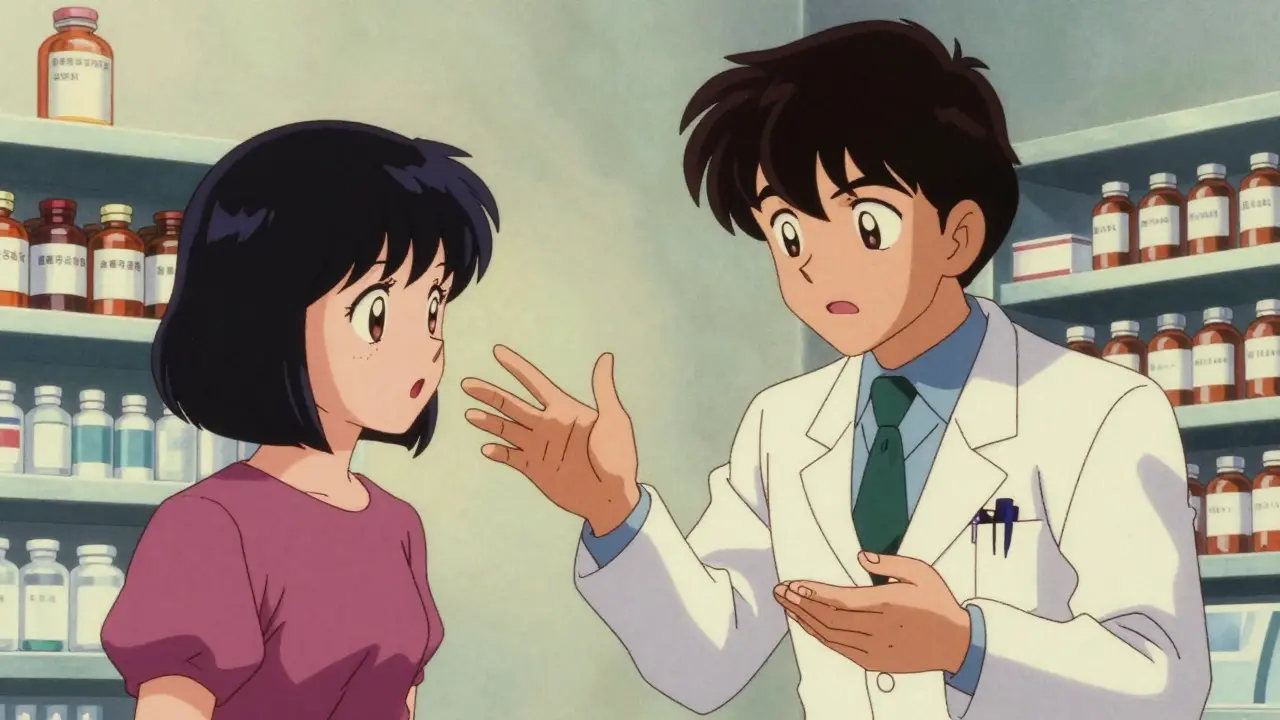
Imagine you're at the pharmacy or the doctor's office, and you mention you had a bad reaction to a specific antibiotic years ago. Suddenly, the doctor tells you that you can't take an entire group of similar drugs-not just the one that made you sick. This is called medication family avoidance. It sounds extreme, but when a reaction is severe, it's often the only way to keep you safe. But here is the catch: not every "allergy" requires you to avoid a whole family of meds, and sticking to an outdated label can actually stop you from getting the best treatment possible.
The Quick Guide to Medication Family Avoidance
Before we get into the weeds, here is the bottom line: whether you need to avoid a whole drug family depends on severe drug reaction patterns, the chemistry of the drug, and how your immune system responded. If you had a life-threatening reaction like anaphylaxis or a severe skin peeling condition, the answer is usually "yes, avoid the whole family." If you just had an upset stomach or a mild rash, you might be fine with a different drug in that same group.
| Reaction Type | Examples | Family Avoidance Needed? | Reasoning |
|---|---|---|---|
| IgE-Mediated (Allergic) | Anaphylaxis, Hives | High Probability | Immune system attacks similar molecular structures |
| Severe Cutaneous (SCARs) | SJS, TEN, DRESS | Almost Always | Extreme risk of mortality; high class-reactivity |
| Non-Allergic/Pharmacological | Nausea, GI bleeding | Low/Case-by-Case | Reaction is based on drug effect, not immune response |
Identifying the "Red Zone": When Avoidance is Mandatory
There are certain reactions that act as a massive red flag. We call these Severe Cutaneous Adverse Reactions, or SCARs. These aren't your typical itchy rashes; they are medical emergencies. For example, Stevens-Johnson syndrome (SJS) and Toxic Epidermal Necrolysis (TEN) cause the skin to blister and peel off in large sheets. Because TEN carries a mortality rate as high as 30-50%, doctors will almost always tell you to avoid the entire family of drugs that caused it.
The culprits are often specific. About 40% of these severe cases are caused by antibacterial sulfonamides (sulfa drugs). If you've had a SCAR reaction to a sulfa drug, taking another one isn't just a risk-it's potentially fatal. The same logic applies to certain anticonvulsants and the drug allopurinol.

The Complexity of Cross-Reactivity
Cross-reactivity is the "secret sauce" behind why one drug reaction leads to avoiding a whole family. It happens when your immune system mistakes a similar-looking drug for the one that caused the initial reaction. This is most common in Beta-lactam antibiotics, a huge family that includes both penicillins and cephalosporins.
For a long time, if you were "allergic to penicillin," you were told to avoid all beta-lactams. But science has evolved. We now know that the actual cross-reactivity rate between penicillins and some cephalosporins can be as low as 0.5% to 6.5%. This means a huge number of people are avoiding effective medications they could actually tolerate.
Another classic example is NSAIDs (Nonsteroidal Anti-inflammatory Drugs). If you have aspirin-exacerbated respiratory disease, you might react to almost all NSAIDs. However, if your reaction was just a stomach ulcer caused by a non-selective NSAID, you might be able to safely switch to a COX-2 inhibitor because the mechanism of the side effect is different from an allergic response.
The "Allergy Label" Trap
Here is a shocking statistic: roughly 95% of people labeled with a penicillin allergy aren't actually allergic to it. They might have had a fever or a mild rash when they were five years old, and it was written in their chart as "penicillin allergy." Decades later, they are still avoiding the drug.
This leads to a dangerous cycle. When you have a "drug allergy" on your chart, doctors may struggle to find the right antibiotic for a severe infection, leading to treatment delays. Some patients report waiting days longer for the right medicine because doctors are too afraid to prescribe anything in that family. This is why "de-labeling" is becoming such a big deal in modern medicine.

How to Safely Test the Waters
If you've been avoiding a drug family for years based on a reaction that wasn't life-threatening, you don't have to just guess. There are professional ways to find out if you're still at risk.
- Skin Testing: A specialist can apply a tiny amount of the drug to your skin to see if there is a localized reaction.
- Component-Resolved Diagnostics: Newer tests, like the ImmunoCap Specific IgE, can look for specific antibodies with much higher accuracy than old-school tests.
- Graded Drug Challenges: This is where a doctor gives you a very small dose of the medication under strict medical supervision. If you don't react, the dose is slowly increased. This is surprisingly successful, with success rates between 70-85% for those with low-risk histories.
- Genetic Testing: For some drugs, like abacavir, a simple genetic test for the HLA-B*57:01 marker can predict with 99% accuracy whether you'll have a severe reaction, allowing doctors to safely prescribe the drug to those without the marker.
Practical Steps for Managing Your Drug History
You are the best advocate for your own health. To make sure your medical records are accurate and your treatments are safe, follow these steps:
- Be Specific: Don't just say "I'm allergic to penicillin." Say, "I took amoxicillin in 2010 and developed hives all over my chest within an hour." The timing and the specific symptom matter immensely.
- Demand Detail: Ask your doctor to record the type of reaction in your electronic health record. A note that says "rash" is helpful; a note that says "anaphylaxis" is critical.
- Ask About Alternatives: If you are told to avoid a whole family, ask: "Is this because of a chemical cross-reactivity or a general side effect? Are there subclasses in this family that are safer?"
- Wear Medical ID: If you have truly had a life-threatening reaction (like anaphylaxis), a medical alert bracelet is a lifesaver if you're unconscious in an ER.
If I had a mild rash with one antibiotic, can I take another in the same family?
Possibly. Non-allergic reactions, like a simple maculopapular rash, often don't require avoiding the entire class. However, you should only do this after a doctor confirms it wasn't an IgE-mediated allergic response, as those can be more severe upon second exposure.
What is the difference between a side effect and a drug allergy?
A side effect is a predictable response based on the drug's pharmacology (like nausea or drowsiness). A drug allergy is an unpredictable immune system response (like hives or swelling) where your body treats the medicine as a foreign invader.
Why do some people react to all NSAIDs if they react to Aspirin?
This is often due to Aspirin-Exacerbated Respiratory Disease (AERD). In these cases, the reaction isn't necessarily a classic "allergy" but a metabolic shift that causes the airways to constrict, which happens with most drugs that block the COX-1 enzyme.
Can a drug allergy go away over time?
In some cases, yes. Some people develop a tolerance or the immune system's sensitivity diminishes. This is why drug challenge protocols and skin testing are so useful-they can prove you are no longer reactive to a medication you were told to avoid years ago.
What should I do if I suspect I'm having a severe reaction right now?
Stop taking the medication immediately and seek emergency medical care. If you have trouble breathing, swelling of the face or throat, or a rapidly spreading rash, call emergency services or use an epinephrine auto-injector if you have one.

9 Comments
The point about de-labeling is actually the most critical part here. In clinical practice, we see so many patients who are restricted from first-line therapies because of a vague "rash" from thirty years ago. If you are unsure about your status, requesting a formal allergy evaluation from an immunologist is the gold standard for getting that label removed safely.
wow such a basic explantion. everyone knows about sjs but the way this is written is just too simple for anyone who actually knows medicine lol
Typical big pharma nonsense trying to trick us into "testing the waters" with more chemicals. They just want to keep us dependent on their synthetic garbage while they manipulate our immune systems from the shadows. This whole system is designed to keep us sick and compliant under the guise of safety guidelines. Wake up and realize that these "drug families" are just blueprints for how to control the population's biology!
That's a really helpful way to break down a complex topic. I think focusing on being specific with your doctor is great advice for anyone.
It is truly fascinating how people cling to these medical labels as if they are immutable truths of their existence rather than fluid snapshots of a biological moment in time. We live in an era where the Cartesian divide between the mind and the body is further blurred by the pharmacological interventions we accept without question, and while this post attempts to shed light on the mechanics of cross-reactivity, it fails to address the existential dread of realizing our very chemistry can betray us in such a random, chaotic fashion. The sheer arrogance of the medical establishment to believe they can "de-label" a human soul by simply poking a needle into a forearm is almost poetic in its absurdity, yet we dance to this tune because we are terrified of the void that comes with a severe reaction. I've seen so many people just accept their fate without questioning why the system is designed to categorize us into boxes of "allergic" or "non-allergic" as if we were mere specimens in a lab rather than complex beings with evolving spiritual and physical needs that transcend simple molecular structures.
The lack of nuance regarding molecular pharmacology in this discourse is quite disappointing
Exactly! These "tests" are just ways for them to get you back on the drugs. It's a scam to make money off the "de-labeling" process. If you're told to avoid a family, avoid it, because the doctors are probably lying about the cross-reactivity rates anyway to push more products!
STOP BEING AFRAID OF YOUR OWN RECORDS! Take charge of your health and DEMAND the tests! Stop letting outdated labels hold you back from the best treatment!
I think we can all agree that the most important thing is just staying safe and working with a team you trust.