Imagine waking up with an eye so red and painful that you can barely open it. Whether it's a severe allergic reaction or an inflammatory flare-up like uveitis, the discomfort can be overwhelming. In these moments, Steroid Eye Drops is a class of potent pharmaceutical agents, such as corticosteroids, designed to rapidly reduce ocular inflammation by blocking inflammatory pathways like prostaglandin synthesis. They are often the fastest way to save your vision during an acute crisis, but they come with a catch: using them for too long can actually cause the very vision loss they were meant to prevent.
Why Doctors Prescribe Steroid Drops
When your eye is inflamed, the tissues swell and the immune system goes into overdrive. Standard lubricating drops won't touch this. This is where corticosteroids like Prednisolone acetate (found in brands like Pred Forte) or Loteprednol etabonate come into play. These aren't your average over-the-counter drops; they are high-powered tools that stop the inflammation cycle almost immediately.
They are typically used for a few specific, serious scenarios:
- Uveitis: Inflammation of the middle layer of the eye that can lead to permanent blindness if not controlled.
- Severe Allergies: Non-infectious reactions that cause extreme swelling and itching.
- Chemical Burns: Reducing the secondary inflammatory damage after a thermal or chemical injury.
- Post-Surgical Inflammation: Helping the eye heal after a procedure without excessive swelling.
The Hidden Danger: Steroid-Induced Glaucoma
The biggest risk with these drops is a spike in Intraocular Pressure (IOP), which is the fluid pressure inside your eye. Think of your eye like a balloon; if too much pressure builds up, it starts to squash the delicate optic nerve. This is known as Steroid-Induced Glaucoma.
Here is the tricky part: not everyone reacts the same way. About 30-40% of people will see a slight increase in pressure. However, there is a small group-roughly 4-6% of the population-known as "steroid responders." For these people, the pressure jumps significantly (often more than 15 mmHg), putting them at a high risk for permanent optic nerve damage. The scariest part? You usually can't feel your eye pressure rising. By the time you notice "tunnel vision" or peripheral vision loss, the damage is often irreversible.
| Entity | Potency | Typical Use Case | Risk Level (Long-term) |
|---|---|---|---|
| Prednisolone Acetate | High | Severe uveitis, acute inflammation | High |
| Loteprednol | Moderate | Allergies, mild inflammation | Lower (Soft steroid) |
| Dexamethasone | High | Chronic inflammatory conditions | High |
The Risk of Cataracts and Infections
Beyond pressure, steroids can change the physical structure of your eye's lens. If you use these drops for more than 10 days, you increase your risk of developing Posterior Subcapsular Cataracts. Unlike the common cataracts that happen slowly as you age, these form at the very back of the lens-right in your direct line of sight. This can cause a sudden blurriness that makes reading or driving difficult.
There is also a secondary danger: immunosuppression. Because steroids tell your immune system to "calm down," they don't just stop the inflammation; they also stop your eye from fighting off germs. This creates an open door for opportunistic infections. A minor scratch on the cornea can suddenly turn into Fungal Keratitis or a flare-up of Herpes Simplex because your eye's natural defenses are offline.
How to Stay Safe: The Monitoring Protocol
You should never use steroid drops without a strict follow-up plan. Because the side effects are often invisible, your doctor needs to be your eyes. A standard safety plan usually includes:
- The Baseline Check: A pressure test before you ever put the first drop in, so the doctor knows your starting point.
- Regular Tonometry: Checking your IOP every 2-4 weeks. If you are a high-risk patient (e.g., you have diabetes or a family history of glaucoma), this might happen every week.
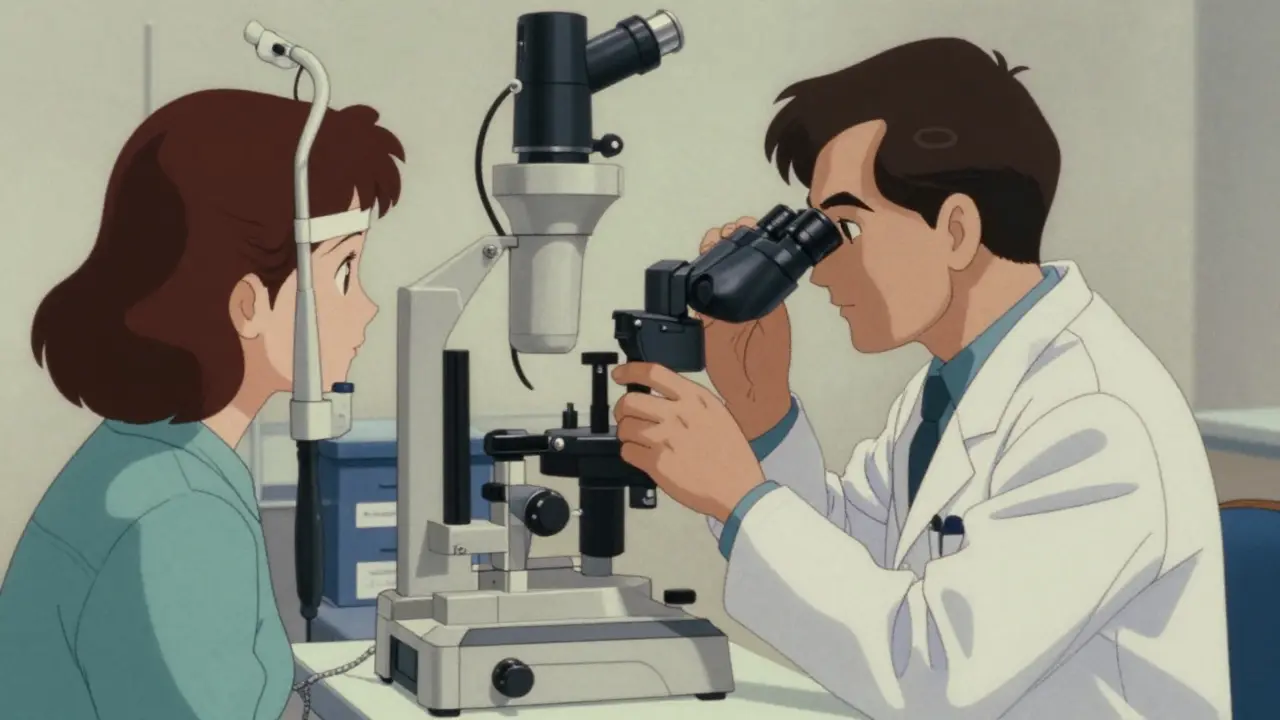
- Slit-Lamp Exams: Your doctor uses a high-powered microscope to look for early signs of lens clouding (cataracts) or corneal thinning.
- The "Slow Taper": Never stop these drops cold turkey. If you do, you might experience a "rebound" effect where the inflammation comes back even worse than before. Your doctor will slowly decrease the dose (e.g., from four times a day to three, then two) over several weeks.
When to Seek Immediate Help
While most monitoring happens at the clinic, you need to know the red flags. If you are on steroid therapy and experience any of the following, call your ophthalmologist immediately:
- Sudden blurry vision or "halos" around lights at night.
- A feeling of intense pressure or a dull ache in the eye.
- Increased redness or a sudden return of pain after it had improved.
- A noticeable loss of side vision (tunnel vision).
Alternatives for Long-Term Care
If you have a chronic condition that requires inflammation control for months or years, steroids might not be the best primary choice. Doctors often turn to nonsteroidal anti-inflammatory drugs (NSAIDs). While they don't have the same "punch" as a steroid, they don't carry the same risk of spiking eye pressure or causing cataracts. In some cases, your doctor might combine a low-dose steroid with a glaucoma-preventing drop to keep the pressure stable while still treating the inflammation.
How long is it safe to use steroid eye drops?
For most people, a course of treatment lasting up to two weeks carries a relatively low risk. However, once you pass the 10-to-14-day mark, the risk of cataracts and increased eye pressure rises. Many patients with uveitis use them for one to two months, but this requires strict medical supervision and regular pressure checks.
Can steroid-induced glaucoma be reversed?
The pressure spike itself is often reversible once the steroids are stopped or the dose is lowered. However, if that high pressure has already damaged the optic nerve, that specific vision loss is permanent. This is why monitoring is more important than the cure.
What happens if I stop using the drops suddenly?
Stopping abruptly can cause rebound inflammation. This is when the condition the steroids were treating returns aggressively, sometimes more severely than the initial flare-up. Always follow your doctor's tapering schedule.
Are all steroid eye drops the same?
No. There are "hard" steroids (like prednisolone) which are very potent and have a higher risk of increasing eye pressure, and "soft" steroids (like loteprednol) which are designed to be metabolized more quickly and generally have a lower risk of causing glaucoma.
Who is at the highest risk for side effects?
People with pre-existing glaucoma, those with diabetes, and individuals with a strong family history of glaucoma are at a much higher risk of being "steroid responders." These patients require more frequent monitoring, sometimes every 1-2 weeks.
Next Steps for Patients
If you've just been prescribed steroid drops, start by asking your doctor for your baseline eye pressure. If you've been using them for more than a month without a check-up, schedule an appointment for a full eye exam, including an optic nerve assessment. For those with chronic inflammation, discuss a transition to nonsteroidal alternatives to protect your long-term vision.

Write a comment