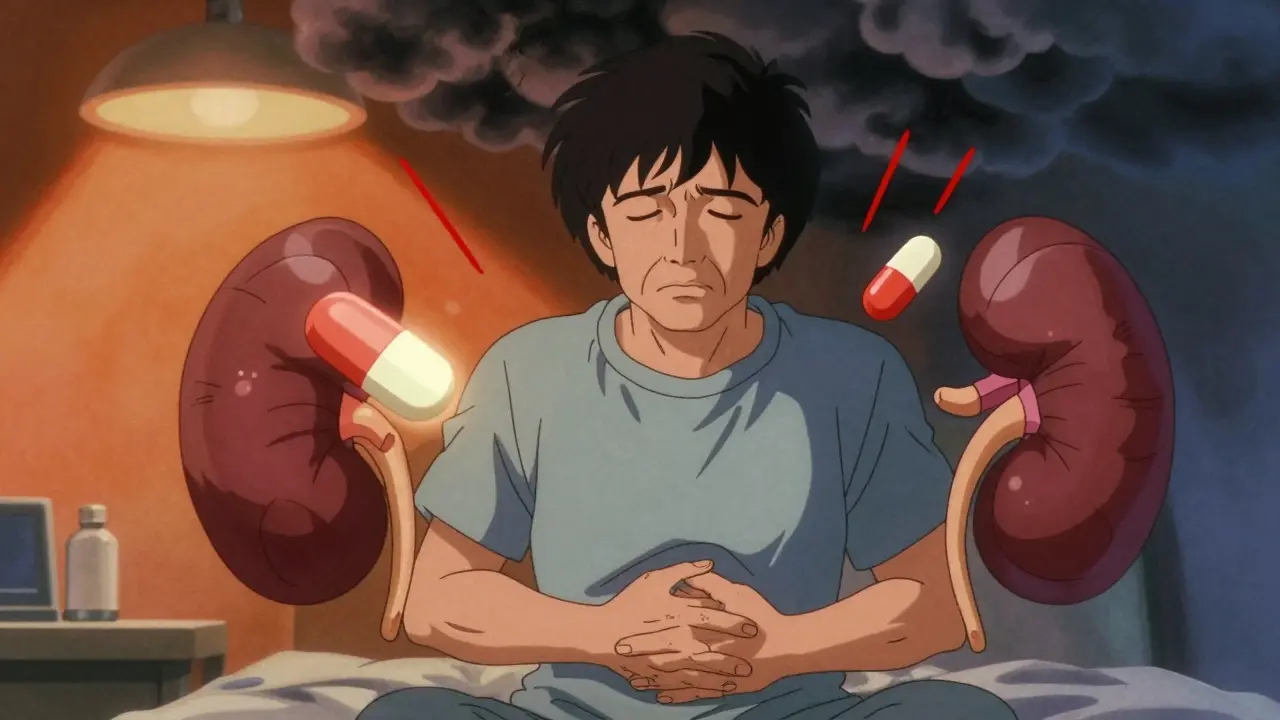
Lithium-NSAID Interaction Risk Calculator
This tool helps you understand the risk of kidney damage and lithium toxicity when taking common pain relievers with lithium. Based on research from Journal of Clinical Psychopharmacology and JAMA Network Open.
Input Your Details
Risk Assessment
When you're managing bipolar disorder with lithium, you're already balancing a delicate system. Your brain depends on steady lithium levels to keep mood swings in check. But what happens when you reach for ibuprofen for a headache, naproxen for back pain, or even aspirin for heart protection? Many people don’t realize that these common painkillers can turn a stable treatment into a medical emergency - and fast.
Why Lithium and NSAIDs Don’t Mix
Lithium works by affecting nerve signals in the brain, but it’s cleared from your body almost entirely by your kidneys. NSAIDs - like ibuprofen, naproxen, and indomethacin - block enzymes in the kidneys that help maintain blood flow. When those enzymes are suppressed, your kidneys slow down how much lithium they flush out. The result? Lithium builds up in your blood. A 2013 study in the Journal of Clinical Psychopharmacology found that NSAIDs can reduce lithium clearance by 25% to 60%. That’s not a small bump - it’s enough to push levels into the toxic range.How Toxicity Happens - Fast
Lithium toxicity doesn’t creep up over weeks. It can hit within 48 to 72 hours after starting an NSAID. Symptoms start mild: shaky hands, nausea, dizziness. But they can escalate quickly to confusion, slurred speech, muscle weakness, seizures, or even coma. A 2023 study in JAMA Network Open tracked over 12,000 patients and found that those taking both lithium and NSAIDs had a 3.2-fold higher risk of acute kidney injury compared to those on lithium alone. The highest danger? The first 30 days after starting the NSAID.Not All NSAIDs Are Equal
Some NSAIDs are far more dangerous than others when paired with lithium. Indomethacin is the worst offender - it can spike lithium levels by 40% to 60%. Piroxicam and ibuprofen follow closely, raising levels by 25% to 30%. Even naproxen, often thought of as "safer," still carries a 20% to 35% risk increase. Aspirin and celecoxib are less risky, but they’re not safe. Even celecoxib can raise lithium levels by 10% to 15% in people with existing kidney issues. The bottom line: if you’re on lithium, no NSAID is truly safe.The Kidney Takes a Double Hit
Lithium doesn’t just sit in your blood - it damages kidney cells directly. It interferes with proteins that help cells repair themselves, leading to long-term scarring. NSAIDs make this worse. By reducing blood flow to the kidneys, they starve those same cells of oxygen. This combination - direct cellular injury plus reduced blood supply - accelerates kidney damage. A 2017 study in Kidney International showed lithium causes beta-catenin buildup in kidney cells, a known trigger for fibrosis. Add NSAIDs into the mix, and you’re essentially turning your kidneys into a battlefield.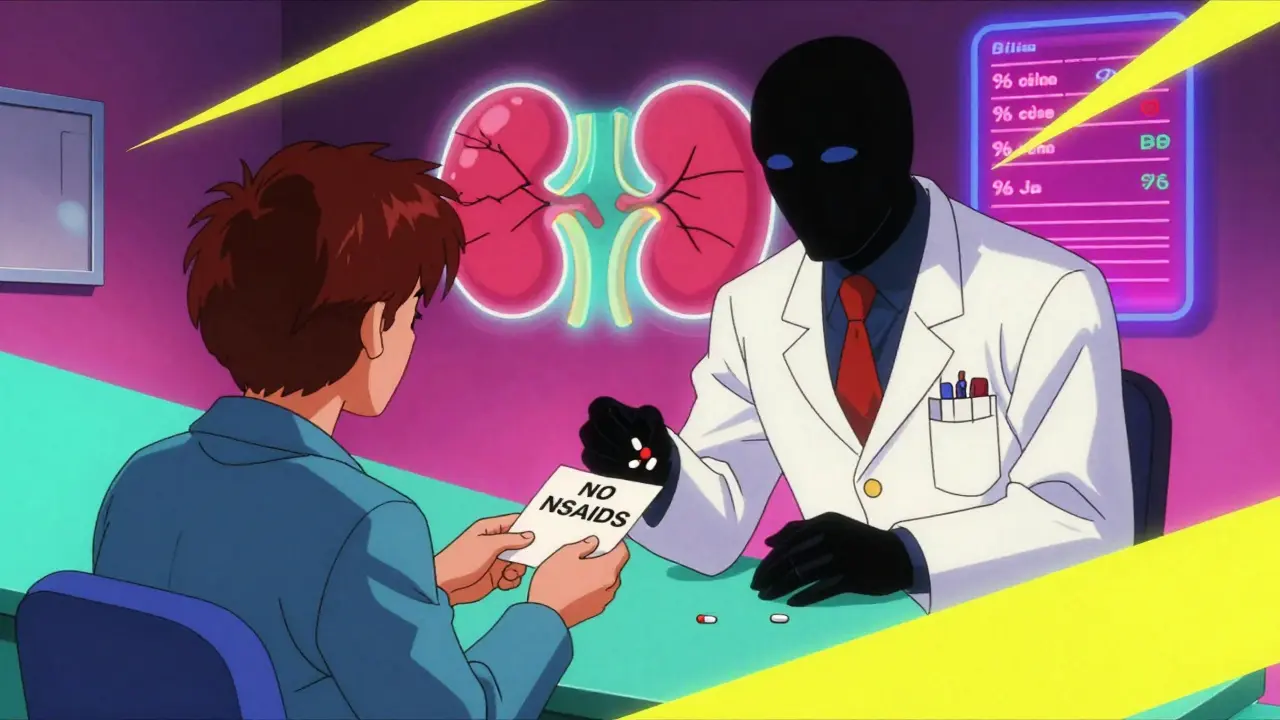
Who’s at Highest Risk?
Age matters. People over 65 are at the greatest risk. Kidney function naturally declines with age, so even a small drop in lithium clearance can push levels into danger. A 2023 analysis from 478 nephrology clinics found that 52.1% of lithium-related kidney injuries occurred in patients 65 and older. Another high-risk group? People seeing multiple doctors. If your psychiatrist prescribes lithium but your orthopedist prescribes naproxen, and your primary care provider doesn’t know about the lithium, the warning gets lost. One study found that only 58.3% of primary care providers knew NSAIDs were high-risk for lithium users.What About Acetaminophen?
Here’s the good news: acetaminophen (Tylenol) doesn’t interfere with lithium clearance. It’s the safest pain reliever for people on lithium. The Canadian Network for Mood and Anxiety Treatments (CANMAT) recommends it as first-line for chronic pain. But don’t go overboard - stick to 3,000 mg per day to avoid liver damage. For more severe pain, tramadol may be an option, but it needs careful dosing and monitoring. Opioids can also raise lithium levels slightly, mostly by causing dehydration, so they’re not ideal either.What If You’ve Already Taken an NSAID?
If you’ve taken an NSAID while on lithium, don’t panic - but act fast. Stop the NSAID immediately. Drink plenty of water - aim for 2 to 3 liters a day to help flush out excess lithium. Call your doctor right away. They’ll likely order a blood test to check your lithium level. If it’s elevated, they may hold your lithium dose for a few days and retest. Don’t wait for symptoms. Toxicity can develop before you feel anything.How to Stay Safe Long-Term
If you need ongoing pain management, here’s your roadmap:- First choice: Acetaminophen - up to 3,000 mg daily, no interaction with lithium.
- Second choice: Tramadol - start low (25 mg/day), increase slowly under supervision.
- Third choice: Short-term NSAIDs only - no more than 7 days, with hydration and lithium level checks every 2-3 days.
Also, make sure every provider who prescribes you anything - even a pharmacist - knows you’re on lithium. Keep a list in your wallet or phone. Ask your psychiatrist to send a note to your other doctors. Don’t assume they know.
What Happens After You Stop the NSAID?
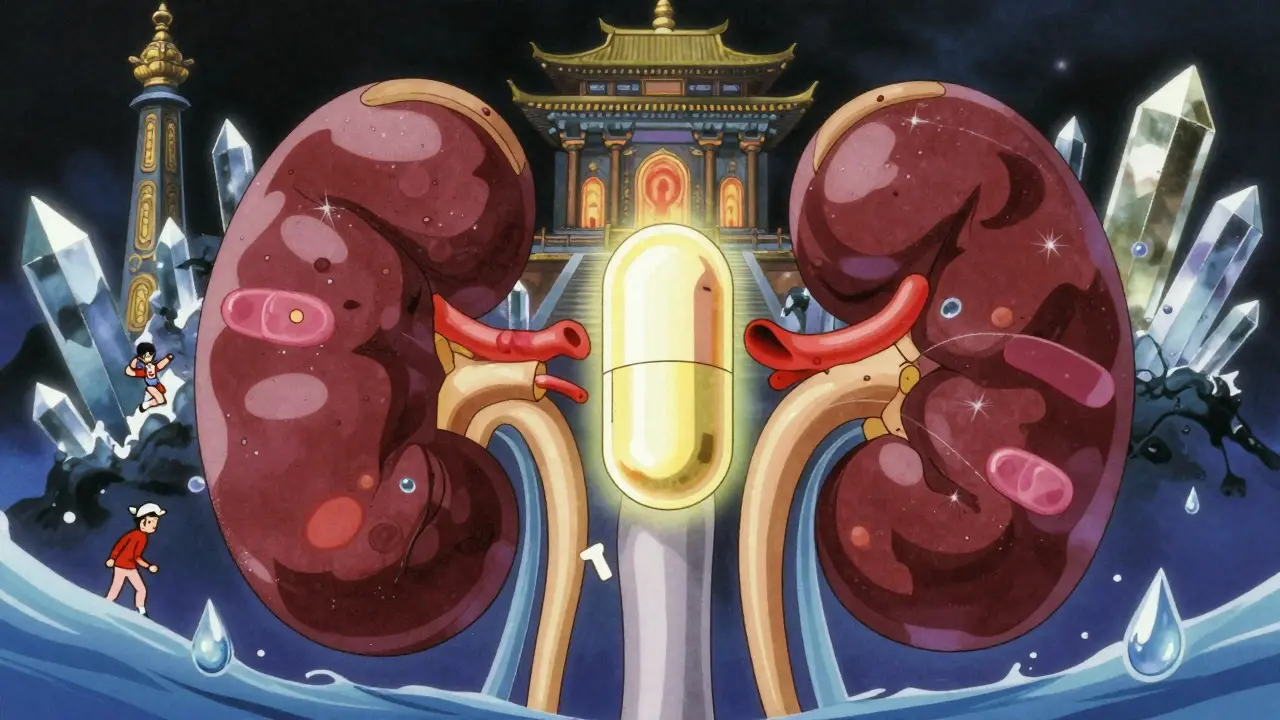
The interaction doesn’t vanish when you stop taking the NSAID. Prostaglandin suppression lasts for 7 to 10 days. That means your lithium levels can stay high even after you’ve stopped the painkiller. So, continue monitoring your levels and stay hydrated for at least a week after stopping the NSAID. Your doctor may delay restarting your full lithium dose until your levels stabilize.The Bigger Picture
This isn’t just a personal risk - it’s a system failure. A 2023 analysis showed that 28.6% of lithium users still get at least one NSAID prescription per year. Even with electronic alerts in most hospitals, co-prescribing hasn’t dropped enough. Kaiser Permanente cut it from 32% to 12% by forcing education and alerts. The VA only managed a 15% drop. That means thousands of people are still being put at risk because of broken communication.And the cost? The U.S. healthcare system spends $48.7 million annually treating lithium-NSAID toxicity. That’s over $18,000 per hospitalization. Most of it’s preventable.

10 Comments
Lithium saved my life, but I didn’t know NSAIDs could wreck my kidneys like that. 🤯 I used to pop ibuprofen like candy for gym soreness. Now I keep Tylenol in every bag. Stay hydrated, folks. Your kidneys will thank you. 🙏
It is, frankly, astonishing that such a well-documented pharmacological interaction remains so poorly understood by the general public and even many primary care practitioners. The persistence of co-prescribing in the face of robust clinical evidence constitutes a systemic failure of medical education and interprofessional communication. One might reasonably infer that patient safety is, in practice, secondary to convenience.
So basically, if you're on lithium, your headache meds are now a minefield. 😅 I used to think "it's just a pill" - turns out, it's more like "it's just a silent assassin with a prescription." Good thing I switched to Tylenol years ago. Still, I feel bad for the 65+ crowd who don't have anyone reminding them. We gotta do better.
Lithium is like your brain's bestie but NSAIDs are the toxic ex who shows up at your party and steals your drink 🍸💔 I just take Tylenol now and chill. Also I told my dentist. And my yoga teacher. And my Uber driver. Just in case
I’m so glad this was posted. My mom’s on lithium and she used to take Advil for her arthritis. We didn’t know it was dangerous. Now she only uses Tylenol and drinks water like it’s her job. Small changes save lives. 💛
Stop NSAIDs. Use acetaminophen. Max 3,000 mg/day. Hydrate. Tell every provider. Check levels after any NSAID exposure. That’s the entire protocol. No exceptions. No "I’ll just take one." You don’t get bonus points for ignoring warnings.
Funny how we treat lithium like magic, but treat NSAIDs like harmless candy. It’s like saying "I’m on insulin, but I’ll just have one donut." The body doesn’t care about your intentions - it just does the math. And the math says: you’re playing Russian roulette with your kidneys.
I used to think this was just doctor scare tactics. Then my uncle ended up in the ER after taking naproxen for a week. He didn’t even know he was on lithium - his doctor forgot to tell him. Now he’s got stage 3 kidney disease and a new hobby: yelling at pharmacists. So yeah. Don’t be that guy.
I’m on lithium and just got a new pain doctor. I printed out this whole post and handed it to him. He said "wow, I didn’t realize." Honestly? I’m tired of being the one who has to educate everyone. But I’ll keep doing it. My kidneys are worth it.
They’re hiding the truth. NSAIDs are just the tip. What if the real danger is that lithium itself is a slow poison? And they’re using NSAIDs as the scapegoat? 🤔 I heard the FDA gets money from pharma... so maybe they just want you to switch to something else. 🕵️♀️