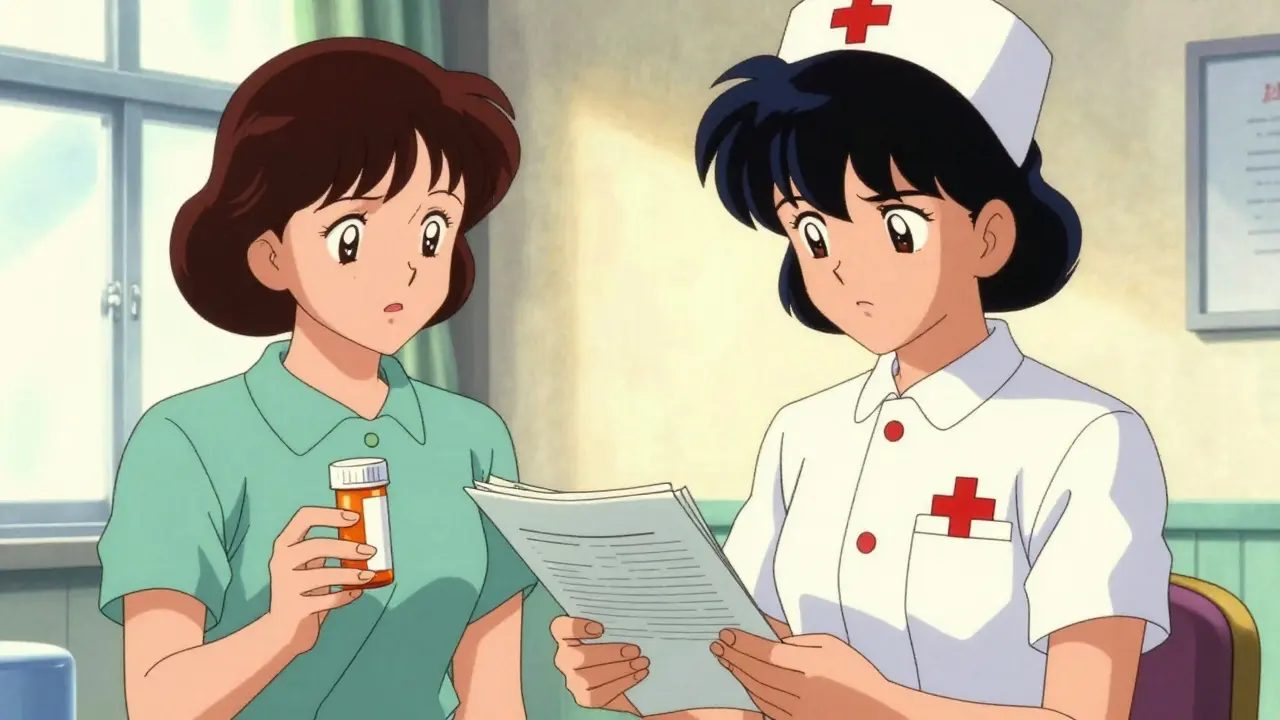
Imagine this: it’s 10:15 AM on a Tuesday. Your child is in math class, but their asthma inhaler sits unopened in the school nurse’s office because the paperwork wasn’t signed correctly. Or worse, they missed their ADHD medication, leading to an afternoon of behavioral struggles and disciplinary notes home. These aren’t just hypotheticals; they are daily realities for thousands of families. With nearly half of all school-aged children taking prescription or over-the-counter medications daily, the stakes for getting this right are incredibly high.
As parents, we hand over our kids’ care to schools with trust, but that trust needs to be backed by precise protocols. The landscape of school medication administration has shifted significantly in recent years. It’s no longer just about handing a bottle to the teacher. It involves strict legal documentation, specific storage requirements, and a collaborative effort between you, your pediatrician, and the school staff. Getting these guidelines wrong doesn’t just mean missed doses; it can lead to serious health consequences and legal liabilities for the school.
The Non-Negotiable Documentation Rules
The biggest hurdle parents face isn’t usually the medicine itself-it’s the paperwork. Schools operate under strict liability frameworks. They cannot administer anything without explicit, written authorization. This isn’t bureaucracy for the sake of it; it’s a safety net designed to prevent errors that could harm your child.
First, let’s talk about the container. You might think putting pills in a cute plastic case labeled with your kid’s name is fine. It’s not. According to guidelines from districts like Frederick County Schools and reinforced by the American Academy of Pediatrics (AAP), all medications must arrive in their original, manufacturer-labeled containers. Why? Because the label contains critical data: the prescriber’s name, the exact dosage, expiration date, and lot numbers. If you transfer meds to a generic pillbox at home, the school nurse legally cannot touch them.
Next is the Physician Authorization Form. This is the cornerstone of safe administration. It must be signed by both your prescribing doctor and you. A simple note saying “Give this to him” is insufficient. The form must detail:
- The student’s full name.
- The medication name and strength.
- The exact dose (e.g., 5mg, not “one tablet”).
- The route of administration (oral, nasal, injection).
- The specific timing (e.g., “with breakfast” or “8:00 AM sharp”).
- Duration of treatment.
- Potential side effects to watch for.
In New York State, for example, these orders must include the healthcare provider’s license number and be renewed annually. Even if your child has been taking the same antibiotic for three years, a new school year often requires a fresh signature. Don’t wait until the first day of school. Submit these forms early-New York City Public Schools recommends submitting Medication Administration Forms (MAF) by June 1 for the upcoming year to ensure there is no break in access.
Understanding the '5 Rights' of School Medication
You’ve likely heard of the “5 Rights” if you have any background in healthcare, but do you know how they apply in a classroom setting? The National Association of School Nurses (NASN) mandates that every dose given in a school adheres to these five checks:
- Right Student: Verifying the identity of the child receiving the med.
- Right Medication: Checking the drug name against the order.
- Right Dose: Ensuring the amount matches the prescription exactly.
- Right Route: Confirming how it’s taken (swallowed, inhaled, injected).
- Right Time: Administering within the approved window.
The “Right Time” is where many parents get confused. Schools don’t have medical-grade timers. However, the AAP policy states that medications may generally be administered within a 30-minute window before or after the scheduled time unless the doctor specifies otherwise. For instance, if the order says “9:00 AM,” giving it at 9:25 AM is usually acceptable. But if the order says “with food,” the nurse must coordinate with the cafeteria schedule. This is why clear communication with your child’s school nurse is vital-they need to know if timing flexibility exists.
Storage, Safety, and Who Can Handle Meds
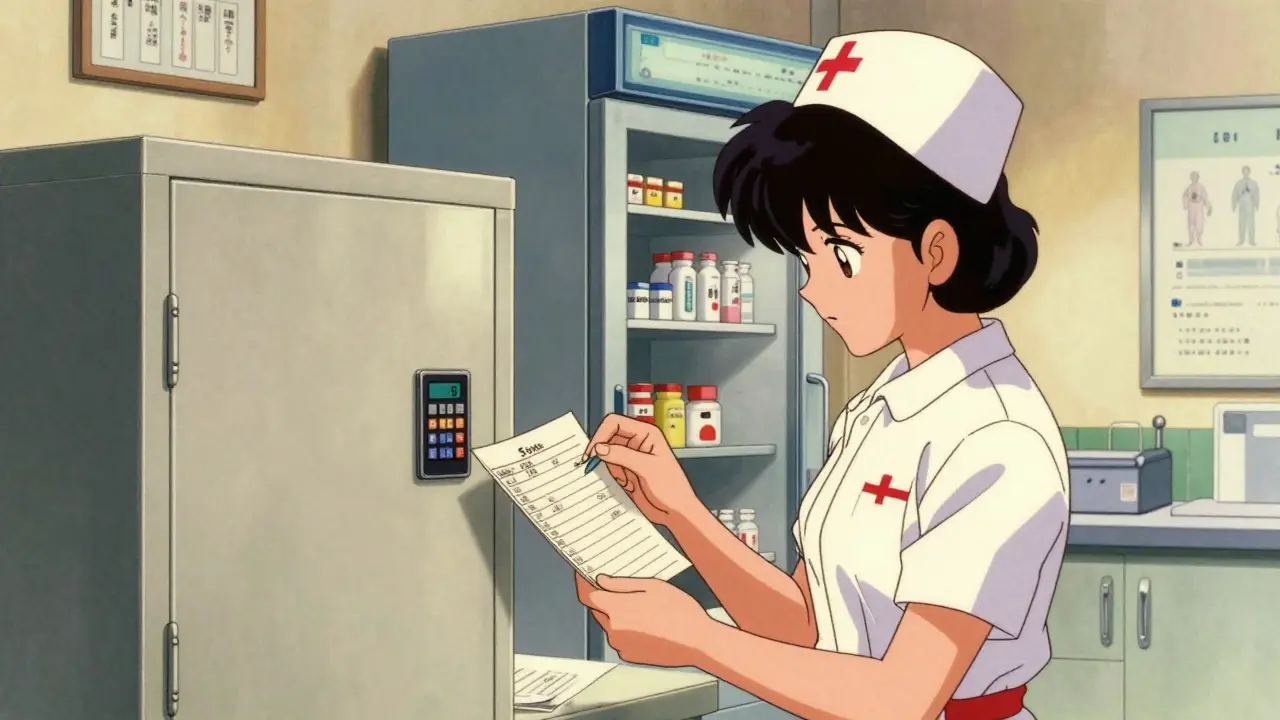
Where does your child’s medicine live during the day? It shouldn’t be in a teacher’s desk drawer. Regulations require that all medications be stored in locked, temperature-appropriate locations accessible only to trained personnel. For most schools, this means the main office or the nurse’s station.
If your child needs refrigerated medication, such as certain insulin types or eye drops, the rules are even stricter. The NASN specifies that refrigerated meds must be kept at 2-8°C (36-46°F) in dedicated units separate from food. You should never put your child’s medicine in a shared teacher fridge next to the lunch sandwiches. Ask your school nurse specifically where controlled substances and refrigerated items are stored. In many cases, schools use electronic medication administration records (eMARs) now-used by 89% of public schools-to log every single dose digitally, reducing documentation errors by nearly 60%.
Who actually gives the medicine? In most districts, only certified school nurses or specifically trained administrators can dispense prescriptions. Teachers are generally prohibited from doing so due to liability and lack of training. However, for emergency medications like epinephrine auto-injectors (EpiPens) or albuterol inhalers, many schools train additional staff members to assist, provided there is a signed plan in place.
Self-Administration: When Can Your Child Take Their Own Meds?
As kids grow older, especially those with chronic conditions like diabetes or asthma, they naturally want more control. Many parents ask, “Can my teenager carry their own inhaler?” The answer depends entirely on state law and district policy.
States vary wildly here. California, for example, allows students to self-administer certain medications if they demonstrate competency through supervised practice sessions. New York permits self-administration only when authorized by both the physician and the parent on a specific “Self-Medication Release Form.” Other states are much more restrictive.
Even where allowed, self-administration isn’t automatic. The AAP emphasizes that students must show developmental readiness. Dr. Michael Johnson, Chair of the AAP Committee on School Health, notes that when students participate in their regimen appropriately, missed doses drop significantly. If your child is ready, discuss a “Self-Care Plan” with the school nurse. This document outlines what the student can handle alone versus what requires adult supervision. It empowers your child while keeping everyone safe.
Common Pitfalls and How to Avoid Them
Medication errors in schools often stem from simple oversights. The NASN identifies inconsistent communication between providers and schools as the cause of 68% of errors. Here is how to plug those gaps:
| Error Type | Frequency | Prevention Strategy |
|---|---|---|
| Incomplete Documentation | 42% | Double-check that all fields on the Physician Order are filled out. Never leave blanks. |
| Communication Gaps | 68% | Call the school nurse directly when changing dosages. Email is not enough for urgent changes. |
| Expired Medications | 15% | Check expiration dates before sending meds to school. Replace them monthly. |
| Missed Retrieval | High | Set a calendar reminder to pick up unused meds by August 31st. |
One major pitfall is failing to notify the school of changes. If your pediatrician adjusts your child’s dose mid-year, you must send a new authorization form immediately. Do not assume the old form covers minor tweaks. Another common issue is end-of-year cleanup. Schools will not hold onto medications over the summer. Frederick County Schools explicitly states, “NO medication will be kept over the Summer.” If you don’t pick up unused pills or inhalers by the final day of school (or August 31st in NY), they will be discarded. Set a reminder on your phone now.

Emergency Medications: EpiPens and Inhalers
For allergies and asthma, speed is everything. Most schools have protocols for emergency medications, but you still need to provide the actual device. In NYC Public Schools, for instance, they provide free Albuterol and Fluticasone inhalers, but only if prescribed and documented on your MAF. For epinephrine, many districts allow “standing orders” for anonymous rescue kits in case of unknown allergies, but your child’s personal EpiPen must still be on file.
Ensure the school has two EpiPens if possible-one for immediate use and one backup. Check the expiration date every month. And crucially, make sure the teachers who interact with your child most know where the kit is located. A locked cabinet is useless if no one has the key or code during a crisis.
Building a Partnership with the School Nurse
Finally, treat the school nurse as your partner, not just a dispenser. Dr. Sarah Clauss, lead author of the AAP’s 2024 policy statement, highlights that interdisciplinary approaches identify system barriers proactively. Introduce yourself at the start of the year. Bring a copy of your child’s full medical history. Ask questions: “How do you track doses?” “What happens if my child refuses the med?” (Note: Schools must contact parents immediately if a child refuses.)
This collaboration reduces anxiety for everyone. When you understand the process, you sleep better at night. When the school understands your child’s specific needs, they act faster and safer. It’s a two-way street built on clear, timely, and complete communication.
Can I send over-the-counter (OTC) medication to school?
Yes, but only with proper documentation. Most schools require a parent-signed consent form and often a physician’s note for OTC meds like ibuprofen or acetaminophen, especially if used regularly. Always keep the medication in its original packaging. Some districts allow a simpler “Parent Request Form” for occasional OTC use, so check your specific school’s policy.
What happens if my child forgets their medication at home?
The school cannot give medication from their own stock (except for emergency drugs like EpiPens). If your child misses a dose, the school will typically notify you. Depending on the severity, they may ask you to bring the medication to school or pick up your child if the condition becomes unmanageable. To avoid this, establish a morning routine where checking the backpack is a non-negotiable step.
Do I need to renew medication orders every school year?
In many states, yes. For example, New York State requires annual renewal of all medication orders. Even if the dosage hasn’t changed, the legal authorization expires. Failing to renew means the school cannot legally administer the drug. Mark your calendar for June or July to gather new signatures from your doctor.
Can my child self-carry an inhaler or EpiPen?
It depends on your state laws and district policies. Federal law encourages schools to allow students to carry and self-administer asthma and allergy medications. However, you usually need to sign a specific waiver or release form. Discuss this with your school nurse early in the year to ensure the paperwork is correct and the staff is comfortable with the arrangement.
What if the school nurse is unavailable when my child needs medication?
Schools should have a backup plan. Often, a trained administrator or another certified staff member can administer routine medications. For complex procedures, the school may delay administration until the nurse returns or contact you to come in. Ensure your emergency contact information is up-to-date so they can reach you quickly if a gap in coverage occurs.




Write a comment