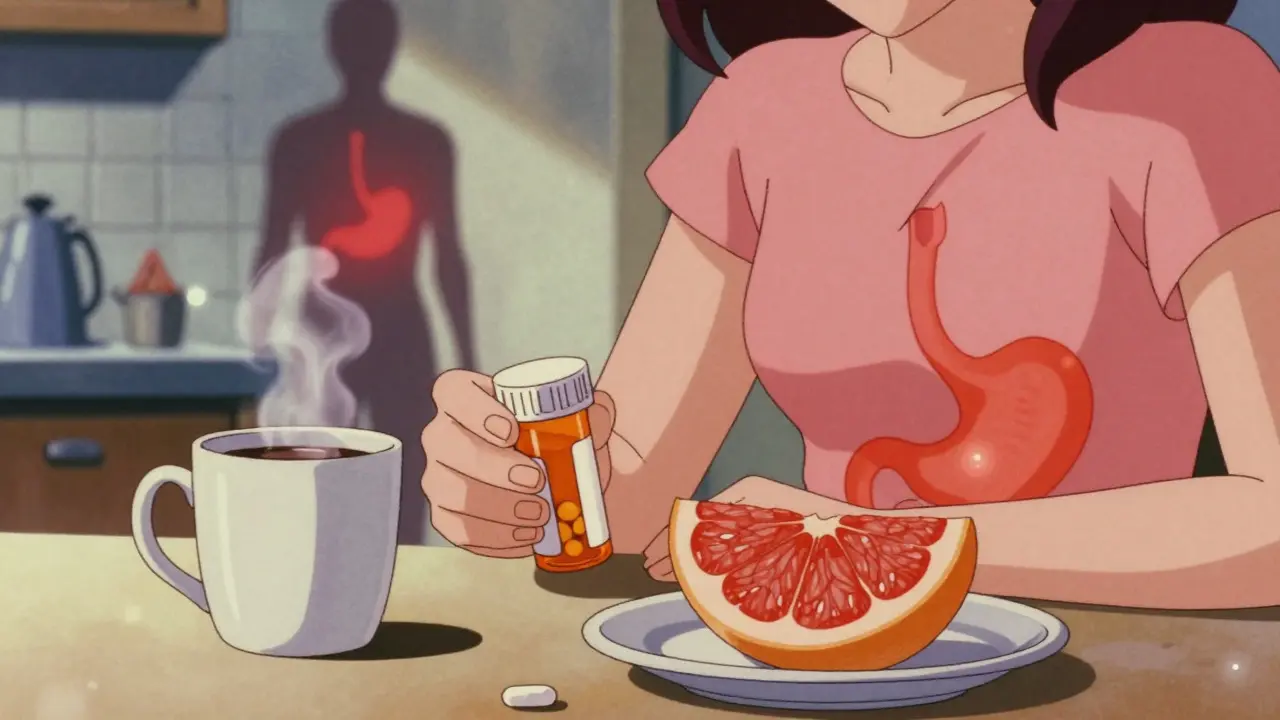
Imagine taking your morning coffee with a prescription pill, only to find out later that the caffeine canceled out the medicine’s effect. Or perhaps you ate a grapefruit while on blood pressure meds and felt dizzy for hours. These aren’t just random bad luck moments; they are classic examples of pharmacokinetic drug interactions. Simply put, these happen when one substance changes how another moves through your body. It’s not about the drugs fighting each other directly in your bloodstream-it’s about one drug messing with the logistics of getting the other drug to where it needs to go.
If you take multiple medications, supplements, or even certain foods regularly, understanding this concept is crucial for your safety. The U.S. Food and Drug Administration reports that adverse drug reactions cause about 1.3 million emergency room visits every year in the United States. A significant chunk of those comes from interactions like these. Knowing how your body processes medicines can help you avoid serious side effects and ensure your treatments actually work.
The Four Steps of How Drugs Move Through Your Body
To understand pharmacokinetics, you need to know the journey a drug takes once you swallow it. Scientists use the acronym ADME, which stands for Absorption, Distribution, Metabolism, and Excretion. Think of it like shipping a package. First, the package gets into the mail system (Absorption). Then, it travels to different cities (Distribution). Next, the warehouse workers open and sort the contents (Metabolism). Finally, the empty box is thrown away (Excretion).
Most drugs follow this path, but problems arise when another substance interferes with any of these steps. If a second drug blocks the mailbox, slows down the truck, jams the sorting machine, or clogs the trash chute, the first drug won’t do its job correctly. This interference is what we call a pharmacokinetic interaction. Let’s break down each step so you can spot potential issues in your own routine.
Absorption: Getting Into the Bloodstream
Absorption is the first hurdle. For a pill to work, it has to dissolve and enter your bloodstream. Sometimes, other things in your stomach block this process. For example, antacids neutralize stomach acid. While that feels good for heartburn, some antibiotics like ketoconazole need an acidic environment to dissolve properly. Take them together, and the antibiotic might pass right through you without being absorbed.
Another common issue involves chelation. This happens when minerals bind to drugs. Tetracycline antibiotics, often used for acne or infections, love to bond with calcium. If you drink milk or eat yogurt with your tetracycline, the calcium grabs the drug instead of your body absorbing it. Studies show this can reduce absorption by up to 50%. The fix? Space them out. Wait at least two to three hours between taking the antibiotic and consuming dairy products.
Gastrointestinal motility also plays a role. Opioids like morphine slow down your gut movement. If your stomach empties slower, drugs like acetaminophen stay in the stomach longer than intended, delaying their entry into the intestine where they are usually absorbed. This doesn’t mean the drug stops working entirely, but it might kick in later than expected, leading you to think it’s ineffective and accidentally overdosing by taking more too soon.
Distribution: Traveling Through the Body
Once a drug is in your blood, it doesn’t float around freely. Most drugs hitch a ride on proteins, specifically albumin, which acts like a bus carrying passengers through your veins. Only the "free" drug-the ones not sitting on a protein bus-can leave the bloodstream and treat your condition. This is where distribution interactions get tricky.
Imagine a crowded bus. If a new passenger (Drug B) forces an old passenger (Drug A) off the seat, Drug A is now floating alone in the blood. This is called protein binding displacement. A famous example involves warfarin, a blood thinner, and diclofenac, a painkiller. Both have a high affinity for albumin. If you take diclofenac while on warfarin, the diclofenac can push warfarin off its protein seats. Suddenly, there’s more free warfarin circulating, which increases the risk of dangerous bleeding.
However, don’t panic about every combination. The body is smart. When extra free drug appears, the liver often ramps up metabolism to clear it faster. So, while protein binding displacement sounds scary, it rarely causes severe issues unless the drug has a narrow therapeutic index-meaning the difference between a helpful dose and a toxic dose is very small. Warfarin, digoxin, and phenytoin fall into this risky category.
Metabolism: The Liver’s Busy Workshop
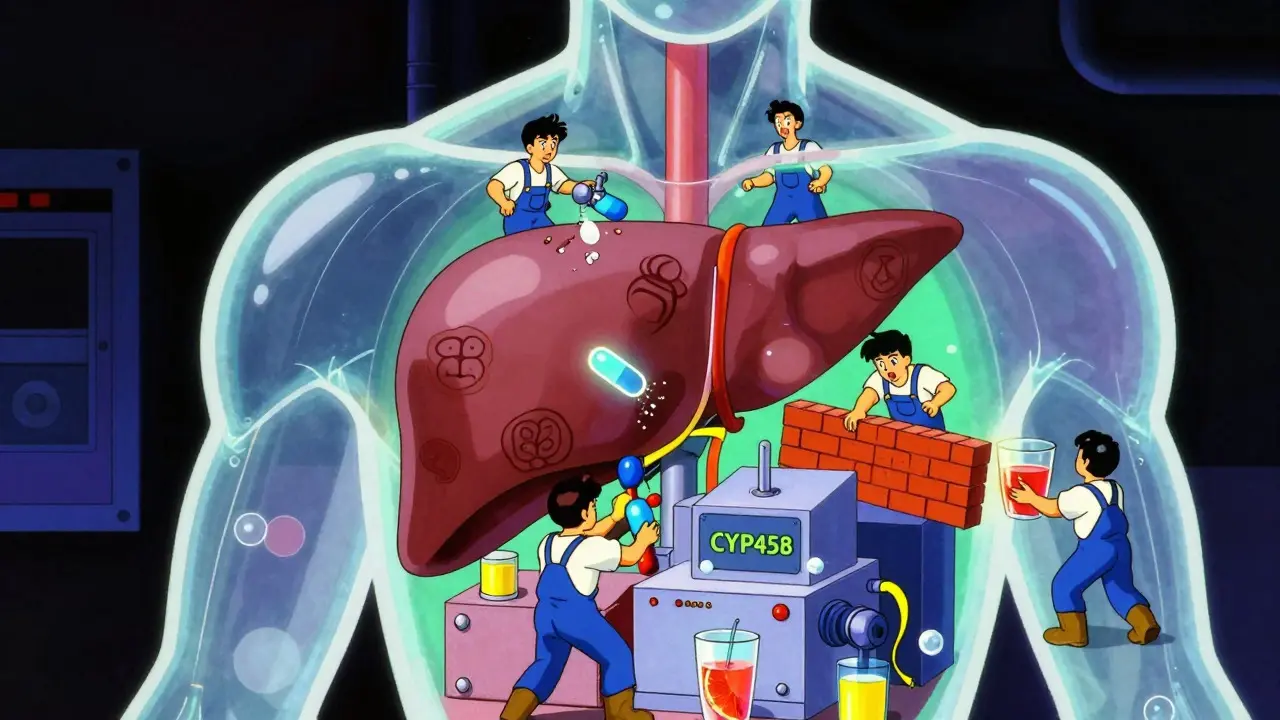
This is where most major interactions happen. Your liver contains enzymes, tiny biological machines that break down drugs so your body can eliminate them. The star players here are the cytochrome P450 enzymes, especially CYP3A4 and CYP2D6. About 60% of all approved drugs interact with these enzymes. Some drugs inhibit (block) these enzymes, while others induce (speed up) them.
Inhibition is like putting a brick wall in front of the enzyme. If you take clarithromycin, an antibiotic, it blocks CYP3A4. If you’re also taking midazolam, a sedative broken down by CYP3A4, the midazolam isn’t cleared from your body fast enough. Levels build up, leading to excessive drowsiness or even breathing problems. Grapefruit juice is another well-known inhibitor. It blocks CYP3A4 in the gut and liver, affecting over 85 prescription drugs, including some statins and blood pressure medications. Even a single glass can increase drug levels significantly.
Induction is the opposite. It’s like hiring more workers to speed up the assembly line. Rifampin, used for tuberculosis, and St. John’s Wort, a herbal supplement for depression, are powerful inducers. They tell your liver to make more enzymes. If you’re taking birth control pills or blood thinners, these inducers can break down the drugs so quickly that they become ineffective. Many women who started St. John’s Wort reported unexpected pregnancies because their contraceptives were metabolized too fast to prevent ovulation.
Excretion: Clearing the Waste
Finally, your kidneys filter waste out of your blood and into your urine. Some drugs compete for the same exit doors. Probenecid, once used for gout, blocks the renal excretion of penicillin. By blocking the exit, probenecid keeps penicillin in the body longer, boosting its effectiveness. That’s a useful interaction. But others are dangerous.
Methotrexate, a drug for cancer and autoimmune diseases, is excreted by the kidneys. Nonsteroidal anti-inflammatory drugs (NSAIDs) like ibuprofen can interfere with this process. If methotrexate isn’t cleared efficiently, it builds up to toxic levels, potentially causing bone marrow suppression and kidney damage. Similarly, transporter proteins like P-glycoprotein pump drugs out of cells. Itraconazole, an antifungal, inhibits P-glycoprotein. If you’re taking digoxin for heart failure, itraconazole prevents digoxin from being pumped out, raising serum concentrations to life-threatening levels that can cause arrhythmias.
Real-World Consequences and Safety Strategies
These aren’t just textbook scenarios. An 85-year-old woman developed visual hallucinations and agitation after starting venlafaxine for depression while already taking propafenone for heart rhythm. Propafenone inhibits both CYP2D6 and P-glycoprotein, causing venlafaxine levels to skyrocket. She wasn’t imagining things; her brain was reacting to toxic drug levels. Cases like this highlight why monitoring matters.
You can protect yourself with simple habits. Keep a complete list of everything you take-prescriptions, over-the-counter meds, vitamins, and herbs. Studies show this reduces interaction risks by nearly half. Use one pharmacy for all your prescriptions. Their computer systems flag conflicts automatically, preventing hundreds of thousands of adverse events annually. Ask your doctor or pharmacist specific questions: "Does this interact with my current meds?" and "Are there foods I should avoid?"
Timing helps too. The American Society of Health-System Pharmacists recommends spacing problematic meds by four hours. For example, take thyroid medication first thing in the morning, wait four hours, then take calcium supplements. Avoid grapefruit juice if you’re on statins or certain blood pressure drugs. And never start herbal supplements like St. John’s Wort without checking with your healthcare provider first.
| Drug/Food | Interacting Agent | Effect | Recommendation |
|---|---|---|---|
| Tetracycline Antibiotics | Dairy Products (Calcium) | Reduces absorption by up to 50% | Space doses by 2-3 hours |
| Warfarin | Diclofenac | Increases bleeding risk via protein displacement | Monitor INR closely; consider alternative painkillers |
| Statins (e.g., Simvastatin) | Grapefruit Juice | Blocks CYP3A4, increasing muscle damage risk | Avoid grapefruit juice entirely |
| Birth Control Pills | St. John’s Wort | Induces metabolism, reducing contraceptive efficacy | Use backup contraception; consult doctor |
| Digoxin | Itraconazole | Inhibits P-gp, raising digoxin to toxic levels | Monitor heart rate and digoxin levels frequently |
Frequently Asked Questions
What is the difference between pharmacokinetic and pharmacodynamic interactions?
Pharmacokinetic interactions change how the body handles a drug (absorption, distribution, metabolism, excretion), altering the drug's concentration. Pharmacodynamic interactions occur when two drugs affect the same biological target or pathway, either enhancing or opposing each other's effects without changing drug levels. For example, taking two sedatives is pharmacodynamic (additive effect), while taking grapefruit juice with a statin is pharmacokinetic (increased drug level).
Can food really interact with prescription medications?
Yes, absolutely. Foods like grapefruit juice contain compounds that inhibit liver enzymes, specifically CYP3A4, leading to higher drug levels. Dairy products can bind to antibiotics like tetracyclines, reducing absorption. High-fat meals can delay the absorption of some drugs, while high-fiber diets may bind to medications like levothyroxine, reducing their effectiveness. Always check labels or ask your pharmacist about food restrictions.
Why do doctors warn against mixing alcohol with certain medications?
Alcohol affects both pharmacokinetics and pharmacodynamics. It can compete for liver enzymes, slowing the breakdown of drugs like acetaminophen, which increases the risk of liver toxicity. Additionally, alcohol is a central nervous system depressant. Mixing it with sedatives, opioids, or benzodiazepines creates a pharmacodynamic additive effect, dangerously suppressing breathing and consciousness. Even moderate drinking can amplify side effects like dizziness and impaired judgment.
How can I tell if I’m experiencing a drug interaction?
Signs vary depending on the drugs involved. You might notice increased side effects (like excessive drowsiness, nausea, or rash) suggesting the drug level is too high. Conversely, you might feel like your medication isn’t working anymore, indicating it’s being cleared too fast. Unexplained symptoms like bruising easily (with blood thinners), irregular heartbeat (with digoxin), or sudden mood changes can signal serious interactions. If you suspect an interaction, contact your healthcare provider immediately rather than stopping medication abruptly.
Do herbal supplements pose a risk for pharmacokinetic interactions?
Yes, many people assume "natural" means safe, but herbs are potent bioactive substances. St. John’s Wort is a strong inducer of CYP3A4 and P-glycoprotein, reducing the effectiveness of birth control, HIV meds, and transplant immunosuppressants. Garlic and ginkgo biloba can affect platelet function and increase bleeding risk when combined with warfarin. Always disclose all supplements to your doctor and pharmacist, as they undergo the same metabolic pathways as prescription drugs.

Write a comment