Generic drugs are the quiet heroes of American healthcare. They’re the pills you pick up at the pharmacy for $4 instead of $400. They’re the reason millions of people can afford their blood pressure meds, insulin, or antibiotics. But how did we get here? How did generic drugs go from being an afterthought to making up over 90% of all prescriptions in the U.S.? The story isn’t just about science-it’s about politics, greed, innovation, and a system that learned the hard way how to protect people.
The Early Days: No Rules, No Standards
Before there was a Food and Drug Administration, there was chaos. In the 1800s, anyone could sell medicine. Pills were made in backrooms. Some contained arsenic. Others had no active ingredient at all. The first real step toward order came in 1820, when eleven doctors in Washington, D.C., created the U.S. Pharmacopeia. It was a simple list-112 drugs with their correct ingredients and strengths. It wasn’t law, but it became the Bible for pharmacists.
By 1848, Congress passed the Drug Importation Act. It gave U.S. Customs the power to stop bad drugs from coming in from Europe. That was the first time the government said: "We’re not just watching; we’re blocking." Then in 1888, the American Pharmaceutical Association published the National Formulary, another effort to fight counterfeit drugs. But these were voluntary standards. No one got punished for breaking them.
The Poison That Changed Everything
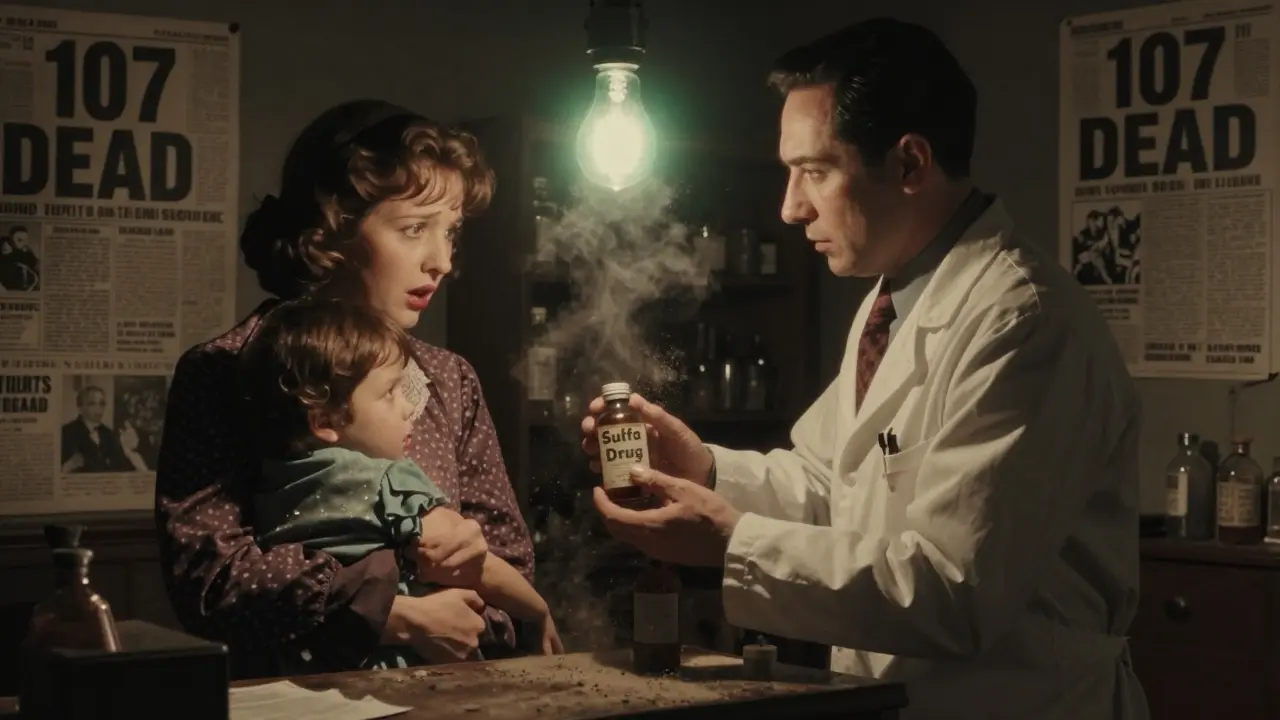
Then came 1937. A company in Tennessee made a liquid version of a sulfa drug to treat infections. Instead of using water, they used diethylene glycol-a chemical used in antifreeze. It killed 107 people, mostly children. The public outcry was deafening. Congress acted fast. In 1938, President Roosevelt signed the Federal Food, Drug, and Cosmetic Act. For the first time, drug companies had to prove their products were safe before selling them. This law created the modern FDA. It also set the stage for what would become the foundation of generic drug approval.
But there was still a loophole. If a drug was already on the market before 1938, it didn’t need proof of safety. That meant thousands of old drugs were still being sold without any real testing. And no one had to prove they even worked.
The Efficacy Revolution
The 1960s brought another crisis. Thalidomide, a drug sold overseas for morning sickness, caused severe birth defects in thousands of babies. Though it never got approved in the U.S., the scandal shocked lawmakers. In 1962, Congress passed the Kefauver-Harris Drug Amendments. This time, they didn’t just ask for safety. They demanded proof of effectiveness. Every drug, old and new, had to show it actually worked.
That’s when the government realized: if brand-name drugs had to prove they worked, why shouldn’t copies? But there was no system for that. Generic manufacturers couldn’t afford to repeat expensive clinical trials. So they were stuck. The market for generics stayed small-only 19% of prescriptions in 1984.
The Hatch-Waxman Act: The Game Changer
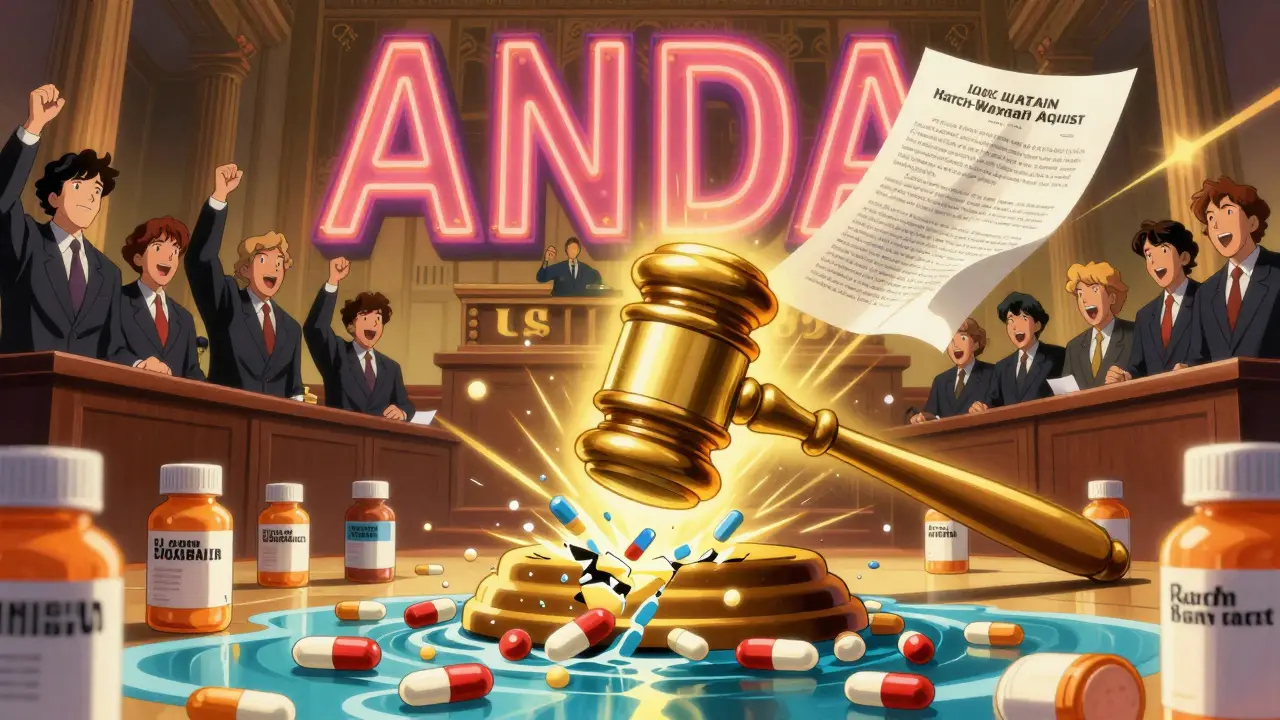
In 1984, Congress passed the Drug Price Competition and Patent Term Restoration Act-better known as the Hatch-Waxman Act. It was a brilliant compromise. Brand-name companies got extra patent time to make up for the years they spent getting FDA approval. In return, generic makers got a clear path to market.
The key? The Abbreviated New Drug Application, or ANDA. Generic companies no longer had to prove safety or effectiveness from scratch. They just had to show their drug was bioequivalent-the same amount of active ingredient, absorbed at the same rate, in the same way. No more repeating 10-year trials. No more $1 billion costs. Just science. Just proof it worked like the original.
The results were immediate. Generic drug use jumped. By 2000, they made up half of all prescriptions. By 2022, it was 90.5%. And they didn’t just increase access-they saved money. The average generic drug costs 80-85% less than its brand-name twin. In 2021 alone, generics saved the U.S. healthcare system $373 billion.
The Dark Side: Shortages, Price Spikes, and Corporate Games
But the system isn’t perfect. As generics became the norm, a new problem emerged: consolidation. A handful of companies now make most generic drugs. When one factory shuts down-or a raw material gets delayed-the whole supply chain stumbles.
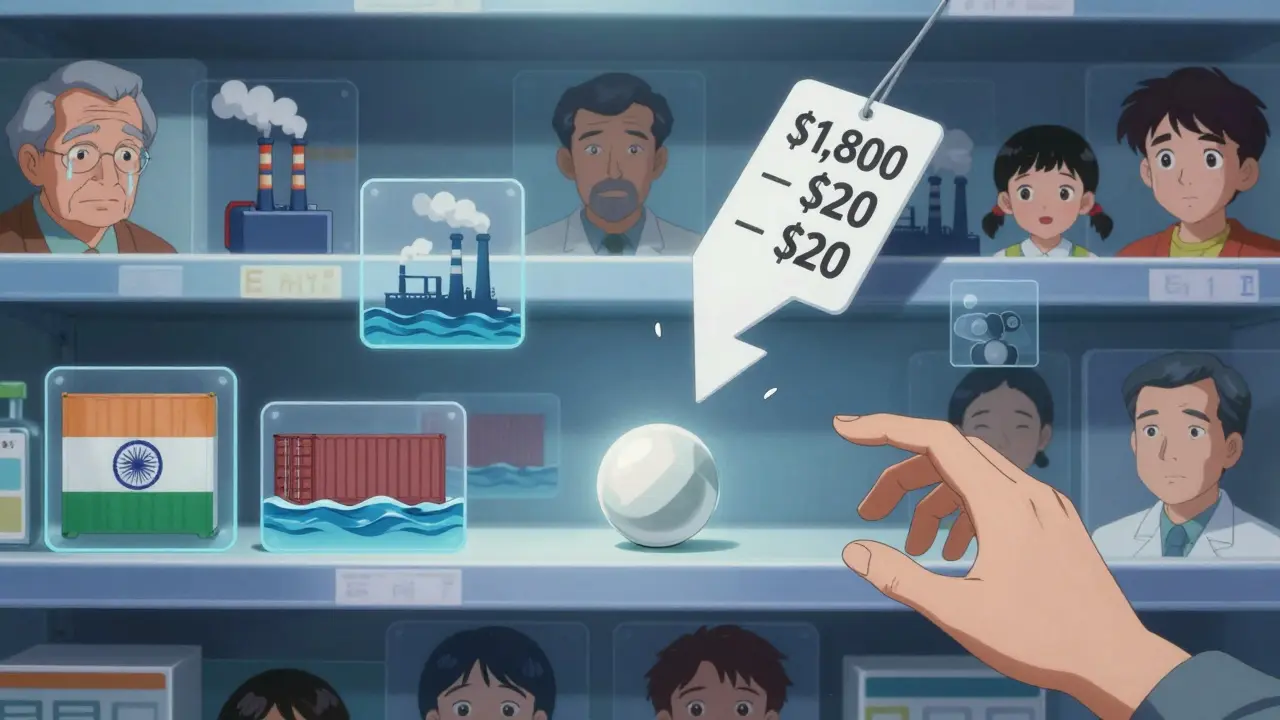
Between 2018 and 2022, the FDA recorded 1,234 drug shortages. Two-thirds of them involved generic drugs. Insulin, antibiotics, and even basic painkillers vanished from shelves. Why? Because manufacturing generics is a low-margin business. Companies don’t invest in backup plants or local supply chains. They rely on overseas factories, mostly in India and China. Over 80% of active pharmaceutical ingredients come from abroad.
And then there’s price gouging. While most generics dropped in price, 15% saw spikes of over 100% between 2013 and 2017. Some drugs, like doxycycline or tetracycline, went from $20 a bottle to $1,800. No one could explain why. The market had no competition. A few companies controlled the supply. And no one was watching.
Modern Reforms and the Fight for Fair Access
The FDA didn’t sit idle. In 2012, they launched the Generic Drug User Fee Amendments (GDUFA). This gave the agency more money to hire reviewers. Before GDUFA, it took 30 months to approve a generic. Now, it’s down to 10 months. Approval rates jumped from 45% to 95%. The backlog cleared. More drugs hit the market.
In 2019, Congress passed the CREATES Act. It stopped brand-name companies from blocking generic access by refusing to sell them samples for testing. Some big pharma firms had been hoarding samples-making it impossible for generics to prove bioequivalence. The law gave the FDA power to force those companies to cooperate. By 2022, the FDA had taken 27 enforcement actions under it.
Still, the biggest threat isn’t regulation-it’s profit. When a drug’s patent expires, the first generic maker usually gets a 180-day exclusivity window. That’s when they can charge high prices before others enter. Some companies exploit this. They file lawsuits just to delay competitors. A single lawsuit can extend a patent by 30 months. This trick, called "patent evergreening," has been used hundreds of times. The result? A generic drug that should be cheap stays expensive for years.
What’s Next? Biosimilars and the Future of Affordable Medicine
Today, generics make up 90% of prescriptions but only 23% of drug spending. That’s the power of competition. But the next frontier isn’t pills-it’s biologics. These are complex drugs made from living cells-like insulin, rheumatoid arthritis treatments, and cancer drugs. They cost tens of thousands of dollars a year.
Now, biosimilars are entering the market. They’re not exact copies (because you can’t copy a living cell), but they’re designed to work the same way. The FDA has approved over 40 biosimilars since 2015. Experts predict they’ll cut costs by 15-35%. That’s not 80%, but it’s a start.
The lesson from the history of generic drugs is clear: competition works. When the rules are fair, prices drop. When the rules are gamed, people suffer. The system isn’t broken-it’s just being pushed to its limits. The next chapter will be written by regulators, manufacturers, and patients who demand better.
When did generic drugs become legal in the U.S.?
Generic drugs weren’t "illegal" before-they just had no clear path to market. The legal framework began with the 1984 Hatch-Waxman Act, which created the Abbreviated New Drug Application (ANDA) process. This allowed generic manufacturers to prove bioequivalence without repeating costly clinical trials, making it legally and economically feasible to produce and sell generic versions of brand-name drugs.
Why are generic drugs so much cheaper than brand-name drugs?
Generic drugs are cheaper because manufacturers don’t have to repeat expensive clinical trials to prove safety and effectiveness. Instead, they only need to show their product is bioequivalent to the brand-name drug-meaning it delivers the same amount of active ingredient at the same rate. This cuts development costs by 80-90%. They also don’t spend billions on marketing or advertising. The savings are passed directly to consumers.
Are generic drugs as safe and effective as brand-name drugs?
Yes. The FDA requires generic drugs to meet the same strict standards as brand-name drugs. They must have the same active ingredient, strength, dosage form, and route of administration. They must also be bioequivalent-meaning they work the same way in the body. The FDA tests every generic manufacturer and inspects their facilities. If a generic drug doesn’t meet these standards, it’s rejected.
Why do generic drug shortages happen so often?
Shortages happen because the generic drug industry is built on low margins and global supply chains. Most active ingredients are made in just a few factories in India and China. If one factory has a quality issue, shuts down, or faces a shipping delay, hundreds of drugs can disappear. There’s little incentive for companies to build backup production lines because the profit is so thin. The FDA reports that 65% of drug shortages between 2018 and 2022 involved generic medications.
Can generic drug prices suddenly spike? Why?
Yes. When a drug has only one or two manufacturers and the patent expires, competition can collapse. If one company stops making it-or if demand suddenly rises-prices can skyrocket. Between 2013 and 2017, 15% of generic drugs saw price increases of over 100%. Examples include doxycycline and cycloserine. This happens because there’s no real competition left. The market becomes a monopoly, and prices follow.

11 Comments
Generic drugs saved my ass last year when I got diagnosed with hypertension. Was paying $300 a month for the brand then switched to generic for $12. Didn't notice any difference in how I felt. Funny how the system works - the same damn pill but now it's affordable. People act like generics are some scam but nah they're just the economy version of a product that was overpriced by design.
I've been thinking about this for a while and it's wild how we built a system where the most essential medicines are treated like commodities instead of public goods. The Hatch-Waxman Act was genius on paper but what it really did was create a race to the bottom. Companies stopped investing in quality control because there was no profit incentive. Now we have entire drug classes that vanish from shelves because one factory in Hyderabad had a power outage. We're not just dependent on global supply chains - we're hostage to them. And nobody talks about how the FDA is understaffed and underfunded despite GDUFA. We're running on fumes here.
LMAO at people who still think generics are inferior 😂 I work in a hospital pharmacy and we stock 200+ generic meds daily. The quality control is insane. FDA inspects these facilities harder than Apple's factories. I've seen brand-name drugs with more variability than generics. The real issue? When one company monopolizes a drug and hikes prices. Not the generic system itself. Fix the market not the medicine.
The 1937 Elixir Sulfanilamide tragedy was the turning point. Before that, medicine was basically snake oil with a label.
Honestly this whole thing gives me hope. We fixed something broken through policy and science. Generics are proof that government can work when it's not corrupted. I'm glad we didn't let big pharma kill this model. Still wish we'd go further though - like national bulk purchasing or public manufacturing. But baby steps.
lol i thought generics were just cheap knockoffs. turns out they're just... the same thing. mind blown.
The evolution of generic drug regulation represents one of the most profound triumphs of public health policy in modern American history. From the chaos of unregulated patent medicines to the rigorous bioequivalence standards of today, we have witnessed a paradigm shift from profit-driven exploitation to science-based accessibility. The Hatch-Waxman Act, though imperfect, remains a monument to legislative foresight. Yet we stand at a precipice: as biosimilars emerge and global supply chains fracture, our commitment to equitable access must be renewed with equal vigor.
You think this is about science? Nah. The FDA? Controlled by Big Pharma. The ANDA system? A backdoor for them to keep control. They let generics in so they can charge monopoly prices when they own the few factories left. You ever notice how every shortage happens right before a new patent extension? Coincidence? I think not. The real villains aren't the manufacturers - they're the lobbyists writing the laws. And don't even get me started on the Indian and Chinese factories... those are state-run operations. We're not buying medicine. We're buying geopolitical leverage.
I remember when my grandma couldn't afford her diabetes meds and had to split pills in half. She was so scared. Then we found the generic version for $4 and she could finally sleep at night. It's crazy how something so simple - a pill that works the same - can change someone's entire life. I wish more people understood that. It's not about politics or profits. It's about whether a person gets to live. The system's flawed for sure but the idea? Pure gold. We just need to protect it from the greedy ones.
They let companies make billions on patents then act shocked when generics drop prices? Pathetic. This isn't capitalism. This is theft disguised as innovation.
The FDA approval process for generics is too lenient. Many of these drugs are manufactured in facilities with poor sanitation standards. We are risking public health for cost savings. The 90% statistic is misleading. It doesn't account for quality failures or inconsistent bioavailability. We need stricter oversight not more reliance on foreign suppliers.