
PHQ-9 Depression Symptom Calculator
Instructions: Rate how often you were bothered by the following problems over the past 2 weeks.
Your PHQ-9 Score
Based on your responses from the past two weeks.
Severity Level:
Starting an antidepressant often feels like stepping into the unknown. You want relief from depression, but you also worry about what the medication might do to your body and daily life. The hard truth is that roughly 30% to 40% of people with major depressive disorder don’t find remission with their first prescription. At the same time, nearly three-quarters of patients experience at least one side effect. Without a clear plan to track both benefits and burdens, it’s easy to stay stuck in a cycle of trial and error.
The solution isn’t just waiting to see if things get better. It involves active, structured monitoring. This approach, known as Measurement-Based Care (MBC), which was formally established by the American Psychiatric Association in 2010, uses standardized tools to measure symptom changes and side effects objectively. Studies show this method improves remission rates by 50% to 60% compared to standard care. But how do you actually do this? And more importantly, how can you take control of the process yourself?
Understanding the Core Metrics
To monitor your treatment effectively, you need numbers, not just vague feelings. Clinicians rely on validated rating scales because they provide a consistent baseline. The most common tool you’ll encounter is the Patient Health Questionnaire-9 (PHQ-9). This short survey asks nine questions about your mood over the past two weeks. Each answer is scored from 0 to 3, giving a total score between 0 and 27. A score below 5 usually indicates minimal depression, while a score of 15 or higher suggests moderate to severe symptoms.
Another option is the Beck Depression Inventory (BDI), which includes 21 items and scores up to 63. Research published in the Journal of Clinical Psychiatry found that a 50% reduction in BDI scores strongly predicts successful treatment response. These scales matter because they remove guesswork. Instead of asking "Am I feeling okay?" you ask "Did my score drop by half since we started?" This clarity helps you and your provider make data-driven decisions rather than relying on memory alone.
Tracking Side Effects Systematically
Efficacy is only half the equation. If the side effects outweigh the benefits, the treatment fails regardless of the mood score. Common adverse reactions include fatigue, weight gain, sleep disturbances, and sexual dysfunction. In fact, a 2022 study revealed that 61% of patients stopped taking SSRIs specifically because their providers didn’t manage these side effects well enough.
You can track these issues using tools like the Antidepressant Side-Effect Checklist (ASEC). This checklist evaluates 15 common symptoms on a severity scale from 0 to 4. By logging these scores alongside your PHQ-9 results, you create a complete picture of your health. For example, if your depression score drops significantly but your side effect burden spikes, you know the current dose or medication class isn’t right for you. This dual-tracking prevents the common mistake of ignoring physical discomfort in hopes that mental health will improve.
The Role of Therapeutic Drug Monitoring
Sometimes, self-reporting isn’t enough. That’s where Therapeutic Drug Monitoring (TDM) comes in. TDM involves blood tests to measure the exact concentration of the antidepressant in your system. This is particularly useful if you’re not responding to treatment despite taking it correctly. According to experts like Dr. Mark H. Rapaport, 50% to 70% of non-responders have subtherapeutic drug levels due to metabolic differences.
While TDM requires specialized lab equipment and costs between $50 and $150 per test, it offers objective proof of adherence and metabolism. It’s especially recommended for complex cases involving multiple medications or genetic variations. Although only a small fraction of prescriptions currently use TDM, its ability to optimize dosing makes it a powerful tool when standard monitoring hits a wall.
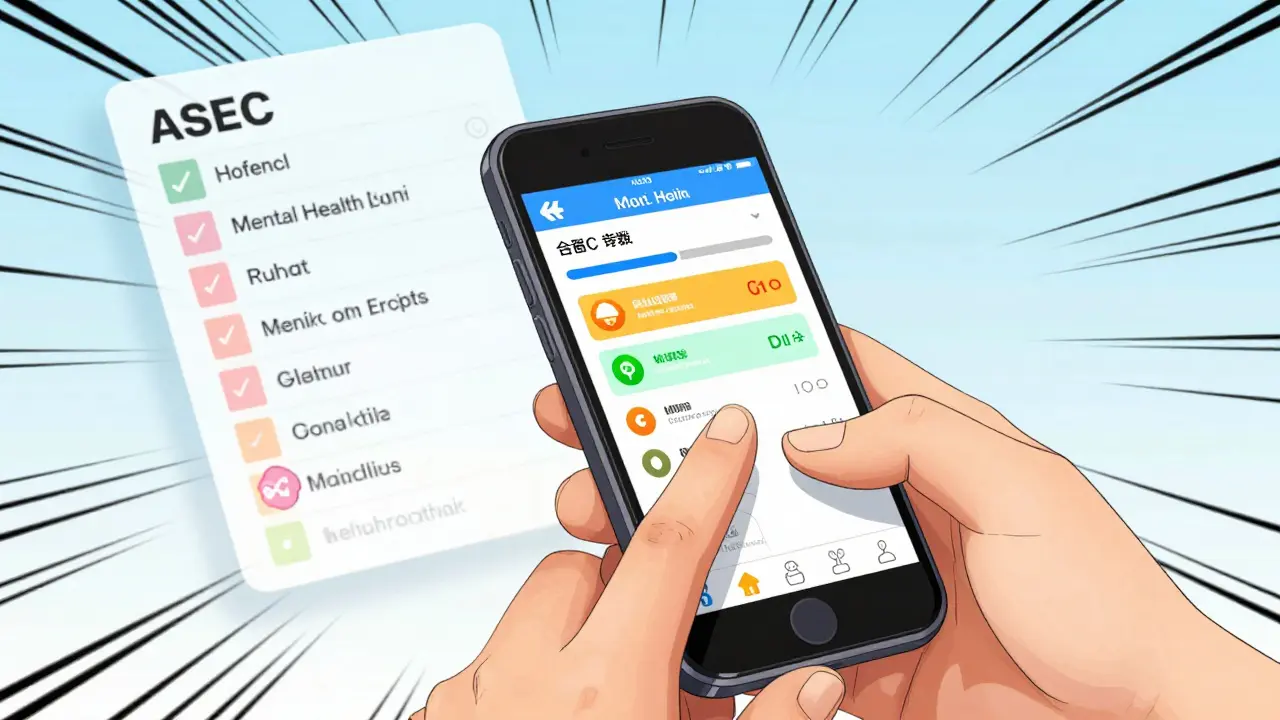
Digital Tools for Daily Tracking
Carrying paper forms isn’t practical for everyone. Digital apps bridge the gap between clinical visits. Platforms like Moodfit and Sanvello allow you to log mood, sleep, and side effects daily. A 2023 study in JMIR Formative Research showed that users of Moodfit had 32% greater adherence to their treatment plans over six months compared to those without digital support.
These apps help you spot patterns that might otherwise go unnoticed. Maybe your mood dips every Sunday evening, or perhaps a specific side effect worsens after lunch. While digital tools may not match the strict reliability of paper-based clinical scales, they offer convenience and real-time data. Just remember to share these logs with your doctor. An app is only as good as the insights you bring to your appointment.
Setting Personalized Treatment Goals
Numbers tell part of the story, but functional recovery tells the rest. The National Institutes of Health recommend setting 3 to 5 personalized goals when starting treatment. Instead of aiming to "feel better," aim for concrete actions like "return to work four days a week" or "cook dinner for my family three times a week."
Assess these goals biweekly. Did you achieve them? If your PHQ-9 score improved but you still can’t return to work, there’s a disconnect that needs addressing. This holistic view ensures that treatment improves your actual quality of life, not just your test scores. It shifts the focus from passive observation to active participation in your healing journey.

Comparison of Monitoring Methods
| Method | Primary Use | Cost/Accessibility | Key Benefit | Limitation |
|---|---|---|---|---|
| PHQ-9 Scale | Symptom Severity | Free / Widely Available | Standardized, quick administration | Subjective self-reporting |
| ASEC Checklist | Side Effect Tracking | Free / Clinic Provided | Identifies specific adverse events | Requires patient diligence |
| Therapeutic Drug Monitoring (TDM) | Blood Concentration | $50-$150 / Lab Required | Objective metabolic data | Invasive, expensive, limited availability |
| Digital Apps (e.g., Moodfit) | Daily Pattern Recognition | Low Cost / Subscription | Real-time trends, high engagement | Lower reliability than clinical scales |
Overcoming Common Challenges
One major hurdle is response bias. Patients might underreport side effects to please their doctor or overreport symptoms to justify continuing medication. To combat this, clinicians should verify 2 to 3 key items during visits. As a patient, be brutally honest. Your provider needs accurate data to adjust your treatment safely.
Time constraints in primary care settings also pose a challenge. Many doctors simply ask, "How are you feeling?" without deeper analysis. If this happens, advocate for yourself. Bring your PHQ-9 scores and side effect logs to the appointment. Say, "My score has dropped by 20%, but I’m experiencing significant fatigue. Can we discuss adjusting the dose or timing?" This proactive stance forces a structured conversation rather than a casual check-in.
Next Steps for Effective Monitoring
Start by downloading a reliable tracking app or printing out PHQ-9 and ASEC forms. Establish a routine-perhaps every Sunday morning-to fill them out. Share these records with your provider at every visit. If you’re struggling with side effects, don’t wait. Ask about TDM or pharmacogenetic testing if standard adjustments fail. Remember, monitoring isn’t a sign of failure; it’s a strategy for success. By combining objective data with personal goal-setting, you transform antidepressant treatment from a gamble into a precise, manageable process.
How often should I take the PHQ-9?
Clinicians typically recommend administering the PHQ-9 at baseline and then every 2 to 4 weeks during the acute treatment phase. Once stable, monthly checks are sufficient. Consistency is key to spotting meaningful trends.
What does a PHQ-9 score of 15 mean?
A score of 15 or higher indicates moderate to severe depression. This level usually warrants immediate attention from a healthcare provider and may require adjustment in medication dosage or type.
Is Therapeutic Drug Monitoring (TDM) necessary for everyone?
No, TDM is not required for all patients. It is most beneficial for those who are non-responders, have complex medical histories, or are taking multiple medications that interact with antidepressants. It helps determine if blood levels are therapeutic.
Can digital apps replace clinical scales?
Digital apps are excellent supplements but not perfect replacements. They offer convenience and trend analysis but generally have lower test-retest reliability (around 0.72) compared to paper-based clinical scales (0.85+). Use them together for best results.
Why do so many patients stop taking SSRIs?
Many patients discontinue SSRIs due to unmanaged side effects, particularly sexual dysfunction and weight gain. Studies show that inadequate management of these issues by providers is a leading cause of discontinuation, highlighting the need for proactive side effect monitoring.




Write a comment