You walk into your local pharmacy, pick up a prescription for a medication you’ve taken for years, and notice something is off. The box looks different. The name on the front isn’t the brand you recognize. But the pharmacist says it’s the same drug, just cheaper. Is it a generic? Or is it something else entirely?
This confusion is common because authorized generics are a unique category of drugs that bridge the gap between brand-name medications and traditional generics. They contain the exact same active ingredients as the brand-name drug but come in different packaging with a different labeler code. Unlike traditional generics, which must prove they work the same way through bioequivalence studies, authorized generics are manufactured by the original brand company using the same process.
If you’re a patient trying to understand what you’re taking, or a pharmacist ensuring accuracy, knowing how to spot these products matters. This guide breaks down exactly what authorized generics are, why they exist, and-most importantly-how to identify them by looking at the box, the bottle, and the numbers printed on the label.
What Makes an Authorized Generic Different?
To identify an authorized generic, you first need to understand what it actually is. An authorized generic is a product marketed by the holder of the New Drug Application (NDA) for the brand-name drug, but under a different name or packaging. It is not a separate drug approval. It is the brand-name drug sold under a "private label" arrangement.
Here is the key distinction:
- Brand-Name Drug: Sold under the trademarked name (e.g., Lyrica). Marketed heavily. Highest price.
- Traditional Generic: Made by a different company. Approved via an Abbreviated New Drug Application (ANDA). Must prove bioequivalence. Lowest price.
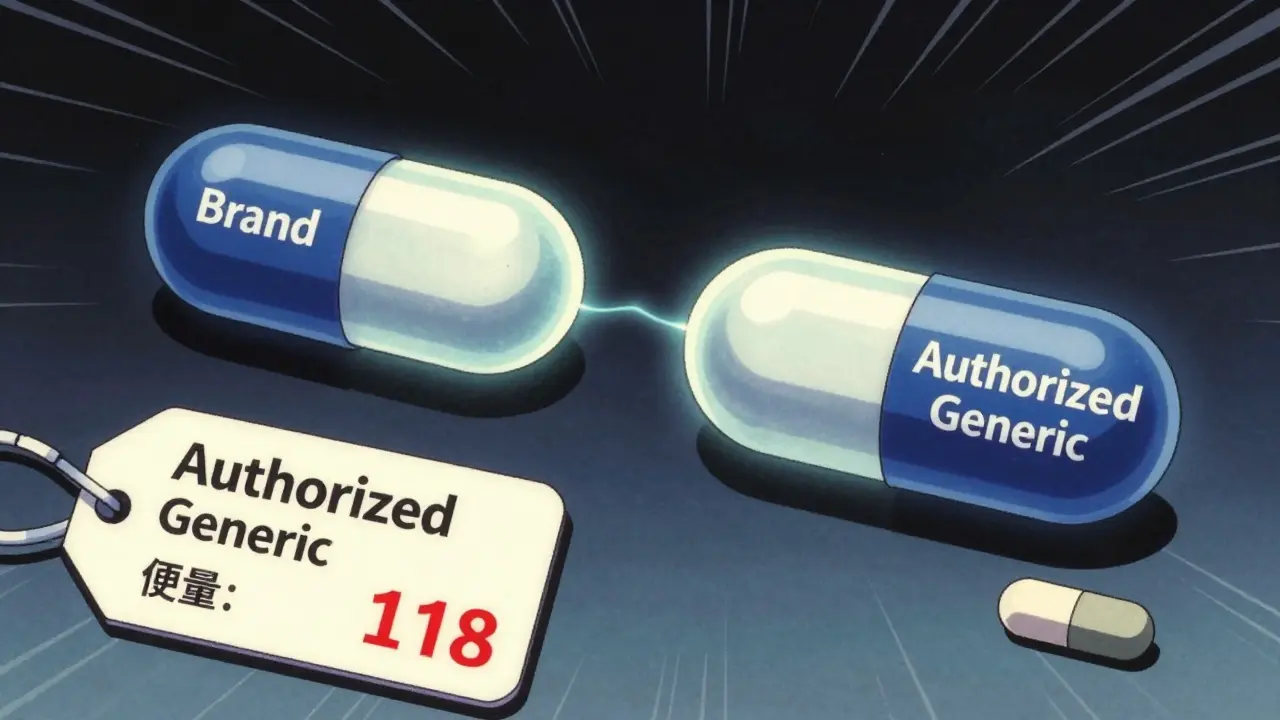
- Authorized Generic: Made by the same company as the brand. Sold under a generic-sounding name or no brand name. Same formulation as the brand. Price sits between brand and traditional generic.
The Federal Food, Drug, and Cosmetic Act defines these specifically. When AstraZeneca launched an authorized generic version of Prilosec in 2004, it was the first of its kind. Today, there are over 140 active authorized generic products in the U.S. market. They allow brand manufacturers to compete during the 180-day exclusivity period granted to the first generic applicant, giving consumers a lower-cost option without waiting for full generic competition.
Visual Cues: Reading the Packaging and Label
You can often spot an authorized generic just by holding the box. The visual differences are subtle but consistent if you know what to look for.
1. The Manufacturer Name Unlike traditional generics, which list a completely different manufacturer, authorized generics often list a subsidiary or a partner distribution company. For example, when Pfizer marketed an authorized generic of Lyrica, the packaging did not say "Pfizer." Instead, it listed "Greenstone LLC" as the distributor. Greenstone is a partnership involving Pfizer. If you see a name you don’t recognize but suspect is linked to the big pharma company, check the connection.
2. Absence of Brand Trademarks The most obvious sign is that the famous brand name is missing. You won’t see the logo, the specific color scheme associated with the ad campaigns, or the trademark symbol (™ or ®) next to the drug name. The packaging usually looks plainer, resembling a standard generic box but often higher quality than some budget generics.
3. Pill Appearance Here is where it gets tricky. Because the authorized generic is made in the same facility as the brand, the pill itself might look identical to the brand-name pill. However, due to trademark laws, the markings on the tablet or capsule might differ slightly. Sometimes the color is the same; sometimes it changes. Never rely solely on the pill’s look. Always check the label.
The Definitive Test: Decoding the NDC Number
If the packaging is ambiguous, the National Drug Code (NDC) is your best friend. The NDC is a three-part number found on every drug package in the U.S. It follows this format: Labeler Code - Product Code - Package Size.
Here is how to use it to identify an authorized generic:
- Check the Labeler Code (First Segment): This identifies who is marketing the drug. For an authorized generic, this number will be different from the brand-name drug’s labeler code. It will likely match a subsidiary or a generic distributor.
- Check the Product Code (Second Segment): This identifies the specific drug strength and formulation. For an authorized generic, this number is often identical to the brand-name drug’s product code because it is the exact same formulation.
- Check the Package Size (Third Segment): This indicates the quantity. This may vary based on how the distributor packs it, but often matches the brand.
For instance, compare Protonix (brand) and its authorized generic distributed by Dr. Reddy’s Laboratories. The brand has a labeler code of 00071. The authorized generic has a labeler code of 55111. However, the product code remains the same. Traditional generics, by contrast, will have a completely different product code because their formulation (inactive ingredients) differs.
| Feature | Brand-Name Drug | Authorized Generic | Traditional Generic |
|---|---|---|---|
| Active Ingredients | Original Formula | Identical to Brand | Same Active, Different Inactive |
| Manufacturer | Brand Company | Brand Company (via Subsidiary) | Different Company |
| NDC Labeler Code | Brand Code | Different Code | Different Code |
| NDC Product Code | Unique | Often Identical to Brand | Unique |
| FDA Orange Book Listing | Listed as Reference Drug | Not Separately Listed | Listed as ANDA Holder |
| Price Point | Highest | Middle (15-25% below brand) | Lowest |
Why Pharmacists Often Get Confused
You might wonder why this matters if the drug is the same. The issue is verification and trust. A study published in the Journal of Generic Medicines found that nearly 37% of pharmacists incorrectly identified authorized generics as traditional generics. Why? Because the packaging often mimics the clean, clinical look of generics, but the supply chain is tied to the brand.
When a pharmacist sees a different manufacturer name on a familiar drug, their first instinct should be to check for counterfeiting. With authorized generics, the change is legal and intentional. However, misinterpreting the labeler code change as a counterfeit product happens in about 19% of cases, according to safety reports. This leads to delays in dispensing and unnecessary anxiety for patients.
Furthermore, authorized generics do not appear as separate entries in the FDA’s Orange Book (the official list of approved drug products). They are covered under the original brand’s NDA. Traditional generics appear separately with their own ANDA numbers. If you search the Orange Book and only find the brand name, but the bottle has a different labeler code, it is highly likely an authorized generic.
Step-by-Step Verification Process
If you want to confirm whether a drug is an authorized generic, follow these steps:
- Locate the NDC: Find the three-part number on the box or bottle.
- Identify the Labeler: Look up the first segment (labeler code) on the FDA’s National Drug Code Directory. Note the company name associated with that code.
- Cross-Reference the FDA List: Visit the FDA’s quarterly "List of Authorized Generic Drugs." This list is updated four times a year (January, April, July, October). Search for the drug name or the labeler code. If it appears on this list, it is confirmed.
- Check Pharmacy Databases: Systems like First Databank and Medi-Span now flag authorized generics. If your pharmacy software shows a different manufacturer but the same therapeutic equivalence rating (AB), it is likely an authorized generic.
- Review the Labeling Text: Look for phrases like "Distributed by [Company]" rather than "Manufactured by." Also, note the absence of promotional claims. Authorized generic labels are strictly clinical, adhering to the "same as" requirement for safety information but stripping away marketing fluff.
Impact on Patients and Pricing
For patients, the biggest question is cost. Authorized generics typically price 15-25% lower than the brand-name drug but 5-15% higher than traditional generics. This pricing strategy allows brand companies to capture market share during the exclusivity period while offering savings to those who cannot afford the full brand price.
In terms of efficacy, there is zero difference. Since the drug is made in the same facility with the same ingredients, the therapeutic outcome is identical. A 2022 Medscape survey found that 92.6% of patients reported identical results between authorized generics and brand products. The main complaint wasn’t health-related; it was confusion. About 35% of patients expressed concern about seeing a different manufacturer name, fearing it meant lower quality.
Understanding that an authorized generic is essentially the brand drug in disguise can alleviate this fear. It is not a "copy"; it is the "original" sold under a different label.
Future Changes and Regulatory Updates
The landscape is shifting. The FDA plans to integrate specific authorized generic identifiers into the National Drug Code Directory by mid-2024. This update aims to reduce the identification errors that currently account for over 8% of generic drug dispensing discrepancies. Until then, manual verification using the methods above remains the gold standard.
Additionally, the MODERN Labeling Act of 2020 has introduced new provisions for updating labels when scientific evidence changes. While this primarily affects traditional generics, it highlights the increasing complexity of drug labeling regulations. As more brands launch authorized generics to protect their revenue streams, expect to see more of these products on pharmacy shelves.
Are authorized generics safe?
Yes. Authorized generics contain the exact same active and inactive ingredients as the brand-name drug and are manufactured in the same facilities. They undergo the same rigorous FDA inspections and quality controls as the brand product.
How do I know if my drug is an authorized generic?
Check the National Drug Code (NDC) on the package. If the labeler code is different from the brand but the product code is the same, it is likely an authorized generic. You can also cross-reference the drug name on the FDA's Quarterly List of Authorized Generic Drugs.
Why are authorized generics cheaper than brand names?
They save on marketing costs. Brand-name drugs include high expenses for advertising and promotion. Authorized generics are sold under plain packaging without heavy marketing campaigns, allowing the manufacturer to offer a lower price while maintaining profit margins.
Do authorized generics appear in the FDA Orange Book?
No. Authorized generics are marketed under the original brand-name drug's New Drug Application (NDA). Therefore, they do not have a separate entry in the Orange Book. Traditional generics, approved via ANDA, do have separate listings.
Can I ask my pharmacist for an authorized generic?
You can request any available alternative, but availability varies. Pharmacists dispense based on formulary preferences and stock. If you prefer an authorized generic due to past tolerance issues with traditional generics, discuss this with your doctor and pharmacist. They may need to specify "Dispense As Written" or check with the supplier for availability.

Write a comment