
Imagine waking up one day to find your peripheral vision slowly fading away. For millions of people living with primary open-angle glaucoma, a chronic eye condition that damages the optic nerve, this is a terrifying reality. The primary defense against this vision loss is lowering intraocular pressure (IOP), the fluid pressure inside the eye. While surgery exists, most patients start their journey with prescription eye drops. But which ones? The medical community has long debated the merits of two major classes of medication: prostaglandin analogs (PGAs) and beta-blockers. Understanding how these drugs work, their safety profiles, and their side effects is crucial for anyone managing glaucoma or caring for someone who is.
How Glaucoma Medications Work: Two Different Approaches
To understand why doctors prescribe different drops, you first need to know how they affect the eye’s fluid dynamics. Your eyes constantly produce a clear fluid called aqueous humor, which nourishes internal structures. In healthy eyes, this fluid drains out efficiently. In glaucoma, drainage slows down, causing pressure to build up. Both PGAs and beta-blockers lower this pressure, but they do so through completely different mechanisms.
Prostaglandin analogs, such as latanoprost, bimatoprost, and travoprost, work by increasing the outflow of fluid. They target specific receptors in the eye known as FP prostanoid receptors. When activated, these receptors open up alternative drainage pathways, specifically the uveoscleral outflow route. Think of it like opening a second exit door in a crowded room to let people leave faster. These medications are typically administered once a day, usually in the evening, making them convenient for daily routines.
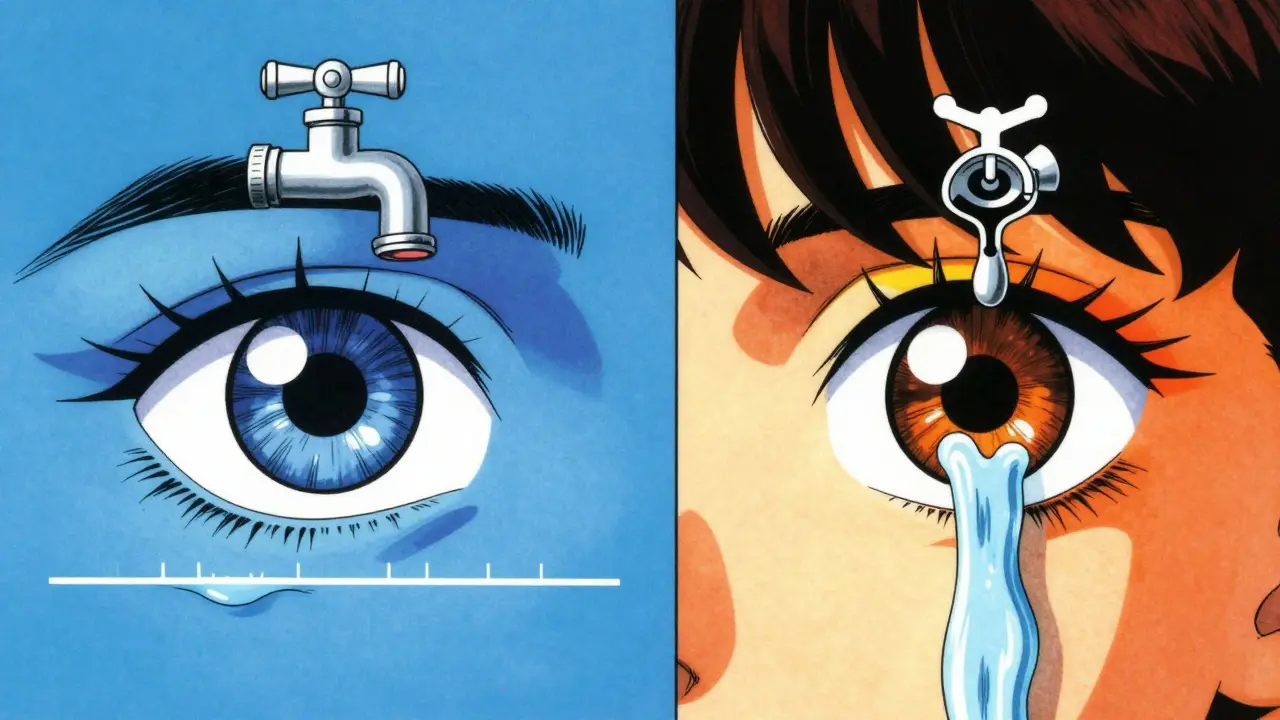
In contrast, Beta-blockers, like timolol and betaxolol, reduce the production of aqueous humor. They block beta-adrenergic receptors in the ciliary body, the part of the eye responsible for making fluid. If you imagine the eye as a sink with the drain partially clogged, beta-blockers turn down the faucet. Because they reduce production rather than improve drainage, they often require twice-daily dosing to maintain effective pressure control throughout the day.
| Feature | Prostaglandin Analogs (PGAs) | Beta-Blockers |
|---|---|---|
| Mechanism of Action | Increases uveoscleral outflow | Reduces aqueous humor production |
| Dosing Frequency | Once daily | Twice daily |
| IOP Reduction | 24-33% from baseline | 20-25% from baseline |
| Common Examples | Latanoprost, Bimatoprost, Travoprost | Timolol, Betaxolol |
| Primary Side Effects | Iris darkening, eyelash growth, redness | Fatigue, breathing issues, slow heart rate |
Efficacy and Long-Term Outcomes
When choosing between these two classes, efficacy is often the top concern. You want to know which drug will best protect your vision over time. Research provides some surprising insights here. A comprehensive seven-year study published in the *Journal of Clinical & Experimental Ophthalmology* (2013) compared visual field changes in patients treated with beta-blockers versus prostaglandins. The results showed no statistically significant difference in visual field preservation between the two groups. This suggests that while the mechanisms differ, the ultimate goal-protecting vision-is achieved similarly by both classes when used correctly.
However, efficacy isn't just about pressure reduction; it's also about adherence. If a patient stops using their drops because they are inconvenient or cause discomfort, the medication fails regardless of its theoretical power. Here, prostaglandin analogs have a distinct advantage. According to data from the *Journal of Managed Care & Pharmacy* (2019), PGAs are associated with significantly greater persistence than beta-blockers. Patients were more likely to continue their PGA treatment over time, largely due to the convenience of once-daily dosing and fewer systemic side effects. A study by Nordstrom et al. (2005) highlighted this with a hazard ratio of 0.40, indicating that patients on PGAs were much less likely to discontinue therapy compared to those on beta-blockers.
Within the PGA class, there are subtle differences. Bimatoprost may lower IOP by an additional 1-2 mm Hg at certain times compared to latanoprost, but this difference rarely translates to a clinically significant advantage in vision protection. More importantly, bimatoprost tends to cause more ocular irritation, which can negatively impact adherence. Latanoprost, introduced in 1996, remains the gold standard for many clinicians due to its balanced profile of efficacy and tolerability.
Safety Profiles and Side Effects
The choice between PGAs and beta-blockers often comes down to safety and individual patient health. Each class carries unique risks that must be weighed carefully.
Systemic Risks of Beta-Blockers
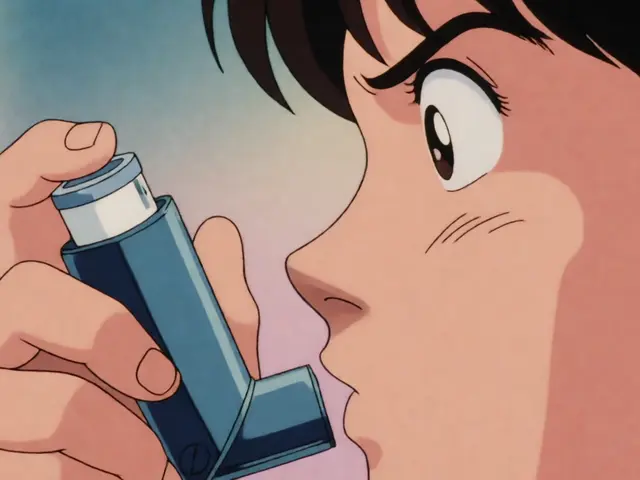
Beta-blockers are not just eye drops; they are absorbed into the bloodstream through the nasal tear duct. This means they can affect the entire body. For patients with asthma, chronic obstructive pulmonary disease (COPD), or certain heart conditions, beta-blockers can be dangerous. They can trigger bronchospasm (tightening of the airways) or cause bradycardia (slow heart rate). Consequently, doctors must screen patients thoroughly before prescribing timolol or similar agents. Fatigue is another common complaint, reported by 15-20% of users, which can affect quality of life.
Cosmetic and Local Effects of Prostaglandins
Prostaglandin analogs generally have fewer systemic risks, but they come with notable local side effects. The most famous is iris pigmentation change. PGAs stimulate melanin production in the iris, potentially turning blue or green eyes brown over time. This change is usually permanent, even if the medication is stopped. It affects 5-10% of users after prolonged use. Another cosmetic effect is hypertrichosis, or increased eyelash growth. While many patients view longer, darker lashes as a benefit, it can be unexpected for others. Additionally, ocular hyperemia (redness) occurs in 30-50% of PGA users, which can be cosmetically bothersome.
It is also worth noting that combining two prostaglandins (e.g., bimatoprost and latanoprost) is not recommended. Despite being additive in animal models, clinical evidence suggests this combination can potentially increase IOP in humans, making it a controversial and unsafe practice.
The Role of Preservatives and Ocular Surface Health
A critical aspect of long-term glaucoma management is the health of the ocular surface. Most multi-dose eye drops contain preservatives, such as benzalkonium chloride (BAK), to prevent bacterial growth. However, chronic exposure to these preservatives can damage the corneal epithelium and tear film, leading to dry eye symptoms and discomfort.
A systematic review and meta-analysis published in *Acta Ophthalmologica* (2021) examined the impact of preservative-free formulations. The study found that preservative-free beta-blockers and combinations led to statistically significant improvements in tear break-up time (TBUT) and Schirmer's test results, indicating better tear film stability. Interestingly, the difference in IOP reduction between preserved and preservative-free treatments was minimal (mean difference of 0.29 mmHg), suggesting that switching to preservative-free options does not compromise efficacy.
Despite these benefits, the evidence level for ocular surface outcomes remains "low or very low" due to inconsistent reporting methods across studies. Nevertheless, many ophthalmologists now recommend preservative-free formulations for long-term users, especially those with pre-existing dry eye disease. The trade-off is cost; preservative-free versions are typically 20-25% more expensive than their preserved counterparts.
Combination Therapies and Future Directions
For many patients, monotherapy with either a PGA or a beta-blocker is insufficient to control IOP. In these cases, combination therapy is necessary. Fixed-combination products, such as timolol combined with latanoprost, offer convenience by reducing the number of bottles and administrations. Studies show that adding a beta-blocker to a PGA can decrease IOP by an additional 13-25%. However, clinical trials have not consistently demonstrated superior efficacy of fixed combinations compared to separate drops, though adherence often improves.
Looking ahead, the landscape of glaucoma treatment is evolving. Minimally invasive glaucoma surgeries (MIGS) are gaining traction, offering surgical alternatives with faster recovery times. Yet, pharmaceutical management remains essential for the majority of patients. Research continues into novel prostaglandin formulations with improved safety profiles and sustained-release delivery systems that could eliminate the need for daily drops. As of 2026, PGAs dominate the market, representing 45-50% of prescriptions for newly diagnosed patients, while beta-blockers are increasingly reserved for specific scenarios where PGAs are contraindicated or cost-prohibitive.
Which is better for glaucoma: prostaglandins or beta-blockers?
Prostaglandin analogs are generally considered the preferred first-line therapy for most patients due to their superior efficacy, once-daily dosing convenience, and better long-term adherence rates. However, beta-blockers remain a vital option, particularly for patients who cannot tolerate prostaglandin side effects or have specific cost constraints. The choice depends on individual health factors, including respiratory and cardiac history.
Can beta-blockers cause breathing problems?
Yes. Because beta-blockers are absorbed systemically, they can trigger bronchospasm in patients with asthma or COPD. They can also slow the heart rate. Therefore, patients with respiratory or cardiac conditions should inform their doctor before starting beta-blocker eye drops.
Do prostaglandin eye drops permanently change eye color?
Yes, prostaglandin analogs can cause a permanent increase in brown pigment in the iris, potentially turning light-colored eyes darker. This effect is usually gradual and irreversible, even if the medication is discontinued. It is most noticeable in patients with mixed or light iris colors.
Are preservative-free glaucoma drops worth the extra cost?
For long-term users, especially those with dry eye syndrome, preservative-free drops can significantly improve comfort and ocular surface health without compromising pressure-lowering efficacy. While they cost 20-25% more, the reduction in side effects and potential need for additional dry eye treatments may justify the expense for many patients.
What happens if I miss a dose of my glaucoma medication?
Missing occasional doses is unlikely to cause immediate harm, but consistent non-adherence can lead to uncontrolled intraocular pressure and progressive vision loss. If you miss a dose, take it as soon as you remember unless it is almost time for the next dose. Never double up on doses. Setting alarms or using pill organizers can help improve adherence.

Write a comment