You might not feel a thing. That is the scary part about glaucoma, a progressive eye disease that damages the optic nerve and leads to irreversible vision loss. It does not announce itself with pain or redness in most cases. Instead, it sneaks up on you, stealing your peripheral vision bit by bit until the damage is done. By the time you notice something is wrong, you may have already lost significant sight.
The core problem isn't just high pressure inside your eye. While elevated intraocular pressure (IOP) is the biggest risk factor, modern science shows us that glaucoma is actually a complex injury to the optic nerve. Think of the optic nerve as a cable carrying data from your eye to your brain. Glaucoma cuts those wires. Once they are gone, they do not grow back. This makes early detection and management absolutely critical for saving your vision.
What Is Happening Inside Your Eye?
To understand why glaucoma causes blindness, we need to look at the plumbing and the wiring of the eye. The eye produces a clear fluid called aqueous humor. Normally, this fluid flows out through a drainage system called the trabecular meshwork. When this drain gets clogged or works poorly, fluid builds up. This raises the pressure inside the eye, known as intraocular pressure or IOP.
Normal IOP usually sits between 10 and 21 mmHg. But here is the catch: some people have high pressure and never get glaucoma. Others have normal pressure and still lose their vision. This is where the optic nerve comes in. At the back of the eye, the optic nerve passes through a sieve-like structure called the lamina cribrosa, a mesh-like tissue that supports the optic nerve fibers as they exit the eye.
When pressure is too high, or when the lamina cribrosa is weak, it gets pushed backward. This mechanical strain damages the retinal ganglion cells-the actual nerve fibers that send visual information to your brain. Recent studies using digital volume correlation show that these structures experience significant strain even before visible damage occurs. The result? Those nerve fibers die. You lose pixels in your visual world, starting from the edges and moving inward.
Types of Glaucoma: It’s Not Just One Thing
People often think of glaucoma as a single condition, but there are several distinct types, each with different causes and risks. Knowing which one you are dealing with changes how doctors treat you.
| Type | Primary Cause | Typical Onset | Risk Group |
|---|---|---|---|
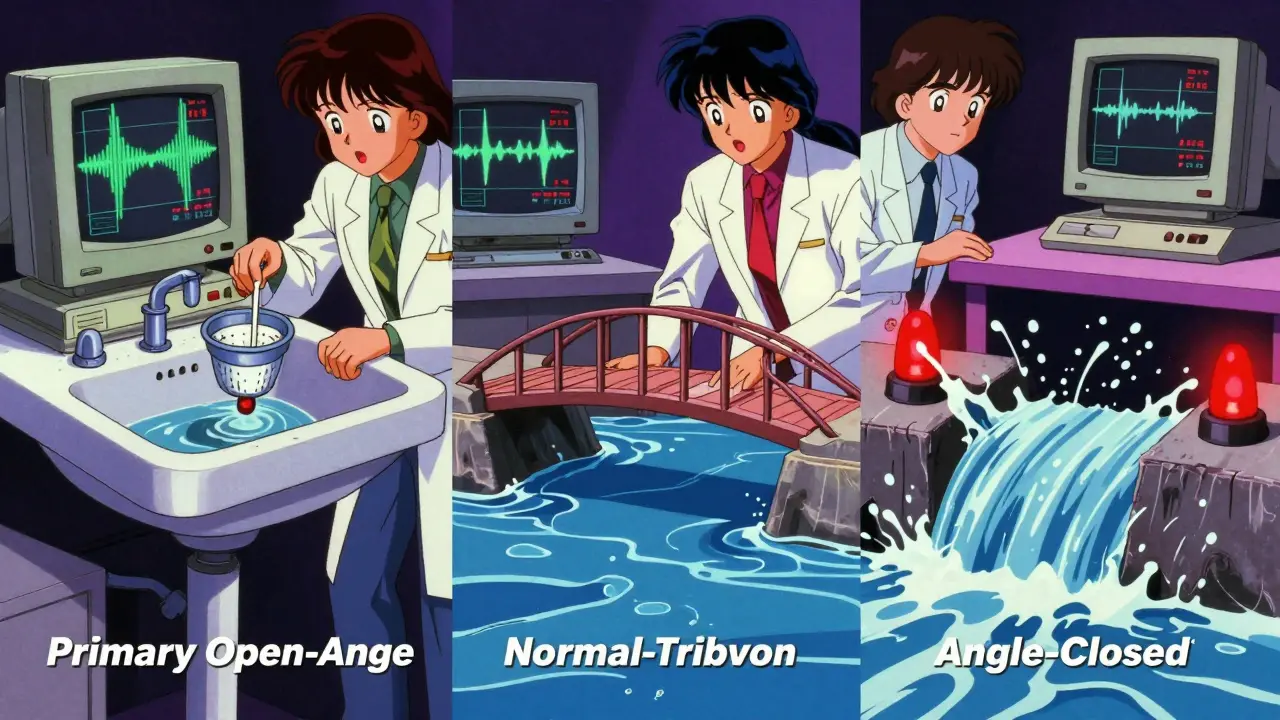
| Primary Open-Angle Glaucoma (POAG) | Poor drainage despite open angle | Slow, gradual | African Americans, over age 60 |
| Normal-Tension Glaucoma (NTG) | Nerve damage at normal pressure | Slow, insidious | Asian populations, history of migraines |
| Angle-Closure Glaucoma | Sudden blockage of drainage angle | Sudden, painful emergency | East Asians, hyperopes (farsighted) |
| Secondary Glaucoma | Injury, inflammation, or steroids | Varies | Patients with other eye conditions |
Primary Open-Angle Glaucoma, the most common form in Western countries, accounting for about 90% of cases is the silent killer. The drainage angle remains open, but the meshwork doesn't filter fluid efficiently. You might live with this for years without knowing.
On the other hand, Normal-Tension Glaucoma, a condition where optic nerve damage occurs despite eye pressure within the normal range challenges the old idea that pressure is everything. Research suggests that blood flow issues or lower cerebrospinal fluid pressure might play a role here. In Asia, angle-closure glaucoma is much more common and can strike suddenly with severe pain and nausea. That is a medical emergency requiring immediate attention to save the eye.
Why Does Pressure Matter So Much?
If normal-tension glaucoma exists, why do doctors obsess over lowering pressure? Because reducing IOP is the only proven way to stop the disease from getting worse. The Early Manifest Glaucoma Trial showed that lowering eye pressure by just a modest amount reduced the risk of progression by 50%. That is a huge number.
However, "normal" pressure is not a magic shield. Some experts argue that the difference between the pressure inside the eye and the pressure around the brain (intracranial pressure) matters more than the absolute number. If the pressure behind the eye drops, the relative strain on the optic nerve increases, even if the eye pressure itself looks fine on a chart. This explains why some patients continue to lose vision even when their drops keep their IOP below 15 mmHg.
Your target pressure is personal. A doctor will look at how much damage you already have. If you have mild glaucoma, they might aim for an IOP of 18-21 mmHg. If you have advanced disease, they might push hard to get you down to 12-14 mmHg. There is no one-size-fits-all number, but the goal is always to relieve the strain on those fragile nerve fibers.
Catching It Before It’s Too Late
You cannot check your own peripheral vision accurately at home. Glaucoma steals side vision first, and our brains are surprisingly good at filling in the blanks. We call this "neuroplasticity," and it helps you walk around without bumping into things, but it hides the disease from you.
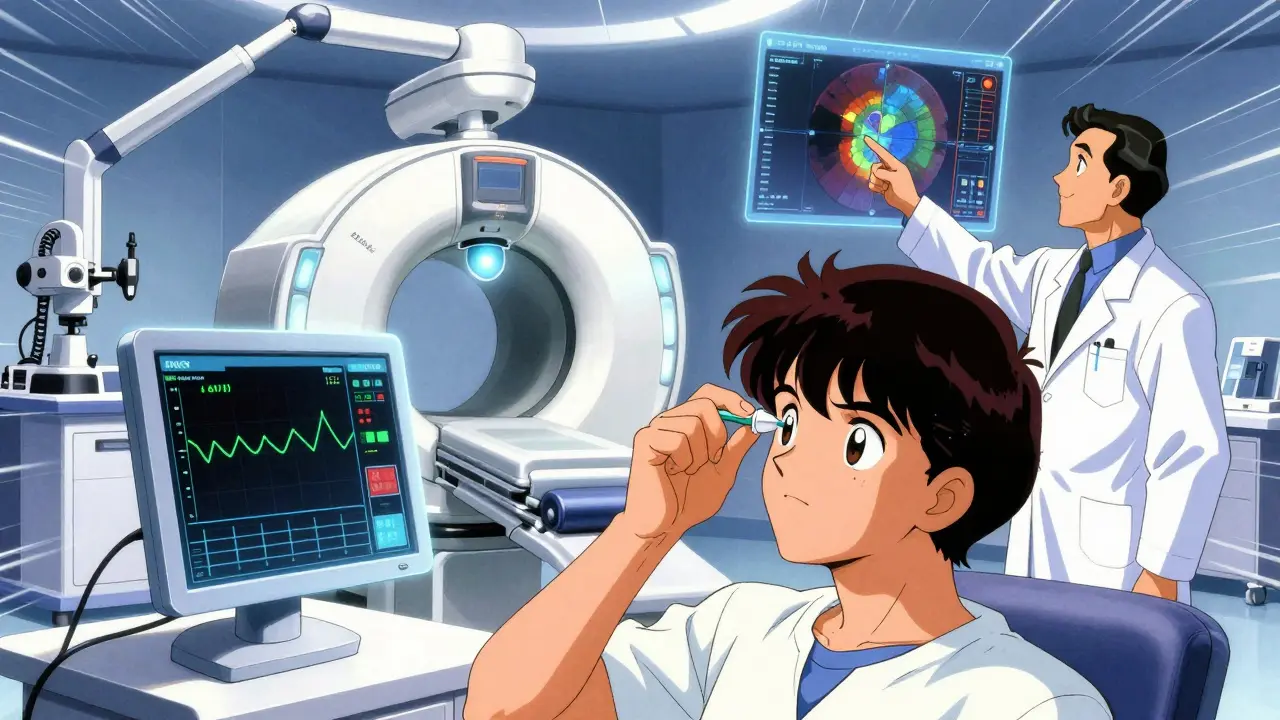
Doctors use three main tools to catch glaucoma:
- Tonometry: This measures your eye pressure. The gold standard is Goldmann applanation tonometry, but newer devices like the iCare rebound tonometer are faster and don't require numbing drops.
- OCT (Optical Coherence Tomography): This scan takes cross-sectional images of your retina. It can detect thinning of the retinal nerve fiber layer as small as 5-10 microns-long before you notice any vision loss. It’s like an MRI for your eye.
- Visual Field Testing: You stare at a dot in the center of a bowl-shaped screen and press a button when you see flashes of light. This maps out your blind spots. It takes time, but it tells the doctor exactly which nerve fibers are failing.
If you are over 60, or over 40 and have family history, diabetes, or high myopia, you need regular comprehensive eye exams. Don’t skip them because your distance vision is perfect. Glaucoma doesn't care about your 20/20 acuity; it cares about your nerve health.
Treatment Options: Drops, Lasers, and Surgery
Once diagnosed, the conversation shifts to management. Since dead nerves don't come back, the goal is preservation. Here is how we fight back.
Eye Drops are the first line of defense. Prostaglandin analogs, like latanoprost, are commonly prescribed because they work well with once-daily dosing. They increase fluid outflow, lowering pressure by 25-33%. However, they aren't perfect. About 20-30% of users experience side effects like eyelash growth, darkening of the iris, or eye redness. Adherence is a major issue; studies show half of patients stop taking their drops within a year due to cost, hassle, or side effects.
Laser Treatment has become a popular alternative. Selective Laser Trabeculoplasty (SLT) zaps the drainage meshwork to stimulate better flow. It can lower pressure by 20-30% in many patients. The benefit? No daily drops. The downside? The effect wears off over time, often needing repeat treatments every few years.
Surgery is reserved for cases where drops and lasers fail. Traditional trabeculectomy creates a new drainage channel. It’s effective but carries risks like infection or low pressure. Newer Minimally Invasive Glaucoma Surgery (MIGS) procedures, such as the iStent, offer safer options with faster recovery times, though they provide a more modest pressure drop compared to traditional surgery.
Living With Glaucoma: What To Expect
Receiving a glaucoma diagnosis can be terrifying. Patients often report anxiety about going blind. But remember: glaucoma is manageable. Most people who stick to their treatment plan maintain useful vision for the rest of their lives.
Here is what your routine might look like:
- Daily Medication: Set a reminder on your phone. Consistency is key. Missing doses lets pressure spike, causing cumulative damage.
- Regular Monitoring: Expect visits every 3-6 months for pressure checks, and annual OCT scans and visual fields. These tests track whether the disease is stable or progressing.
- Lifestyle Adjustments: Exercise moderately to help lower pressure, but avoid heavy weightlifting or yoga poses that invert your head, which can spike IOP. Stay hydrated, but don't chug gallons of water at once.
- Mental Health: Acknowledge the stress. Join support groups or talk to your doctor about coping strategies. Knowledge reduces fear.
New technologies are emerging too. Home tonometry devices allow you to check your pressure in the morning and evening, giving doctors a better picture of your daily fluctuations. AI algorithms are also improving early detection, spotting subtle patterns in OCT scans that human eyes might miss.
The Future: Beyond Lowering Pressure
Science is moving beyond just plumbing fixes. Researchers are exploring neuroprotection-ways to keep the optic nerve alive even if pressure isn't perfectly controlled. Drugs like brimonidine may have protective effects independent of their pressure-lowering ability. Clinical trials are testing factors like CNTF (ciliary neurotrophic factor) to preserve visual fields better than current standards.
We are also looking at gene therapy to fix the underlying drainage problems and stem cell research to regenerate damaged nerves. While these are still in early stages, they offer hope for true cures rather than just management. For now, staying informed and proactive is your best defense.
Can glaucoma be cured completely?
No, glaucoma cannot be cured. The damage to the optic nerve is permanent. However, it can be effectively managed with medication, laser, or surgery to prevent further vision loss. Early detection is crucial to preserving existing sight.
Does high eye pressure always mean I have glaucoma?
Not necessarily. High eye pressure is called ocular hypertension. Many people have high pressure but never develop optic nerve damage. Conversely, some people have normal pressure but still get glaucoma (Normal-Tension Glaucoma). Diagnosis requires checking the optic nerve and visual field, not just pressure.
How quickly does glaucoma progress?
Progression varies widely. In Primary Open-Angle Glaucoma, it is usually very slow, taking years or decades to cause noticeable vision loss. Angle-Closure Glaucoma can happen suddenly and cause rapid damage within hours if not treated immediately. Regular monitoring helps track the speed of progression.
Are eye drops safe to use long-term?
Yes, most glaucoma eye drops are safe for long-term use. However, they can have side effects like redness, burning, or changes in eyelash appearance. Systemic absorption can rarely affect heart rate or breathing. Always discuss side effects with your doctor so they can adjust your prescription if needed.
Who is at highest risk for glaucoma?
Risk increases with age, especially after 60. African Americans and Hispanics have higher rates of POAG. East Asians are at higher risk for angle-closure glaucoma. Family history, high myopia (nearsightedness), diabetes, and previous eye injuries also significantly increase your risk.

Write a comment