You’ve probably heard the advice a thousand times: switch to generics. They’re cheaper, they contain the same active ingredients, and your insurance company practically begs you to do it. But have you ever looked at that small, differently colored pill in your hand and wondered if it’s truly doing the same job as the expensive brand-name version you were used to? It’s a valid question. When your health is on the line, “close enough” doesn’t always feel good enough.
The short answer from decades of research is that for most people, generic medications are just as safe and effective as their brand-name counterparts. However, the full picture is more nuanced. While the vast majority of patients see no difference, specific groups-particularly those taking drugs with narrow therapeutic indices-may experience real-world variations in how their bodies react. Let’s look at what the actual clinical data says, stripping away the marketing hype and the fear-mongering to find out where the truth lies.
The Science Behind the Swap: Bioequivalence Explained
To understand why some people worry about switching, we first need to look at how regulatory agencies like the U.S. Food and Drug Administration (FDA) approve these drugs. A generic drug isn’t just a copycat; it has to pass rigorous tests to prove it is bioequivalent to the original brand-name product.
Bioequivalence means the generic delivers the same amount of active ingredient into your bloodstream within the same timeframe as the brand. The FDA requires that the generic’s performance falls within a strict statistical range: a 90% confidence interval between 80% and 125% of the brand-name drug’s pharmacokinetic parameters. In plain English, this allows for up to a 20% variability in absorption rates compared to the reference product.
For most medications, this margin is harmless. If you’re taking an antibiotic for a simple infection or a painkiller for a headache, a slight variation in how fast the drug hits your system won’t change the outcome. You get better, and the bill is significantly lower. This standard has allowed generics to account for approximately 90% of prescriptions filled in the United States, saving the healthcare system an estimated $370 billion annually.
When the Margin Matters: Narrow Therapeutic Index Drugs
However, that 20% variability window becomes critical when dealing with medications known as having a Narrow Therapeutic Index (NTI). These are drugs where the difference between a helpful dose and a toxic or ineffective one is very small. Think of them like walking a tightrope: step too far left, and the drug doesn’t work; step too far right, and you risk serious side effects.
This category includes certain antiepileptics (like phenytoin and levetiracetam), thyroid hormones, and some blood thinners. For these drugs, even minor differences in inactive ingredients-which can affect how quickly the pill dissolves-can lead to clinically significant changes in blood concentration.
| Drug Class | General Consensus | Key Findings from Clinical Studies | Risk Level of Switching |
|---|---|---|---|
| Antiepileptics (e.g., Phenytoin, Levetiracetam) | Mixed/Cautious | Studies show 22-31% lower plasma levels with some generics; increased seizure frequency reported in sensitive patients. | High for unstable patients |
| Cardiovascular (e.g., Statins, ACE Inhibitors) | Favorable for Generics | Large-scale Austrian study found fewer deaths and cardiac events with generics for most drugs in this class. | Low |
| Common Analgesics/Antibiotics | Equivalent | No clinically significant differences in efficacy or safety observed in broad populations. | Very Low |
A retrospective review published in PMC5417581 highlighted this issue clearly. Among 760 epileptic patients, a significant number required switching back to the brand-name drug after experiencing breakthrough seizures on generics. Specifically, patients on generic phenytoin showed 22% to 31% lower plasma drug levels compared to the brand-name equivalent. That’s not a statistical blip; that’s a potential treatment failure.

What the Large-Scale Data Says
If NTI drugs are the exception, what about the rule? Do large population studies support the safety of widespread generic use?
Yes, but with caveats. A comprehensive 2020 study published in Nature Scientific Reports analyzed data from 8.5 million insured persons in Austria. Looking at 17 different medications across hypertension, heart failure, and diabetes categories, researchers found that generic formulations were actually associated with significantly fewer deaths in 10 of the 17 drugs studied. They also saw fewer Major Adverse Cardiac and Cerebrovascular Events (MACCE) in 11 of the 17 cases. This suggests that for chronic conditions like high blood pressure, generics might even improve outcomes, possibly because lower costs lead to better patient adherence.
However, other studies paint a slightly different picture regarding immediate side effects. A 2017 study in Circulation: Cardiovascular Quality and Outcomes examined three common blood pressure medications: lisinopril, amlodipine, and hydrochlorothiazide. They found that patients who switched to generics experienced a 12.3% higher rate of adverse events for generic amlodipine compared to the brand. Another Canadian study following 88,600 patients noted a 5.4% increase in emergency department visits within six months of switching to generic blood pressure meds.
Why the discrepancy? Often, it comes down to how the studies measure “success.” The Nature study looked at long-term mortality and major events, favoring generics. The Circulation study looked at immediate side effects and ED visits, which spiked slightly after switching. Both are true. You might have a few bad days adjusting to the new formulation, but over five years, you’re likely to be healthier because you can afford to keep taking the medication consistently.
The Human Factor: Adherence and Perception
Medicine isn’t just chemistry; it’s psychology. One of the biggest hurdles in brand-to-generic switching isn’t the pill itself-it’s the patient’s reaction to it.
A 2023 study tracking medication patterns over five years revealed a startling lack of awareness. Of 218 patients switched from one generic to another, only 19.7% knew what their medication was actually treating. Worse, 67% identified their drugs solely by physical traits like color, shape, or scoring. This led to an 11.5% rate of unrecognized medication duplication-patients thinking they were taking two different drugs when they were essentially taking the same thing twice.
There’s also the “nocebo effect,” where expecting a negative outcome causes one. When patients believe the generic is inferior, they report more side effects, even if the chemical composition is identical. Dr. Tsourounis from UCSF noted that patients often jump to conclusions about efficacy without consulting their doctors. Meanwhile, physicians sometimes fail to discuss the switch actively, leaving patients feeling unheard and anxious.
This anxiety has real costs. A 2014 study calculated that managing breakthrough seizures after generic substitution for antiepileptics averaged $1,850 per incident. So, while the pharmacy saves money on the pill, the healthcare system may spend it elsewhere on monitoring and crisis management if the transition isn’t handled carefully.
Practical Steps for a Safe Switch
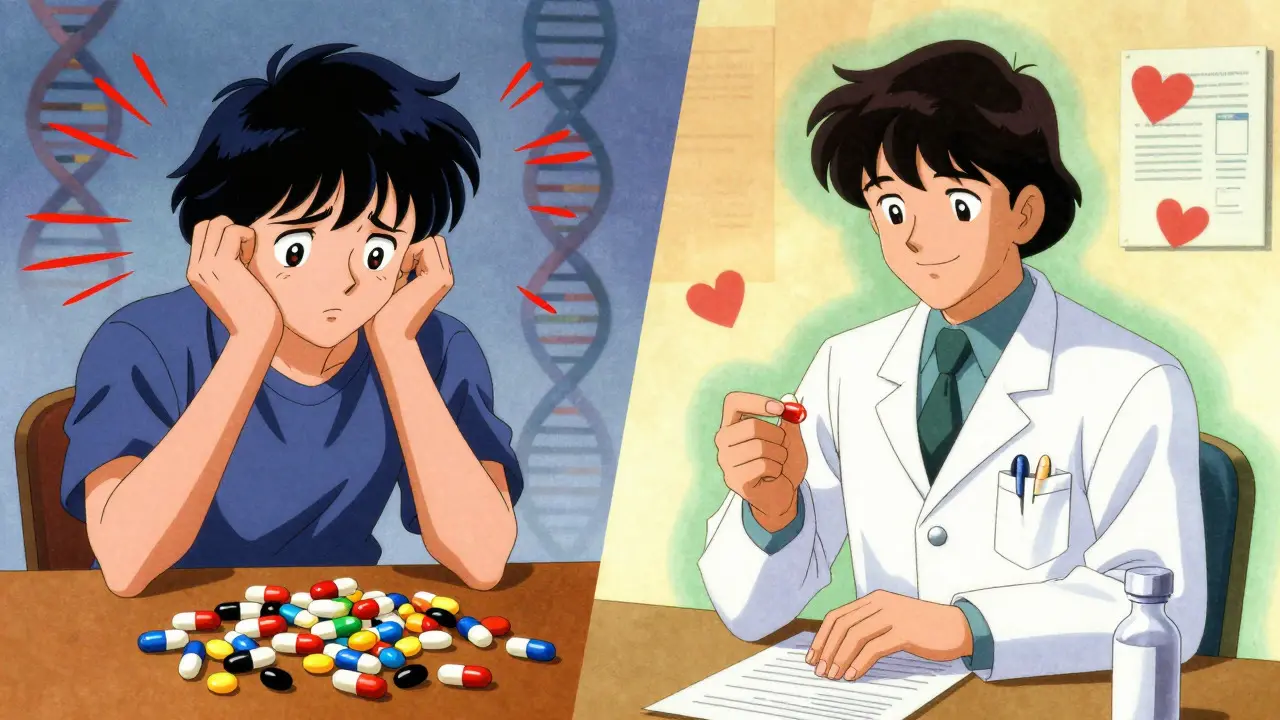
So, should you panic every time your pharmacist hands you a different-looking pill? No. But you should be informed. Here is how to navigate the switch safely:
- Know Your Drug Class: If you are taking an antiepileptic, thyroid hormone, or warfarin, ask your doctor about the importance of staying with a single manufacturer. For these drugs, consistency matters more than cost savings.
- Monitor Closely During Transition: If you switch to a generic, pay attention to your body for the first few weeks. Note any new headaches, dizziness, or return of symptoms. Keep a simple log.
- Communicate with Your Pharmacist: Pharmacists are trained to handle these switches. Ask them if the generic they are dispensing is from a reputable manufacturer. In many places, you can request to stay with a specific generic brand once you’ve established tolerance.
- Don’t Self-Adjust: Never stop taking a medication because you think the generic “isn’t working.” Contact your provider first. They may need to adjust your dosage slightly to compensate for minor absorption differences.
- Check for Duplication: If you take multiple pills, verify with your pharmacist that you aren’t accidentally doubling up on similar medications due to confusing packaging.
The Future of Generic Regulation
Regulators are aware of these nuances. The FDA released draft guidance in 2023 specifically addressing complex generics and NTI drugs. They are proposing additional bioequivalence studies for certain antiepileptics to ensure tighter control over manufacturing standards. The European Medicines Agency similarly emphasized in 2022 that special attention must be paid to patients with unstable epilepsy or those on multiple drugs.
We are moving toward a model where “one size fits all” is being replaced by “precision substitution.” Genetic testing is also emerging as a tool; a 2023 University of Toronto study identified genetic polymorphisms in liver enzymes (CYP2C9 and CYP2C19) that make some patients more susceptible to concentration variations between brands. In the future, your DNA might determine whether you stick with the brand or switch to the generic.
Are generic medications exactly the same as brand-name drugs?
They contain the same active ingredients in the same strength and dosage form. However, they may differ in inactive ingredients (fillers, colors, binders) and can vary slightly in how quickly they dissolve and are absorbed by the body, within a legally accepted range of 80-125% bioequivalence.
Is it safe to switch from brand to generic for epilepsy medication?
It depends on the individual patient. For stable patients, it is often safe. However, for those with unstable epilepsy or on multiple drugs, switching can lead to breakthrough seizures due to slight differences in blood levels. Many neurologists recommend sticking with one consistent manufacturer for antiepileptics.
Why do I feel different side effects after switching to a generic?
This could be due to differences in inactive ingredients causing mild allergic reactions or digestive issues. It could also be the “nocebo effect,” where expectation of inferiority causes perceived side effects. Alternatively, for narrow therapeutic index drugs, there may be a genuine slight variation in absorption affecting your body.
Can I ask my pharmacist to keep me on the same generic manufacturer?
Yes. Once you have tolerated a specific generic manufacturer, you can often request that the pharmacy continue dispensing that specific brand to avoid the stress and physiological adjustment of switching again. Check with your insurance plan to see if this affects your copay.
Do generic drugs save money without sacrificing quality?
For the vast majority of medications, yes. Generics save the US healthcare system billions annually. Large-scale studies show equivalent or even better long-term outcomes for chronic conditions like hypertension and diabetes, largely due to improved affordability and adherence.


Write a comment