
AI vs. Traditional Drug Safety Impact Calculator
Input Parameters
Enter your organization's current monthly volume of adverse event reports.
Projected Results
Enter values above to see the potential impact of AI adoption on your workflow.
Key Performance Comparison
| Metric | Traditional Methods | AI-Driven Systems |
|---|---|---|
| Data Coverage | 5–10% of available data | 100% of integrated streams |
| Detection Speed | Weeks to months | Hours to days |
| Coding Error Rate | ~18% MedDRA errors | ~4.7% MedDRA errors |
| Processing Goal | Reactive documentation | Proactive prevention |
Imagine a medication that looks safe in clinical trials but causes rare heart issues when mixed with a common cold medicine. In the old days of drug safety monitoring, also known as pharmacovigilance, this might take years to discover, costing lives and billions in lawsuits. Today, algorithms can spot these subtle patterns in weeks, or even days. This isn't science fiction; it's the new reality of how we protect patients.
We used to rely on doctors manually reporting side effects. It was slow, incomplete, and reactive. Now, Artificial Intelligence (AI) is transforming pharmacovigilance from reactive documentation to proactive prevention by analyzing millions of patient records in real-time. The shift is massive. We are moving from checking a small sample of reports to scanning every single data point available. If you work in healthcare, pharma, or just care about your own prescriptions, understanding this tech is no longer optional-it’s essential for staying safe.
From Paper Trails to Real-Time Alerts
The core problem with traditional drug safety was volume. Since the thalidomide tragedy in 1961, regulations like the U.S. 21 CFR 314.80 have mandated strict reporting of adverse events. But humans can’t read millions of pages fast enough. Manual reviews typically covered only 5% to 10% of available data. That means 90% of potential warning signs were ignored simply because there wasn’t enough time.
AI changes the math completely. Modern systems process 1.2 to 1.8 terabytes of diverse healthcare data daily. They don’t just read structured forms; they dig into unstructured text. Think of physician notes, social media posts, and insurance claims. A study by Hu et al. in 2025 showed that Natural Language Processing (NLP) algorithms extract data from free-text reports with 89.7% accuracy. This speed allows regulators like the FDA to run safety analyses in hours instead of weeks. The result? Signals that would have been buried in paperwork now trigger immediate alerts.
How AI Actually Finds the Needle in the Haystack
You might wonder how a computer understands medical nuance. It doesn’t guess; it learns. These systems use several techniques working together:
- Supervised Learning: The AI is trained on thousands of verified cases of adverse drug reactions (ADRs). It learns to recognize the specific language and patterns associated with known side effects.
- Clustering Algorithms: These group similar symptoms together, even if they are described differently. For example, "dizzy" and "lightheaded" get linked automatically.
- Federated Learning: This is a privacy-first approach. Instead of sending sensitive patient data to a central server, the algorithm travels to the data source (like a hospital database), learns locally, and sends back only the insights. This allows analysis across 12 different healthcare systems without violating privacy laws.
A real-world example makes this clear. In May 2025, GlaxoSmithKline reported that their AI system identified a dangerous interaction between a new anticoagulant and a common antifungal medication within three weeks of launch. Traditional methods might have taken months. That early detection prevented an estimated 200 to 300 serious adverse events. The AI didn’t just find a correlation; it highlighted a risk before it became a crisis.
The Power of the FDA Sentinel System
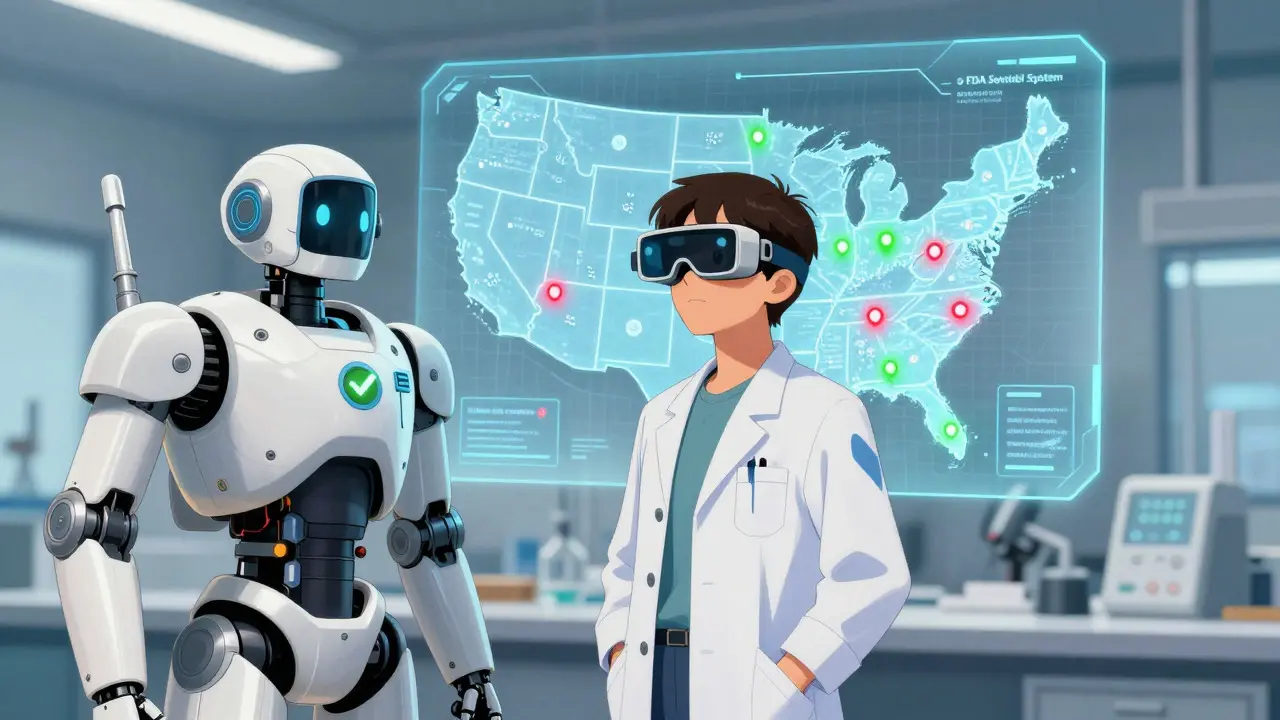
If you want to see AI in action at scale, look at the FDA Sentinel System. This is a large-scale electronic health data network used for post-market safety surveillance, capable of evaluating safety signals using real-world data with unprecedented speed. It’s not just a tool; it’s an infrastructure change. Since its full implementation, Sentinel has conducted over 250 safety analyses.
Here’s why it matters: Sentinel evaluated safety signals for 17 new molecular entities within six months of market approval. Doing this manually would be impossible. It pulls data from Electronic Health Records (EHRs), genomic databases, and claims data. By combining these sources, it creates a multi-dimensional safety profile for each drug. Dr. A. Nagar’s 2025 research cited Sentinel as demonstrating "promising potential" because it moves beyond simple counting. It looks for context-age, other medications, genetic markers-to see who is actually at risk.
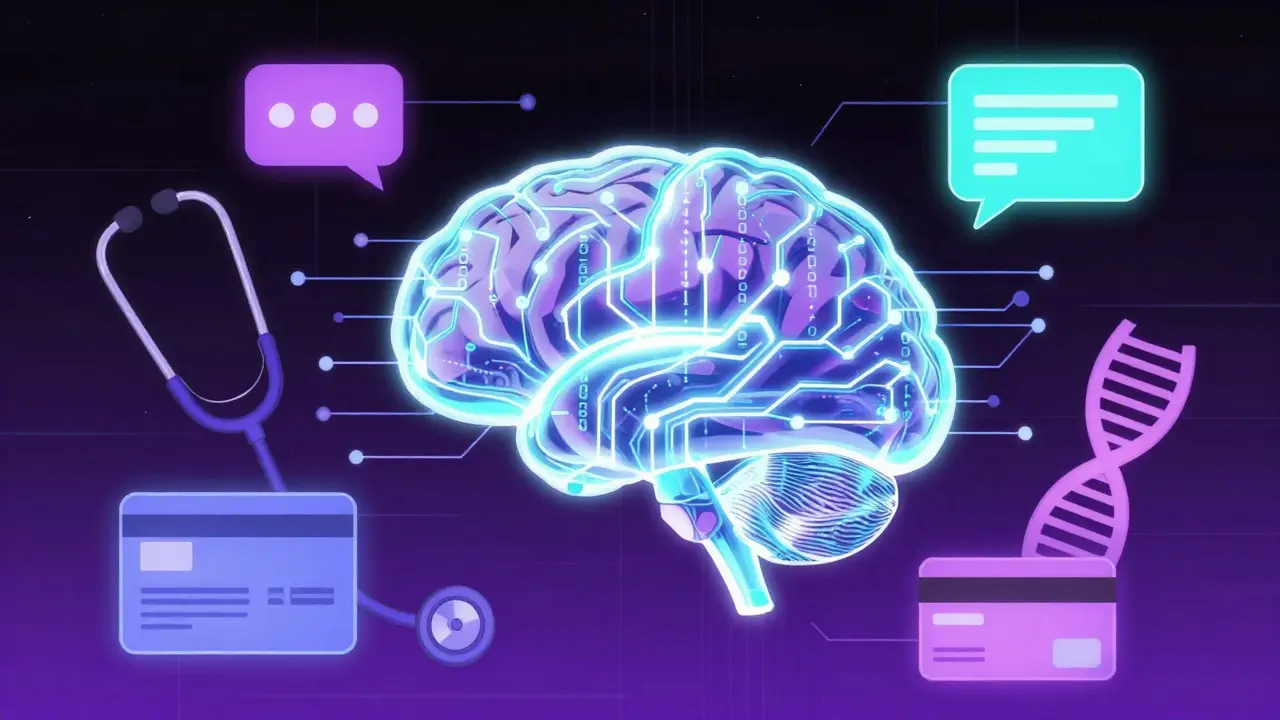
Comparison: Old vs. New Safety Monitoring
| Feature | Traditional Methods | AI-Driven Systems |
|---|---|---|
| Data Coverage | 5-10% of available data | 100% of integrated data streams |
| Detection Speed | Weeks to months | Hours to days |
| Data Sources | Spontaneous reports, clinical trials | EHRs, social media, claims, genomics |
| Error Rate (Coding) | ~18% MedDRA coding errors | ~4.7% MedDRA coding errors |
| Primary Goal | Reactive documentation | Proactive prevention |
The Hidden Risks: Bias and Black Boxes
It’s easy to get excited about the speed, but we need to talk about the flaws. AI is only as good as the data it eats. If the data is biased, the AI will be too. Frontiers’ 2025 analysis highlighted a critical vulnerability: underrepresentation of low-income, rural, or marginalized communities in EHRs leads to missed safety signals for those populations. If an AI hasn’t seen many cases of a side effect in a specific demographic, it might ignore it entirely.
Then there’s the "black box" problem. Complex neural networks often can’t explain *why* they flagged a signal. Safety officers need transparency to trust the alert. In March 2025, the European Medicines Agency (EMA) issued guidance emphasizing "transparency, reproducibility, and human oversight." You can’t just let a robot decide a drug is unsafe; a human must verify the logic. This is why the FDA’s Emerging Drug Safety Technology Program (EDSTP) requires extensive validation documentation-often exceeding 200 pages per algorithm.
What This Means for Patients and Professionals
For pharmaceutical companies, the cost of adoption is high. Integrating these systems takes 6 to 9 months of customization. But the payoff is huge. IQVIA’s 2025 survey found that 78% of pharmacovigilance managers saw a 40% reduction in case processing time after implementing AI. More importantly, 63% noted improved signal detection.
For patients, the benefit is invisible but vital. Your safety net is stronger. Wearable device data is now being integrated, capturing 8-12% of previously unreported adherence patterns. This means if your smartwatch detects irregular heartbeats while you’re on a new med, that data could contribute to a broader safety signal. The industry is shifting from correlation to causal inference. Lifebit, a key player in this space, projects a 60% improvement in distinguishing coincidence from causation by 2027. That distinction saves lives.
Getting Started with AI in Safety
If you’re looking to implement these tools, here is the realistic path:
- Clean Your Data: Expect to spend 35-45% of your project time here. Garbage in, garbage out. You need at least 50,000 verified adverse event reports for reliable model training.
- Choose Hybrid Models: Don’t rely on one type of AI. 85% of organizations use hybrid approaches combining NLP for text extraction and machine learning for pattern recognition.
- Train Your Team: Pharmacovigilance professionals need data literacy. Provide 40-60 hours of specialized training. As FDA Commissioner Robert Califf said in January 2025, "AI won't replace pharmacovigilance professionals, but professionals who use AI will replace those who don't."">
- Engage Regulators Early: Talk to the FDA’s EDSTP or EMA early. Their frameworks for AI validation are evolving rapidly, and getting buy-in upfront saves months of rework.
Is AI replacing human pharmacovigilance experts?
No. AI handles the heavy lifting of data processing and initial signal detection, but human expertise remains essential for causality assessment and final decision-making. The role is shifting from manual data entry to strategic risk management and AI oversight.
How accurate are AI systems in detecting adverse events?
Accuracy varies by implementation, but recent studies show NLP algorithms achieving up to 89.7% accuracy in extracting data from free-text reports. Reinforcement learning models have improved signal detection accuracy by 22.7% compared to older static models.
What is the biggest challenge in adopting AI for drug safety?
Data bias and integration complexity are the top hurdles. Biased training data can lead to missed signals in underrepresented populations, while integrating AI with legacy safety databases often takes 6-9 months of custom development.
Which regulatory bodies are leading AI in pharmacovigilance?
The U.S. FDA and the European Medicines Agency (EMA) are the leaders. The FDA launched its Emerging Drug Safety Technology Program (EDSTP) in 2023, and the EMA released specific guidance on AI transparency and human oversight in March 2025.
Can AI detect drug interactions that weren't found in clinical trials?
Yes. Clinical trials involve limited, controlled populations. AI analyzes real-world data from millions of diverse patients, allowing it to identify rare interactions between new drugs and common medications (like antibiotics or antifungals) that occur in daily life.




Write a comment