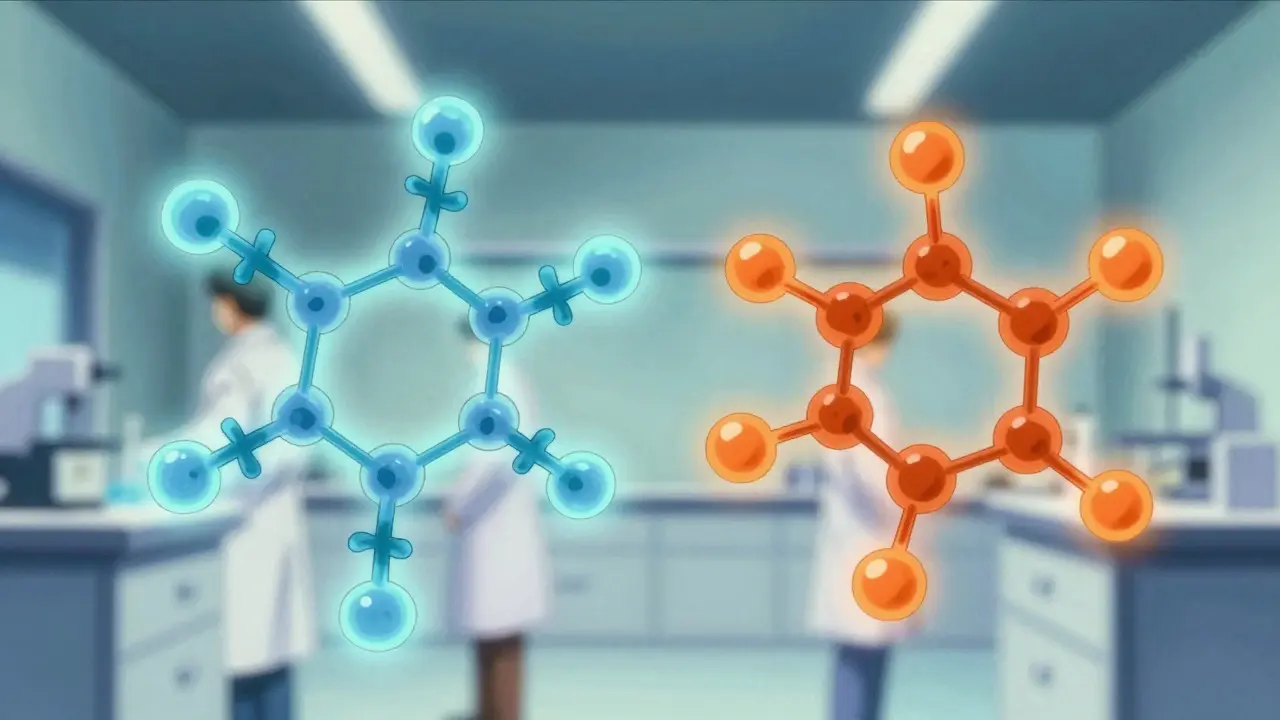
Imagine paying $100,000 a year for a life-saving cancer drug, only to find out there’s a nearly identical version available for half the price. That is the promise of biosimilars, which are highly similar, lower-cost alternatives to reference biologics that treat serious and chronic diseases. But unlike generic drugs, which are chemically identical copies, biosimilars are complex biological molecules that cannot be exactly replicated. This difference creates a unique regulatory hurdle that has historically slowed their entry into the U.S. market.
The U.S. Food and Drug Administration (FDA) reviews these products through a specialized pathway established by Congress in 2010 via the Biologics Price Competition and Innovation Act (BPCIA). For years, this process was considered more stringent than its European counterpart, often requiring lengthy clinical trials that took up to three years and cost between $100 million and $300 million per product. However, the landscape shifted dramatically on October 29, 2025, when the FDA released a landmark draft guidance designed to streamline this approval process. This update represents the most significant change to the biosimilar framework since the BPCIA was implemented, aiming to accelerate patient access and drive down healthcare costs.
Key Takeaways
- The FDA’s October 2025 draft guidance removes the routine requirement for comparative efficacy studies, relying instead on advanced analytical data.
- Biosimilars are distinct from generics; they are "highly similar" but not identical due to their biological nature.
- Development costs are projected to drop from $100-$300 million to $50-$150 million, shortening timelines from 8-10 years to 5-7 years.
- Interchangeability designation remains a separate legal step, though the FDA now advocates for it as the standard for all approved biosimilars.
- The U.S. biosimilar market is expected to grow from $18.7 billion in 2024 to $62.3 billion by 2029.
Understanding the Biosimilar vs. Generic Distinction
To understand why the FDA review process is so specific, you first need to grasp what makes a biosimilar different from a generic pill. A generic drug is a small molecule that can be synthesized in a lab to be chemically identical to the brand-name version. Think of aspirin or ibuprofen; the structure is simple enough to copy perfectly.
Biologics, however, are large, complex proteins produced by living cells. They are like trying to bake two cakes using the same recipe, ingredients, and oven settings. You will get very similar results, but they will never be molecularly identical. The cells introduce subtle variations in shape, charge, and purity. Because of this, the law defines a biosimilar as a product that is "highly similar" to the reference biologic with no clinically meaningful differences. It is not a copy; it is a close cousin that must prove it works just as well and safely.
This distinction matters because it dictates the evidence required for approval. You cannot simply test if the chemical formula matches. You have to prove that the functional behavior of the new molecule mirrors the original in the human body. This is where the FDA’s role becomes critical, acting as the gatekeeper that ensures these subtle variations do not impact patient safety or treatment outcomes.
The New Streamlined Review Pathway
Historically, proving this similarity required massive clinical trials comparing the biosimilar directly against the reference product in thousands of patients. These trials were expensive, slow, and difficult to execute. The October 2025 draft guidance changes this by shifting the burden of proof from clinical efficacy to analytical characterization.
The core idea is that modern science has gotten good enough to predict how a drug will behave based on its physical properties. If the FDA can verify that the biosimilar’s structure, purity, and potency match the reference product across more than 200 quality attributes, it can infer that the clinical outcome will also be similar. This approach relies on three key conditions being met:
- Manufacturing Consistency: Both products must be made from clonal cell lines and be highly purified, allowing for precise analytical comparison.
- Understood Mechanism: The relationship between the drug’s quality attributes and its clinical effect must be generally understood for the reference product.
- Feasible PK Study: A human pharmacokinetic (PK) similarity study must be feasible and clinically relevant.
When these boxes are checked, sponsors no longer need to run a full head-to-head efficacy trial. Instead, they focus on rigorous laboratory testing using mass spectrometry, chromatography, and bioassays. This shift aligns the U.S. pathway more closely with the European Medicines Agency (EMA), which has long relied on this strategy. The result is a faster, cheaper path to market that benefits both developers and patients.
Interchangeability: The Controversial Designation
Approval is one thing, but substitution is another. In the U.S., a biosimilar does not automatically replace the reference product at the pharmacy counter unless it receives an additional designation called "interchangeable." This status allows pharmacists to swap the biosimilar for the reference biologic without calling the prescriber, provided state laws permit it.
This has been a point of intense debate. Under previous rules, proving interchangeability required "switching studies"-clinical trials showing that patients could alternate between the reference product and the biosimilar without added risk. These studies were complex and costly. In October 2025, FDA Commissioner Marty Makary stated unequivocally that "Every biosimilar should have the designation of interchangeable," characterizing the distinction as "a legislative term, not a scientific term."
While the FDA continues to issue formal designations based on submitted evidence-as seen with the simultaneous interchangeability approvals for denosumab biosimilar pairs in late 2025-the agency’s stance suggests a move toward making interchangeability the default expectation. Critics, however, worry that removing the scientific rigor of switching studies might undermine physician confidence. For now, the statutory requirement for a separate designation remains, creating a layer of complexity that developers must navigate carefully.
Comparing the FDA and EMA Approaches
The gap between the U.S. and European regulatory frameworks has narrowed significantly, but differences remain. The EMA has approved over 100 biosimilars since 2006, largely because its pathway focused early on analytical similarity and limited clinical requirements. The FDA, initially more cautious, has now caught up with its 2025 updates.
| Feature | FDA (Post-2025 Guidance) | EMA |
|---|---|---|
| Clinical Efficacy Studies | Not routinely required if analytical/PK data suffice | Typically one comparative PK/PD study |
| Interchangeability/Substitution | Separate designation required; switching studies eliminated | Automatic substitution rights upon approval |
| Estimated Development Cost | $50-$150 million | $50-$100 million |
| Time to Market | 5-7 years | 4-6 years |
| Market Share (2025) | ~23% | ~67% |
Despite these similarities, the U.S. market still lags behind Europe in adoption rates. While biosimilars capture about 67% of the market share in Europe where alternatives exist, they hold only about 23% in the U.S. This gap is driven by factors beyond regulation, including patent litigation, formulary decisions by health plans, and physician hesitation. The streamlined FDA pathway aims to address the supply side by increasing the number of available products, but demand-side barriers remain significant.
Economic Impact and Market Projections
The financial stakes are enormous. Reference biologics often cost between $50,000 and $100,000 annually per patient. By introducing competition, biosimilars can drive prices down substantially. The FDA estimates that increased biosimilar competition could save the U.S. healthcare system $250 billion over the next decade.
Industry analysts predict that the streamlined pathway will boost annual approvals from the current average of 8-10 to 15-20 per year. Grand View Research projects the U.S. biosimilar market will grow from $18.7 billion in 2024 to $62.3 billion by 2029, representing a compound annual growth rate of 27.1%. Major players like Sandoz, Pfizer, and Amgen lead the pack, but emerging developers are entering the space thanks to reduced entry barriers.
Hospital systems are already seeing the benefits. Mayo Clinic reported a 37% reduction in biologic drug costs after switching to biosimilars for oncology treatments, saving approximately $18 million annually. As more products gain approval and interchangeability, these savings are expected to spread across more therapeutic areas, from rheumatoid arthritis to diabetes and Crohn’s disease.
Challenges and Future Outlook
While the outlook is positive, challenges persist. Patent litigation remains a major hurdle, having delayed market entry for 68% of approved products according to an FTC report. Developers must navigate "patent thickets"-dense webs of intellectual property claims-that can stall even the most scientifically sound biosimilars.
Additionally, public awareness is low. Only 32% of patients are aware of biosimilars, and many express initial concerns about safety, although 68% of those concerns are resolved after talking to their doctors. Education campaigns and clearer communication from the FDA will be crucial to building trust.
The final guidance for the 2025 draft is expected by June 2026. Once finalized, it will set the tone for the next decade of biologic innovation. If successful, the U.S. could finally close the gap with Europe, delivering affordable, high-quality care to millions of patients who rely on these life-saving therapies.
What is the main difference between a biosimilar and a generic drug?
A generic drug is chemically identical to its brand-name counterpart, while a biosimilar is a complex biological molecule that is "highly similar" but not identical due to its production by living cells. Biosimilars require more extensive testing to prove they work similarly in the body.
Does the FDA still require clinical efficacy trials for biosimilars?
As of the October 2025 draft guidance, the FDA no longer routinely mandates comparative clinical efficacy studies. Instead, it relies on comprehensive analytical data, pharmacokinetic studies, and immunogenicity evaluations to demonstrate similarity, provided certain manufacturing and mechanistic conditions are met.
What is interchangeability in the context of biosimilars?
Interchangeability is a specific FDA designation that allows pharmacists to substitute a biosimilar for the reference biologic without prescriber approval. It requires additional evidence beyond basic biosimilarity, though the FDA has moved to eliminate the need for separate "switching studies" to earn this status.
How much cheaper are biosimilars compared to reference biologics?
While prices vary by product and market dynamics, biosimilars typically offer significant savings, often ranging from 20% to 50% less than the reference biologic. Hospital systems have reported reductions of up to 37% in drug costs after adopting biosimilars.
When will the new FDA biosimilar guidance become final?
The draft guidance released in October 2025 is open for public comment until January 27, 2026. The final guidance is expected to be issued by June 2026, at which point it will formally guide future biosimilar applications.



Write a comment